
Companion Plants
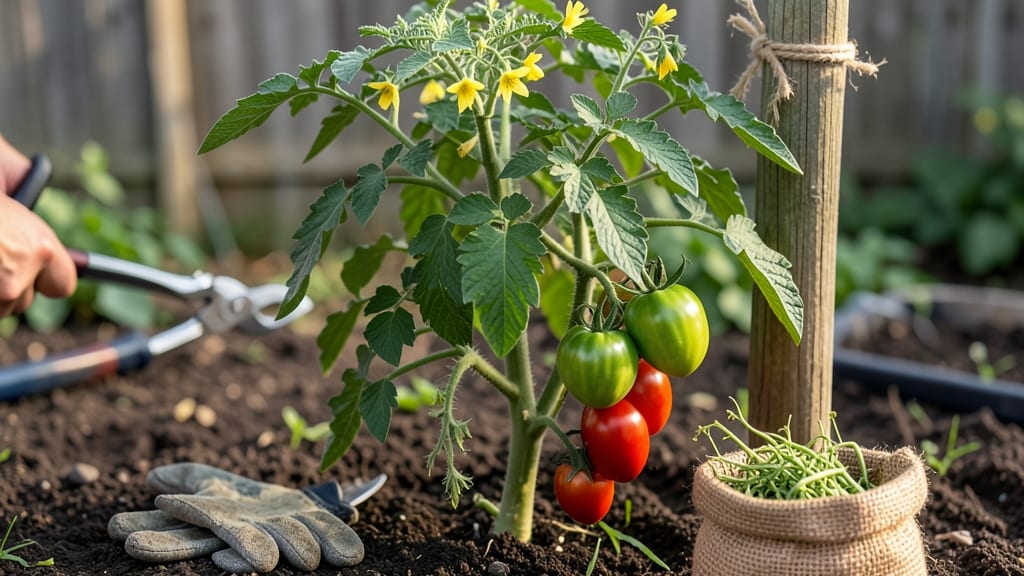
Removing sucker leaves on tomato plants isn’t just pruning—it’s the secret to doubling your harvest. 🌱 I’ve watched my tomato yields triple after mastering this simple technique, and the best part? It takes just 10 minutes to transform a struggling plant into a fruit-producing powerhouse.
The problem starts when those tiny leaves sprout between the main stem and branches—these suckers steal energy from your tomatoes. Most gardeners either ignore them (and lose out on fruit) or over-prune (and stress the plant).
The trick is timing: remove suckers when they’re 1-2 inches long, leaving a small stub to prevent disease.
You’ll see the difference in 2-3 weeks—thicker stems, more flowers, and tomatoes that ripen faster. The plants focus their energy where it counts: on those juicy red (or yellow, or purple!) fruits you’ve been dreaming of all season.
Works for both indeterminate (vining) and determinate (bush) varieties, though indeterminate tomatoes benefit most. Here’s exactly how to spot, snip, and support your plants through the growing season—no guesswork, just results.
The Science Behind Unwanted Growth
Those pesky sucker leaves (or suckers) popping up between your tomato plant’s main stem and branches aren’t just random weeds—they’re a survival tactic rooted in plant biology. Understanding why they appear helps you prune smarter and boost your harvest. Let’s break down the key triggers:
Tomato plants produce a growth hormone called auxin, which regulates cell elongation and root/shoot development. When auxin levels spike—often due to:
- Overcrowded stems: Auxin travels downward from the terminal bud (the topmost growth point). If this bud is damaged or removed, auxin can’t flow efficiently, causing side shoots (suckers) to sprout as backup growth points.
- Stress responses: Heatwaves, drought, or transplant shock trigger auxin surges, prompting the plant to send out extra shoots for resilience.
- Genetic quirks: Some heirloom or indeterminate tomato varieties (like Brandywine or Sungold) are genetically prone to producing more suckers due to higher auxin sensitivity.
Actionable fix: Pinch off suckers early (when they’re pea-sized) to redirect auxin to the main stem and fruit production. Think of it like trimming a bush—you’re shaping the plant’s energy flow!
Tomato plants are energy hogs. Every leaf, stem, and sucker competes for the same pool of nutrients (nitrogen, phosphorus, potassium) and sunlight. Here’s why suckers steal the spotlight:
- Photosynthesis drain: Suckers produce their own leaves, which photosynthesize but don’t contribute directly to fruit. This creates a parasitic effect—the plant splits energy between non-productive growth and tomatoes.
- Root system strain: Each sucker develops its own tiny root network, forcing the plant to allocate water and minerals to maintain multiple growth centers instead of strengthening the main roots.
- Shade competition: Dense foliage from suckers blocks sunlight from lower leaves, reducing photosynthesis and slowing fruit ripening.
Actionable fix: Remove suckers before they develop leaves (they’ll look like tiny nubs). Use a sharp pair of pruners or your fingers—never tear them, as this damages the stem and invites disease. Aim to keep only 3–4 main stems per plant for optimal energy distribution.
Tomatoes are thermophilic (heat-loving), but extreme conditions can backfire. Suckers often erupt as a response to:
| Trigger | Why It Happens | Solution |
|---|---|---|
| 🔥 High temperatures (above 90°F/32°C) | Heat stress disrupts auxin transport, causing erratic side-shoot growth. The plant “gambles” on producing more stems to cool itself via transpiration. | Provide afternoon shade with row covers or mulch to keep soil temps stable. |
| ☀️ Too much sunlight (intense direct light) | Excess UV radiation can “burn” the terminal bud, prompting the plant to send out suckers as a recovery mechanism. | Use light shade cloth (30–50% block) during peak sun hours. |
| 💧 Inconsistent watering | Drought stress or overwatering (leading to root suffocation) throws auxin levels into chaos, triggering sucker growth as a survival tactic. | Water deeply 1–2 times per week (check soil 2” down—it should be moist but not soggy). |
Not all tomatoes play by the same rules. The type of plant dictates how aggressively it produces suckers:
- Indeterminate varieties (e.g., Cherry Roma, Early Girl):
- Grow indefinitely until frost, producing suckers continuously along the stem.
- Suckers here are critical to remove—they divert energy from the plant’s endless fruit production.
- Determinate varieties (e.g., Celebrity, Roma):
- Grow to a fixed size and produce fruit in one flush, then die back.
- Suckers are less aggressive but can still steal resources—prune only if they’re shading fruit.
Actionable fix: Know your variety! Indeterminate tomatoes need weekly pruning to stay productive, while determinate types tolerate a more hands-off approach.
Quick Fixes for Extra Growth
Sucker leaves—those vigorous offshoots sprouting between the main stem and branches—can drain energy from your tomato plants if left unchecked. But with the right approach, you can turn them into a growth hack instead of a nuisance.
Below are targeted solutions based on the most common causes, along with simple prevention tips to keep your plants thriving. 🌱🔪
If your tomato plants are too close together, they compete for sunlight, water, and nutrients—leading to weak stems and excess sucker growth. The fix? Prune aggressively and space them properly.
🍳 Step 1: Identify the Right Time to Prune
- Best time: Early morning (plants are hydrated, and you avoid heat stress).
- When to stop: Avoid pruning 2–3 weeks before harvest—this gives plants time to recover and direct energy to fruit development.
👨🍳 Step 2: Remove Suckers Correctly
- How to spot them: Look for small shoots growing in the "V" between the main stem and a branch.
- How to remove:
- Use clean, sharp pruners or your fingers (twist gently to avoid tearing).
- Snip just above the leaf node (the tiny bump where leaves grow) to prevent regrowth.
- Pro tip: If the sucker is tiny (under 2 inches), you can pinch it off by hand—no tools needed! 💪
🥘 Step 3: Thin Out Crowded Plants
- Ideal spacing:
- Determinate tomatoes (bush varieties): 18–24 inches apart.
- Indeterminate tomatoes (vining varieties): 24–36 inches apart.
- If repotting: Transplant suckers to a separate container if you want extra plants—but only if they’re at least 6 inches tall.
⏰ Prevention Tips
- Start with the right spacing when planting—don’t let them get too close!
- Use trellises or cages early to encourage vertical growth and reduce competition.
- Avoid over-fertilizing with nitrogen—this promotes leafy growth over fruit.
If your soil is heavy on nitrogen, your tomato plants will focus on growing leaves instead of fruit. This leads to a sucker explosion and fewer tomatoes. Fix it by adjusting your fertilizer mix.
🔥 Step 1: Test Your Soil
- Use a DIY soil test kit (available at garden centers) to check nitrogen (N), phosphorus (P), and potassium (K) levels.
- Ideal ratio for tomatoes: Low N, balanced P, high K (e.g., 5-10-10 or 3-4-6).
🍳 Step 2: Switch to a Tomato-Specific Fertilizer
- Stop using general-purpose or lawn fertilizers—they’re too high in nitrogen.
- Best options:
- Organic: Fish emulsion (low N), compost tea, or worm castings.
- Synthetic: Slow-release tomato fertilizer (look for lower first number, e.g., 5-10-10).
👨🍳 Step 3: Feed for Fruit, Not Leaves
- When to fertilize:
- First feeding: When plants are 6–8 inches tall (use a low-N formula).
- Second feeding: At flowering (switch to a high-phosphorus fertilizer to boost blooms).
- Third feeding: When fruit sets (use a potassium-rich fertilizer).
- Avoid fertilizing after mid-summer—it can lead to late-season leaf growth instead of fruit ripening.
🥘 Prevention Tips
- Mulch with compost (not fresh manure)—it adds nutrients slowly without spiking nitrogen.
- Use coffee grounds sparingly (they’re high in nitrogen; mix with wood ash for balance).
- Rotate crops—don’t plant tomatoes in the same spot every year to prevent nitrogen buildup.
If your tomato plants are under stress (from pests, disease, or poor drainage), they’ll produce suckers as a survival mechanism. Fix the root cause first before pruning.
💡 Step 1: Check for Pests & Disease
- Common culprits:
- Aphids, whiteflies, or spider mites (suck plant sap, weakening growth).
- Fungal issues (like early blight or powdery mildew) from overwatering or poor airflow.
- Solutions:
- Pests: Spray with neem oil or insecticidal soap.
- Fungus: Apply copper fungicide or bake powder (1 tsp baking soda + 1 quart water + a drop of soap).
🌡️ Step 2: Improve Drainage & Watering
- Problem: Overwatering or compacted soil stresses roots, leading to sucker growth.
- Fix:
- Amend soil with perlite or coarse sand to improve drainage.
- Water deeply but infrequently (1–1.5 inches per week; avoid wetting leaves).
- Use drip irrigation to keep foliage dry and prevent disease.
✨ Step 3: Support Plant Structure
- Weak stems? Stake or cage plants as soon as they’re 6 inches tall to prevent flopping.
- Prune lower leaves (up to the first flower cluster) to improve airflow and reduce disease risk.
🎯 Prevention Tips
- Choose disease-resistant varieties (e.g., ‘Celebrity,’ ‘Better Boy,’ or ‘Solar Fire’).
- Rotate plant locations yearly to prevent soil-borne diseases.
- Harvest regularly—overripe tomatoes stress the plant, leading to compensatory growth.
Remember: Suckers aren’t always bad—they can be redirected to grow into new plants or used as cuttings. But if you’re growing tomatoes for maximum yield, pruning them early and often is the key to bigger, juicier fruit. 🍅✨
Frequently asked questions
Can I leave sucker leaves on my tomato plants?
Only if you want fewer tomatoes! Sucker leaves compete for nutrients and sunlight, reducing your harvest by up to 50%. For indeterminate varieties (like cherry tomatoes), remove them all. For determinate types (bush tomatoes), you can leave a few small ones if they're not shading fruit.
When is the best time to prune sucker leaves?
Prune suckers when they're 1-2 inches long—this is the sweet spot before they develop leaves. Do it in the morning on a dry day to prevent disease. Avoid pruning 2-3 weeks before harvest so the plant can focus energy on ripening fruit.
How do I know if a small shoot is a sucker or a new branch?
Suckers grow in the "V" between the main stem and a branch, while new branches grow directly from the main stem. Look for tiny shoots emerging from leaf nodes—these are suckers. If it's growing straight up from the main stem, it's likely a new branch that should stay.
Will removing suckers hurt my tomato plant?
Not if done correctly! Proper pruning actually strengthens your plant by improving airflow and reducing disease risk. Just avoid cutting into the main stem and always leave a small stub. Over-pruning (removing too many leaves) can stress plants, but removing suckers is beneficial—it redirects energy to fruit production.
Can I use sucker leaves to grow new tomato plants?
Take 6-inch sucker cuttings, remove lower leaves, and place them in water. In 2-3 weeks, roots will form. Transplant them to soil when roots are 1 inch long. This is a great way to get free tomato plants—just make sure to prune the original plant regularly to maintain its health.