
Companion Plants
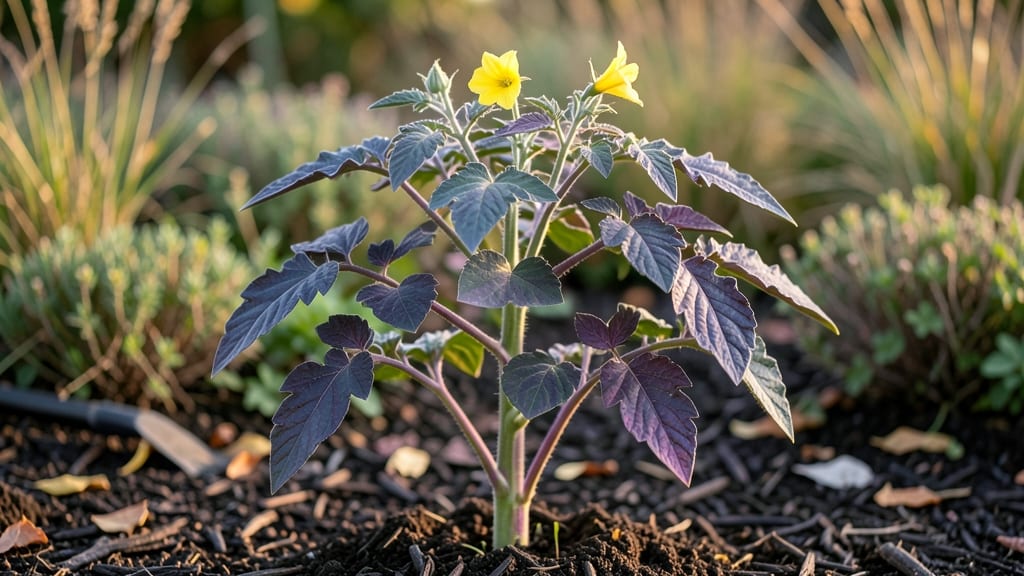
Growing purple leaf tomato plants turns your garden into a living art piece. 🌿 The deep burgundy foliage isn't just stunning—it actually helps shade fruit from sunburn while producing classic red tomatoes with a slightly sweeter taste.
My first harvest had neighbors stopping to ask about the "purple tomato bushes," and I realized these plants do double duty as both food and ornament. You'll need full sun (at least 6-8 hours daily), well-draining soil rich in compost, and spacing of 18-24 inches between plants.
The key is consistent watering—keep soil moist but not soggy—to prevent cracking in those beautiful purple leaves. Prune suckers regularly to focus energy on fruit production, and watch for early blight (common on purple foliage).
By midsummer, you'll have vines heavy with fruit and foliage that makes your garden the envy of the block. The plants grow 4-5 feet tall, so provide sturdy cages or stakes. Even in containers, they thrive with proper care—just use a 5-gallon pot minimum.
This variety handles heat better than most, making it perfect for southern climates. For cooler areas, start seeds indoors 6-8 weeks before last frost. The purple leaves fade slightly in intense heat but always bounce back when temperatures drop.
📚 In This Guide
- What you need
- Instructions
- Tips and common mistakes
- Wrapping up and next steps
What you need
- ● Purple Leaf Tomato Plants: 1–3 plants (depending on space and desired yield)
- ● Varieties: ‘Purple Majesty,’ ‘Indigo Rose,’ or ‘Black Krim’ (all great for purple foliage!)
- ● Containers or Garden Bed: Containers: 5-gallon pots or larger (1 plant per container)
- ● Garden Bed: Well-draining soil, 18–24" spacing between plants, 6+ hours of sunlight
- ● High-Quality Potting Mix: 1 bag (sterile, organic, and well-draining)
- ● Slow-Release Fertilizer: Balanced (10-10-10) or tomato-specific (e.g., Espoma Tomato-Tone)
- ● Mulch: Straw or shredded leaves (2–3 inches) to retain moisture
- ● Hand Trowel or Transplant Spade (for digging)
- ● Watering Can or Hose with Gentle Nozzle (avoid overhead watering)
- ● Pruning Shears (for shaping and removing suckers)
- ○ Stakes or Cages (Optional):
- ● 3–4 ft tall (for indeterminate varieties)
- ● Tomato clips or soft ties (to secure plants)
- ○ Compost or Worm Castings (Optional):
- ● 1 cup per plant (boosts nutrients naturally)
- ● 🌡️ Last Frost Date: Wait until after the last frost in your zone (tomatoes hate cold!)
- ● 🌱 Soil Temperature: At least 60°F (15°C) for seeds; 55°F (13°C) for transplants
- ● 💧 Water Access: Consistent moisture (1–2 inches per week)
- ● 🌿 Sunlight: Full sun (6+ hours daily)
How to grow purple leaf tomato plants for stunning harvests
Here's how I turn ordinary tomato plants into showstopping purple-foliaged beauties that produce just as well.
🌱 Step 1: Select the Right Purple Leaf Varieties
Start with proven purple leaf varieties like 'Purple Calabash' or 'Indigo Rose'—these maintain their stunning foliage while producing excellent fruit. I always buy from reputable seed suppliers to ensure true purple coloration (some cheaper seeds revert to green). These varieties need the same care as regular tomatoes but with extra attention to light exposure to maintain their deep purple hues.
Plant seeds indoors 8-10 weeks before your last frost date, using sterile seed-starting mix in 2-3 inch deep containers. Purple leaf varieties germinate just like regular tomatoes, so keep the soil consistently moist at 75-85°F until sprouts appear in 7-14 days. The key difference comes after germination when the foliage starts developing its signature purple color.
☀️ Step 2: Provide Maximum Light for Vibrant Color
Purple leaf tomatoes need full sun exposure (6-8 hours daily) to maintain their deep purple foliage. Place seedlings under grow lights immediately after germination if natural light is insufficient. I position my lights 2-4 inches above the plants and raise them gradually as the seedlings grow—this prevents leggy stems that can't support the heavy fruit.
Watch for pale or green-tinged leaves—this means your plants aren't getting enough light. Purple leaf varieties are more sensitive to light deprivation than regular tomatoes, so I rotate my plants quarter turn daily to ensure even color development. Once hardened off, transplant to the garden where they'll receive direct sunlight to maintain their stunning purple foliage.
💧 Step 3: Water Consistently Without Overwetting
Purple leaf tomatoes need consistent moisture but hate soggy roots. Water deeply every 2-3 days when the top inch of soil feels dry, using the soak-and-dry method—this prevents the soil from staying too wet, which can dilute the purple color intensity. I always water at the base of the plant in the morning to allow foliage to dry completely, reducing disease risk.
Here's the thing—purple leaf varieties are more prone to leaf scorch if watered inconsistently. You'll notice the purple hues darken beautifully when plants are properly hydrated, while underwatered plants develop green streaks along the veins. Mulch with 2-3 inches of organic mulch to retain moisture and protect those stunning purple leaves from soil-borne diseases.
🌿 Step 4: Prune Strategically to Enhance Foliage and Fruit
Prune purple leaf tomatoes aggressively to maintain their vibrant foliage while maximizing fruit production. Remove suckers (the small shoots that form in the leaf axils) weekly to redirect energy to fruit development and leaf color intensity. I also prune lower leaves that touch the soil to prevent disease and improve air circulation—this helps maintain the deep purple color throughout the plant.
Don't go overboard—leave 3-4 main stems to support the plant's structural integrity. Purple leaf varieties produce heavier fruit than regular tomatoes, so their stems need extra support. Install cages or stakes at planting time and gently tie stems as they grow. The result? Stunning purple foliage that frames beautiful red, yellow, or purple tomatoes—it's like growing a living work of art.
✂️ Step 5: Harvest at Peak Ripeness for Best Color
Harvest purple leaf tomatoes when they reach full color—this is when their sweetness peaks and the purple foliage contrasts most beautifully. I check plants every 2-3 days during peak season, gently twisting fruits until they pop free. The purple leaves actually intensify in color as the plant matures, making late-season harvests especially striking.
Don't wait too long—overripe tomatoes on purple leaf plants can dilute the foliage color as the plant diverts energy to seed production. Store harvested tomatoes at room temperature for 1-2 weeks or refrigerate for longer storage. The combination of deep purple leaves and vibrant fruit makes these plants perfect for container gardens, patio displays, or as centerpiece plants in vegetable gardens.
Tips & tricks for growing stunning purple leaf tomato plants
Real talk: Purple leaf tomato plants are finicky about their care—get these details right, and you'll end up with showstopping foliage that makes your garden the envy of the neighborhood. Here's what nobody tells you about keeping those purple hues vibrant.
Light Exposure is Non-Negotiable: The 6-8 hours of daily sunlight in Step 2 isn't just a suggestion—it's the magic number for maintaining that deep purple color. If you notice your plants developing green streaks, move them immediately to a sunnier spot. I've seen purple leaf varieties revert to almost green when deprived of light, and it's heartbreaking to watch. For container gardeners, rotate pots quarter-turn daily to ensure even exposure on all sides—this prevents uneven color development that can make your plants look patchy.
Soil Temperature Matters More Than You Think: Those 75-85°F soil temps in Step 1 aren't just for germination—they continue to affect your plants' health. Use a soil thermometer to verify temps, especially if you're starting seeds early. Cold soil slows germination and can stress seedlings, leading to pale foliage. I always warm my seed-starting mix by placing trays on a heat mat (set to 75°F) until sprouts appear, and it makes all the difference in getting those purple hues off to a strong start.
Pruning Timing is Everything: The weekly sucker removal in Step 4 needs to happen at the right time—right when those little shoots are about 2 inches tall. If you wait too long, they'll start competing with your main stems for energy, diluting that gorgeous purple color. I use sharp scissors to make clean cuts just above the leaf axil, and I always prune on cloudy days to reduce stress on the plant. Pro tip: Save your pruned suckers in a jar of water—they'll root and give you free plants!
Harvesting Strategy for Maximum Impact: When you harvest every 2-3 days as suggested in Step 5, you're not just getting ripe tomatoes—you're encouraging the plant to produce more vibrant foliage. The key is to harvest when fruits are fully colored but still firm. Overripe tomatoes signal the plant to focus on seed production, which can cause the leaves to lose their intensity. I've found that purple leaf varieties actually develop deeper purple hues when consistently harvested at peak ripeness—it's like they're putting all their energy into that stunning display.
Pro Tips for Purple Leaf Tomato Plants
- Real talk: Purple leaf tomato plants are finicky about their care—get these details right, and you'll end up with showstopping foliage that makes your garden the envy of the neighborhood.
- Light Exposure is Non-Negotiable: The 6-8 hours of daily sunlight in Step 2 isn't just a suggestion—it's the magic number for maintaining that deep purple color.
- Soil Temperature Matters More Than You Think: Those 75-85°F soil temps in Step 1 aren't just for germination—they continue to affect your plants' health.
Frequently asked questions
Got questions about growing purple leaf tomato plants?
Here are answers to the most common ones to help you cultivate these stunning beauties with confidence!
How do purple leaf tomato plants differ from regular tomatoes?
Purple leaf tomatoes (like 'Indigo Rose' or 'Purple Majesty') have dark purple or burgundy foliage, while regular tomatoes have green leaves. The purple hue is harmless—it’s caused by anthocyanins—and doesn’t affect fruit quality. The striking color adds visual appeal to gardens and containers!
When is the best time to plant purple leaf tomato seeds or seedlings?
Start seeds indoors 6–8 weeks before your last frost date (typically early spring). Transplant seedlings outdoors after soil warms to 55–60°F (13–15°C) and nighttime temps stay above 50°F (10°C). Avoid late-season planting—they need warmth to thrive and produce fruit.
Can purple leaf tomatoes grow in containers? If so, what size pot is ideal?
They thrive in containers 5+ gallons with drainage holes. Choose a pot at least 12–18 inches deep to support root growth. Use a lightweight potting mix with compost, and stake or cage the plant early—purple leaf varieties often need support for heavy foliage and fruit.
Do purple leaf tomatoes produce smaller or fewer fruits than regular tomatoes?
Not necessarily! While some varieties (like 'Black Krim') have smaller fruits, others (e.g., 'Purple Calabash') yield standard-sized tomatoes. The purple leaves don’t impact fruit production—focus on proper pruning, watering, and sunlight (6–8 hours daily) to maximize harvests.
Are purple leaf tomatoes more prone to pests or diseases?
The purple foliage is not more susceptible to pests, but the dark leaves can hide early signs of aphids or spider mites. Monitor undersides regularly! Ensure good airflow, avoid overhead watering, and rotate crops yearly to prevent soil-borne diseases like blight.
Can I use purple leaf tomato plants for culinary purposes, or are they ornamental?
Both! While the leaves are edible (mild, slightly bitter flavor), the fruits are fully culinary. Use them in salads, sauces, or roasted dishes—just avoid overharvesting leaves, as it can stress the plant. The vibrant foliage also makes a stunning garnish for plates!
Wrapping up and next steps
Growing purple leaf tomato plants isn’t just about adding a pop of color to your garden—it’s about elevating your harvest with stunning foliage and delicious fruit! These plants are a game-changer for both aesthetics and companion planting, making your garden thrive while looking like a masterpiece. 🌿✨
Now that you’re armed with tips on planting, care, and troubleshooting, it’s time to roll up your sleeves and get growing! Start by picking your favorite purple leaf variety, prep your soil, and watch your garden transform into a vibrant, productive paradise.
Ready to see those deep purple leaves and juicy tomatoes take center stage? Plant your seeds today!