
Diseases
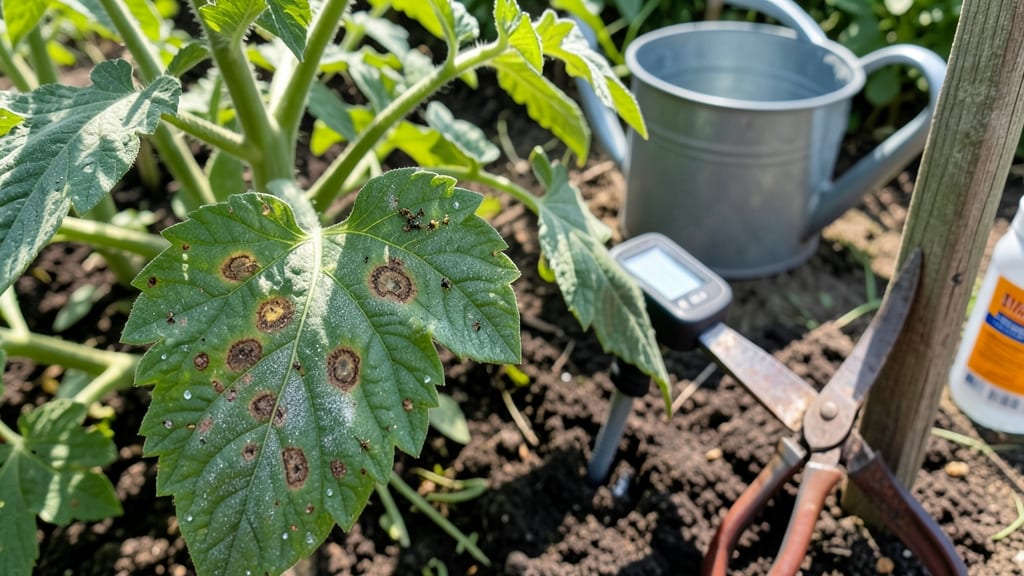
What causes brown spots on tomato plant leaves can ruin a season’s harvest if you don’t act fast—but the real challenge is figuring out why they’re appearing in the first place.
Picture this: You’ve spent weeks nurturing your tomato plants, only to wake up one morning and find leaves dotted with brown splotches. Before you panic, you need to know whether it’s a fungal infection, nutrient deficiency, or something else entirely.
Fungal diseases like early blight or septoria leaf spot thrive in damp conditions, while nutrient issues (like magnesium or potassium shortages) create distinct patterns on the leaves. Even environmental stress—like too much sun or overwatering—can mimic these problems.
In this guide, I’ll walk you through how to diagnose the exact cause, from spot shape and plant location to the best treatments (organic or chemical) to save your 🍅 harvest.

5 Common causes of brown spots on tomato leaves (and how to tell them apart)
When you notice brown spots on tomato leaves, your first instinct might be panic—but don’t worry! Most issues are treatable once you identify the exact problem. The key is observing spot patterns, leaf placement, and plant behavior.
Some issues spread rapidly, while others are harmless if caught early. Let’s break down the top 5 culprits and how to distinguish them.
Fungal diseases like early blight and late blight are the most common causes, but nutrient deficiencies and environmental stress can mimic their symptoms. For example, magnesium deficiency (also called blossom end rot’s cousin) causes brown spots along leaf veins, while potassium deficiency leads to brown edges that curl.
Each requires a different fix—so let’s compare them side by side.
🔍 Visual Diagnosis Tip: Grab a magnifying glass and check the underside of leaves for fungal spores (tiny black or white dots). If you see them, it’s likely a fungal infection. No spores? Look at the soil and watering habits next.
| Issue | Spot Appearance | Leaf Location | Spread Pattern | Time of Year |
|---|---|---|---|---|
| Early Blight | Concentric rings, tan/brown centers | Lower leaves first | Slow, upward progression | Late spring to summer |
| Late Blight | Irregular, greasy-looking brown | All leaves, including new growth | Rapid, can kill plants in weeks | Cool, wet summers (late summer) |
| Septoria Leaf Spot | Small, dark spots with light centers | Upper leaves, often with yellow halos | Slow, but defoliates plants | Warm, humid conditions |
| Magnesium Deficiency | Brown/yellow patches between veins | Older leaves first | Stays on same leaves | Any time (soil issue) |
| Potassium Deficiency | Brown edges, curled leaves | Outer leaf edges | Progresses outward | Fast-growing conditions |
| Environmental Stress | Dry, crispy brown spots | Sun-exposed leaves | No spread, just new damage | Hot, dry weather |
If you spot concentric rings on lower leaves, it’s likely early blight, the most common fungal disease. These spots start as small brown dots and grow into larger, target-like patterns.
The key difference from late blight is the speed—early blight moves slowly, while late blight spreads like wildfire in humid conditions. Late blight also affects stems and fruits, turning them brown and mushy.
For nutrient deficiencies, focus on the leaf patterns. Magnesium deficiency (often called interveinal chlorosis) shows as brown patches between veins on older leaves.
This is your plant’s way of saying, “Feed me Epsom salt!” A quick fix is mixing 1 tablespoon of Epsom salt into a gallon of water and spraying it on leaves.
For potassium deficiency, the edges of leaves turn brown and crispy—this happens when your tomatoes are growing fast but the soil lacks potassium.
Environmental stress, like sunscald or overwatering, can also cause brown spots. If your spots are dry and crispy (not greasy), and only appear on leaves exposed to direct sun, it’s likely suns
Fungal vs. nutrient deficiency: how to confirm the problem before treating
When you spot brown spots on tomato leaves, your first instinct might be to reach for a fungicide—but not all brown spots mean a fungal infection. Misdiagnosing the problem can waste time and money while your plants suffer.
The key difference lies in how the spots appear and spread, along with subtle clues in the plant’s overall health. Let’s break down how to tell them apart so you can treat the real issue.
Fungal infections like early blight or late blight typically show up as dark, concentric rings that expand rapidly, often accompanied by yellowing leaves. Nutrient deficiencies, on the other hand, create uniform patterns—like brown edges from calcium deficiency or yellowing between veins from nitrogen issues.
The location of the spots also matters: fungal spots often start on lower leaves and move upward, while nutrient-related spots can appear anywhere.
Fungal Infections vs. Nutrient Deficiencies
Fungal Infections
- ✅ Spots spread with dark rings
- ✅ Lower leaves affected first
- ✅ Moist conditions worsen symptoms
- ✅ Organic sprays (copper, neem) work best
Nutrient Deficiencies
- ✅ Uniform patterns (edges, veins)
- ✅ All leaves may show symptoms
- ✅ Soil test confirms deficiency
- ✅ Amend soil with compost/fertilizer
Start by examining the edges of the spots. Fungal spots often have a feathered or irregular border, while nutrient deficiencies create crisp, well-defined lines. If the spots are raised or powdery, it’s likely a fungal issue like powdery mildew.
For nutrient deficiencies, look for yellowing between veins (nitrogen) or purple stems (phosphorus). A simple soil test can confirm if the problem is below ground.
Another clue is how quickly the spots appear and spread. Fungal infections progress aggressively in humid conditions, while nutrient deficiencies develop more slowly and are tied to plant growth stages.
If your tomatoes are cracking or blossom ends are rotting, it’s often a calcium deficiency, not a fungal issue. In this case, side-dress with crushed eggshells or use a calcium-rich fertilizer like lime.
Once you’ve identified the problem, the treatment changes completely. For fungal infections, use organic sprays like neem oil or copper fungicide, and improve airflow by pruning crowded foliage. For nutrient deficiencies, amend your soil with compost, fish emulsion, or targeted fertilizers.
Always water at the base of the plant in the morning to prevent fungal growth while encouraging root uptake of nutrients.
Remember, prevention is easier than cure. Rotate crops yearly, avoid overhead watering, and mulch to keep soil moist but not soggy.
If you’re still unsure, snap a photo of the spots and compare them to online plant disease databases like the University of Minnesota Extension or Cornell Plant Disease Diagnostic Clinic. With the right diagnosis, your tomato plants can bounce back faster than you think!