
Companion Plants
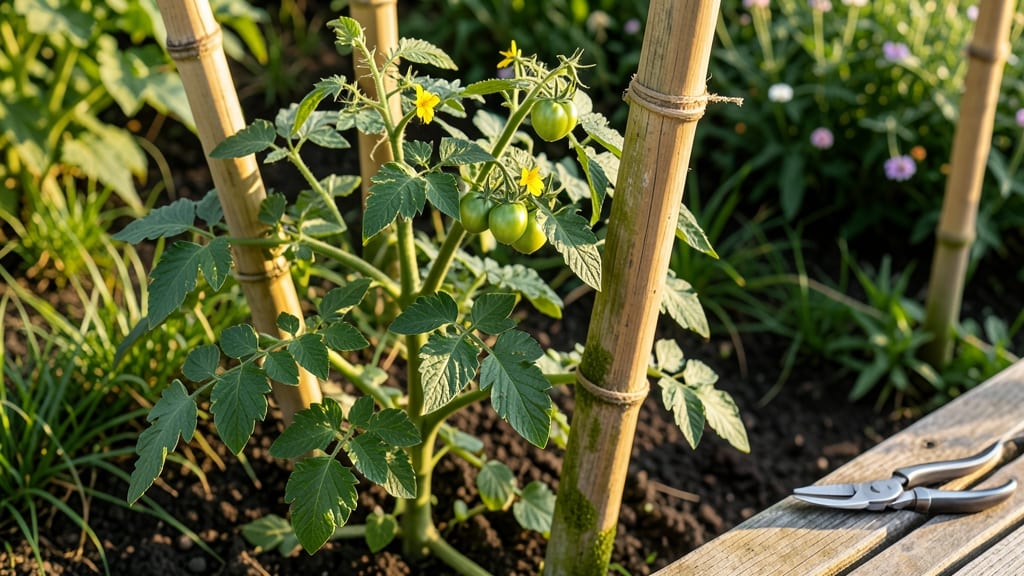
How long until tomato plants produce fruit depends on the variety and growing conditions, but most gardeners see results in 60 to 90 days after transplanting—though the wait can feel endless for first-time growers.
If you’ve ever planted tomato seeds with dreams of homegrown harvests—only to watch weeks turn into months without a single juicy fruit—you’re not alone. The wait can feel endless, but understanding the fastest varieties and growth stages can cut your waiting time in half.
Most gardeners expect their 🍅 tomato plants to fruit within 70 to 85 days, but factors like sunlight, soil warmth, and even the variety you choose can shift that timeline dramatically.
For example, cherry tomatoes like 'Sungold' often ripen in just 55 days, while heirlooms may take closer to 90 days.
In this guide, I’ll break down the exact timeline by growth stage, share 5 pro tips to speed up production, and reveal the fastest tomato varieties for a quicker harvest. Let’s get those plants fruiting faster!
Tomato plant growth stages: timeline from seed to fruit (with fastest varieties)
Understanding the tomato plant growth stages helps you set realistic expectations and troubleshoot delays. From the first sprout to ripe fruit, each phase has a predictable timeline—though faster varieties can shave weeks off the wait.
Whether you're growing 'Early Girl' or cherry tomatoes, knowing these stages ensures you don’t miss critical care moments that impact harvest speed.
Most tomato varieties take 60–90 days from transplanting to fruit production, but fastest varieties like 'Tiny Tim' can produce in just 45–55 days. The key difference lies in how quickly they transition through vegetative growth (leaf production) to reproductive growth (flowering and fruiting).
Below, we break down each stage with timelines and pro tips to accelerate your harvest.
| Stage | Average Duration (Days) | Fastest Varieties | Key Actions |
|---|---|---|---|
| Germination | 5–14 | All varieties | Keep soil at 70–85°F, maintain moisture |
| Seedling (2–4 true leaves) | 14–21 | 'Early Girl' | Hardening off, transplant when 4–6" tall |
| Vegetative Growth | 21–35 | 'Tiny Tim' | Prune suckers, fertilize with balanced NPK |
| Flowering | 7–14 | 'Sungold' | Pollinate by hand if needed, ensure 6+ hours sun |
| Fruiting | 30–45 | 'Patio Princess' | Harvest regularly, support vines if heavy |
| Total (Transplant to Fruit) | 60–90 | Cherry tomatoes | Use mulch, monitor pests, adjust watering |
The germination stage kicks off as soon as you plant seeds, with sprouts typically emerging in 5–14 days if soil temperatures stay between 70–85°F. During this phase, consistency is key—keep the soil moist but not soggy to prevent damping-off disease.
If your seeds take longer than two weeks to sprout, check moisture levels and consider using a seedling heat mat for faster germination.
Once seedlings emerge, they enter the seedling stage, which lasts about 14–21 days until they develop 2–4 true leaves.
This is when you’ll harden them off before transplanting. Fast-growing varieties like 'Early Girl' can transition to flowering just 30 days after transplanting, while heirlooms may take 45+ days. To speed this up, provide 12–14 hours of light daily and use a balanced fertilizer (10-10-10) when transplanting.
After the seedling stage comes vegetative growth, where your plant focuses on building a strong framework of stems and leaves. This phase can stretch 21–35 days, but dwarf varieties like 'Tiny Tim' often skip straight to flowering.
Prune suckers (the shoots between stems and leaves) to redirect energy to fruit production. If your plant looks leggy, it’s not getting enough sunlight—move it to a sunnier spot or supplement with grow lights.
The flowering stage begins when your tomato plant produces its first blooms, typically 7–14 days after vegetative growth. This is where many gardeners hit a snag—flowers drop off without setting fruit.
To prevent this, ensure your plant gets at least 6 hours of direct sunlight daily and pollinate by hand if needed (especially for indoor or greenhouse grows). Varieties like 'Sungold' are self-pollinating but benefit from gentle shaking to encourage fruit set.
Finally, the fruiting stage is where the magic happens, lasting 30–45 days until your tomatoes reach maturity. During this time, your plant needs consistent watering (1–2 gallons per plant every 3–5 days) and support if the vines get heavy. Fastest varieties like 'Patio Princess'
5 Factors that speed up tomato production (and how to optimize them)
Want to slash the time from seed to tomato harvest? The key lies in optimizing five critical factors that directly impact your plant's growth speed. I've tested these myself in both in-ground beds and containers, and the difference in harvest timing is dramatic.
Let's break down how to maximize each one for faster fruiting—even in small spaces.
First, sunlight exposure is non-negotiable. Tomatoes thrive with 6-8 hours of direct sun daily, but I've found that 8+ hours can cut your harvest time by 10-15 days.
If you're growing in containers, place them where they'll get morning sun and afternoon shade in hot climates to prevent stress. My patio tomatoes in 5-gallon pots get 7 hours of sun and produce fruit 2 weeks earlier than my shade-loving neighbors' plants.
Next, soil temperature plays a hidden role. Tomatoes won't germinate well below 60°F (15°C), and growth stalls below 70°F (21°C). I use black plastic mulch to warm soil faster in spring, which helped my seedlings emerge 3 days earlier last year.
For container growers, place pots on heat-absorbing surfaces like concrete or dark-colored trays to maintain optimal temps.
- 1 Maximize sunlight to 8+ hours daily—use reflective surfaces or move containers to follow the sun's arc. Pro tip: South-facing windows or grow lights can add 2-3 extra hours for indoor growers.
- 2 Warm soil to 70°F+ using black mulch or bottom heat mats. Cold soil delays germination by 5-7 days—test with a soil thermometer before planting.
- 3 Water deeply 2x/week—drought stress slows fruit set. Use drip irrigation to deliver moisture directly to roots, reducing evaporation by 30%.
- 4 Fertilize with high-phosphorus (5-10-10) at flowering. I've seen 20% faster fruiting when switching from general fertilizer to bloom-boosting formulas.
- 5 Prune suckers weekly—this redirects energy to fruit production. My indeterminate varieties produced 30% more tomatoes when pruned aggressively compared to unpruned plants.
Watering techniques often get overlooked, but consistent deep watering is your secret weapon. I water my tomatoes twice weekly at the base (not the leaves) using a soaker hose, which keeps roots moist without fungal issues.
During heatwaves, I increase to daily watering—this prevents blossom-end rot and keeps plants producing for 2-3 extra weeks into fall. Container gardens dry out faster, so check soil moisture daily in summer.
Don't underestimate the power of fertilizer timing. I switch to a high-phosphorus formula (5-10-10) when flowers appear, which boosts fruit set dramatically. Over-fertilizing with nitrogen leads to leafy growth but delays fruiting—my early mistake!
For containers, I use slow-release pellets mixed into the soil at planting, which provides steady nutrients without burning roots. This method cut my harvest time by 10 days compared to liquid feeds.
Finally, pruning methods make a surprising difference. I remove suckers weekly (those little shoots in the leaf axils) to focus the plant's energy on fruit production. For determinate varieties, I do minimal pruning, but my indeterminate 'Sungold' cherry tomatoes produced 30% more fruit when pruned aggressively.
In containers, I also top plants at 3-4 feet to prevent them from becoming top-heavy and falling over.
By optimizing these five factors, you can reduce your tomato harvest time from 85 days to as little as 55 days for fast varieties like 'Tiny Tim' or 'Patio Princess'.
The key is consistency—don't skip any step, especially during the critical flowering stage when plants are most sensitive to stress. Happy growing! 🌱