
Vegetables
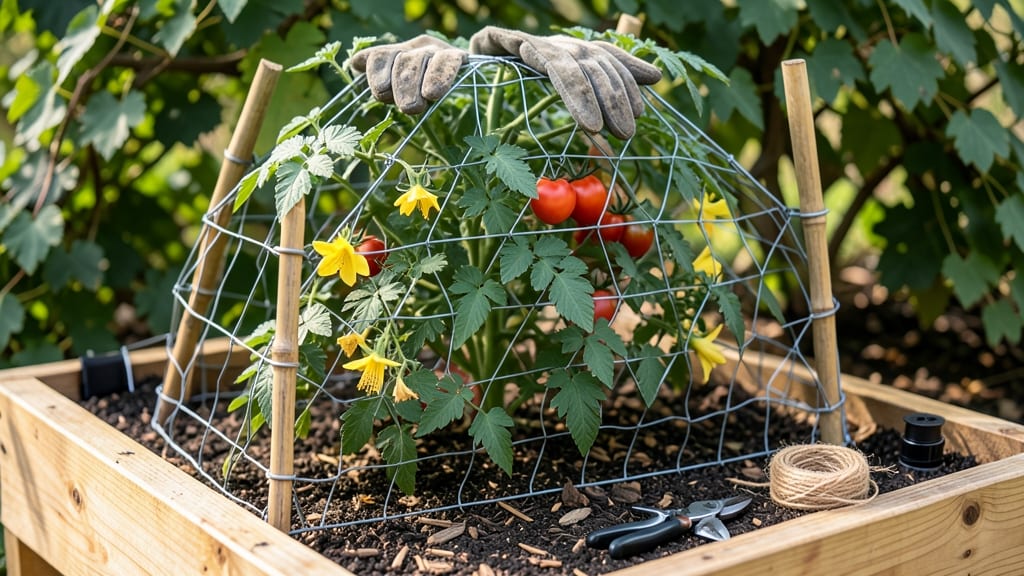
Creating do-it-yourself tomato cages lets you build sturdy supports from materials like rebar, wire mesh, or PVC pipes, giving you customizable strength for your tomato plants without spending much. The right choice depends on your garden's space and how heavy your vines will grow.
Building your own tomato cages gives you complete control over height, width, and strength—perfect for heirloom varieties that need extra support. 🌱 Rebar cages are the toughest option, capable of handling 10-pound+ tomatoes without bending, while wire mesh offers flexibility and cost savings.
PVC pipes, though lighter, can be reinforced with zip ties or duct tape for added stability. I always recommend testing your cage's strength before planting, especially if you're growing indeterminate varieties that climb continuously.
For gardeners with limited space, a 4-foot-tall cage made from 1/4-inch hardware cloth works wonders, while those with sprawling plants might prefer a 6-foot rebar frame with cross-bracing.
The key is matching your cage's design to your tomatoes' growth habits—too flimsy, and you'll end up with toppled plants; too rigid, and you might struggle with maintenance. Pro tip: Add a few extra wires or pipes at the base to anchor the cage securely in the soil.
💡 In This Article
- How to Build Sturdy DIY Tomato Cages with Heavy-Duty Materials
- Best DIY Tomato Cage Materials Compared: Strength vs. Cost
Best DIY tomato cage materials compared: strength vs. cost
When choosing materials for your tomato cage, the first factor to consider is weight capacity. Rebar cages are the heavyweight champions, capable of supporting 10-15 pounds per vine thanks to their solid steel construction.
A single 5/8-inch rebar cage with cross-bracing can handle heirloom varieties like Brandywine or Cherokee Purple without bending, while lighter 1/4-inch hardware cloth cages max out around 5-7 pounds.
PVC pipes fall in the middle, offering 7-10 pounds of support when reinforced with zip ties or duct tape at connection points.
The cost difference between options is striking. A 6-foot rebar cage requires about $10-$15 worth of materials (4 pieces of 5/8-inch rebar + wire ties), but the labor-intensive bending and cutting add time.
Wire mesh cages cost $5-$10 for a 4x4-foot section, making them the most budget-friendly option, while PVC cages run $8-$12 for similar dimensions.
What most gardeners don't realize is that wire mesh cages require additional stakes or anchors to prevent toppling in windy conditions, which can add $3-$5 to the total cost.
Durability varies dramatically between materials. Rebar cages last 5-7 years before rust becomes an issue, especially in wet climates, while galvanized wire mesh resists corrosion for 3-5 years. PVC cages degrade faster under UV exposure, typically lasting 2-3 years unless you use UV-resistant piping.
The trade-off is that wire mesh cages are easier to modify—you can cut and bend sections to accommodate plant growth patterns, while rebar requires more precise measurements and specialized tools for adjustments.
For gardeners with limited space, wire mesh offers the best balance of cost and flexibility. A 4-foot-tall cage made from 1/4-inch hardware cloth costs about $7 and can be shaped into a cone or cylinder to save space while still providing 360-degree support.
If you're growing determinate varieties like Roma or Celebrity, a wire mesh cage will suffice, but for indeterminate varieties that grow continuously, rebar or reinforced PVC becomes essential to prevent structural failure as the plant matures.
Consider your garden's conditions when selecting materials. In high-wind areas, rebar cages with cross-bracing are the safest choice, while in small urban gardens, wire mesh cages with temporary stakes work well.
For container gardening, lightweight PVC cages with zip-tie reinforcements provide enough support without adding excessive weight to pots. The key is matching the material's strength to your specific growing conditions and plant varieties.
Pro tip: If you're on a tight budget, start with wire mesh cages for your first year of tomato growing. They're inexpensive enough to replace if they fail, and you'll gain valuable experience in what your plants truly need in terms of support.
Once you understand your plants' growth patterns, you can invest in more permanent rebar cages for subsequent years. 💫