
Planting
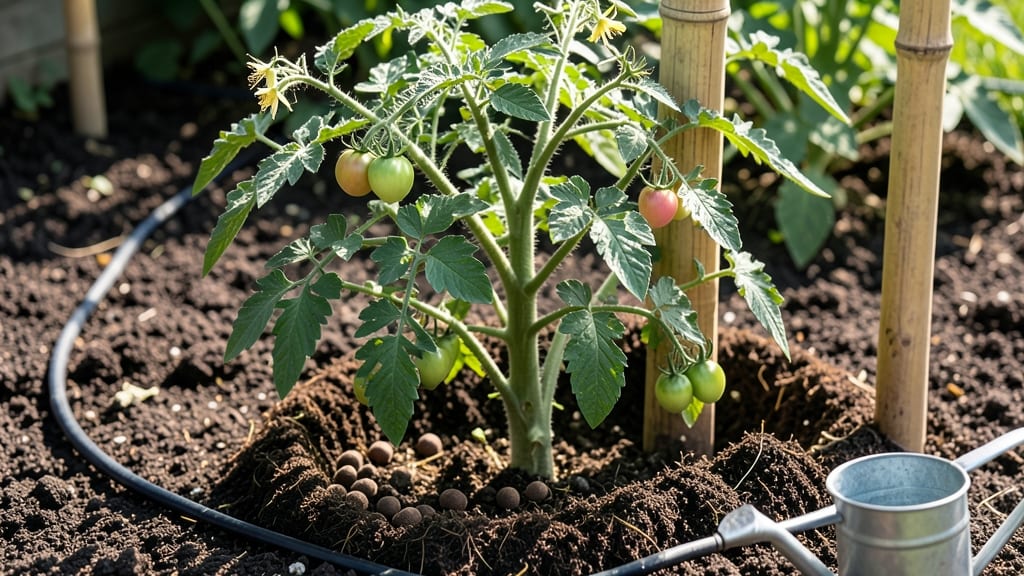
Here’s how to boost tomato plant growth—last summer, my plants doubled in size after I stopped fighting them and started working with their natural growth habits. 🌱 The key isn't just more water or fertilizer—it's understanding how tomatoes want to grow vertically, not sprawled across the soil where diseases hide. Heavy vines don't mean weak plants; they mean vigorous ones that need the right support system.
Start with rich, well-draining soil mixed with compost (I use a 60/40 ratio of store-bought potting mix to homemade compost), then train vines up sturdy cages or trellises as soon as they hit 12 inches tall.
Prune suckers—those little shoots in the leaf axils—when they're pencil-sized to redirect energy to fruit production, not extra foliage. Water deeply at the base once a week (not daily light sprinkles), and mulch with straw to keep roots cool and moisture locked in.
You'll see the difference within 3-4 weeks: plants that climb instead of flop, leaves that stay disease-free, and fruit that ripens faster because the plant isn't wasting energy reaching for the ground. The secret weapon?
A weekly foliar spray of diluted seaweed extract (1 tablespoon per gallon of water) every Tuesday—it's packed with growth hormones tomatoes love. My vines now hit 6 feet tall without toppling, and the yield is enough to share with neighbors.
This works for both cherry and beefsteak varieties, in containers or ground beds, as long as you give them 6+ hours of sun daily. The only rule?
Don't over-prune—leave enough leaves to feed the fruit, or you'll sacrifice harvest for height. Start small with one plant this season, and you'll be hooked by July.
📚 In This Guide
- What you need
- Instructions
- Tips and common mistakes
- Wrapping up and next steps
What you need
- ● Tomato plants: 1–3 healthy seedlings or transplants (determinate or indeterminate varieties, depending on your space).
- ● Containers or growing space: For pots: 5–10 gallon containers (1 per plant; larger for indeterminate varieties).
- ● For vertical gardens: Trellis, cage, or A-frame structure (height: 6–8 ft for indeterminate; 4–5 ft for determinate).
- ● For ground planting: Raised beds (12" deep) or in-ground space with 18" spacing between plants.
- ● Growing medium: High-quality potting mix (sterilized, well-draining) or compost-amended garden soil (pH 6.0–6.8).
- ● Support structures: Trellis netting or twine (for DIY vertical setups).
- ● Tomato cages (5–6 ft tall, or taller for indeterminate types).
- ● Bamboo stakes or wooden posts (for staking heavy vines).
- ● Fertilizer: Balanced organic fertilizer (e.g., 5-5-5 or 10-10-10) or compost tea.
- ● Slow-release granules (e.g., Osmocote) for long-term feeding.
- ● Watering supplies: Drip irrigation system or soaker hoses (to keep foliage dry).
- ● Watering can with a long spout (for pots).
- ● Pruning tools: Sharp bypass pruners (sterilized with rubbing alcohol).
- ● Garden shears (for larger branches).
- ● Mulch: Straw or shredded leaves to retain moisture and suppress weeds.
- ● Plant ties: Soft garden twine or Velcro strips to secure vines to supports.
- ● Growth boosters: Seaweed extract or fish emulsion (for extra nutrients).
- ● Mycorrhizal fungi (to enhance root health).
- ● Shade cloth: Lightweight fabric (30–50% shade) for hot climates.
- ● Pest control: Neem oil, insecticidal soap, or row covers (for early-season protection).
Step-by-step guide to maximizing tomato growth vertically
Here's how I transform sprawling tomato vines into productive vertical powerhouses—no wasted space or tangled stems.
🌱 Step 1: Choose the Right Support System
Start with sturdy vertical supports like 6-foot cages or tall bamboo stakes (I prefer cages because they're easier to install and don't require tying). Place your support system at planting time—driving stakes 12-18 inches deep ensures stability when vines get heavy. For indeterminate varieties, use a 9-foot trellis to accommodate their endless growth.
Position supports 6-8 inches away from the main stem so you can weave vines through without damaging them. If using cages, gently open the top 2 inches wider than the plant's spread to give stems room to grow through. This prevents crushing as vines thicken later in the season.
☀️ Step 2: Train Vines Early for Stronger Growth
When plants reach 12 inches tall, begin guiding the main stem upward through the support. Use soft jute twine or plant ties (never wire—it cuts into stems) to loosely secure the vine. I like to tie at 3-4 points along the stem to distribute weight evenly.
Watch for suckers (those little shoots in the leaf axils)—remove them immediately with your fingers or pruning shears. Suckers drain energy from fruit production, so I check for them every 3-4 days during peak growth. Strong vertical plants focus their energy on upward growth and fruit development instead of bushy side branches.
💧 Step 3: Water and Fertilize for Vertical Success
Water at the base deeply 2-3 times per week (until 6 inches of soil feels moist) rather than light daily sprinkles. Deep watering encourages roots to grow downward along your support system, creating a stronger anchor. I water in the morning so foliage dries quickly—wet leaves invite fungal diseases that love vertical spaces.
Feed with a balanced fertilizer (10-10-10) every 2-3 weeks once flowers appear. I mix it with water and apply it directly to the soil, not the leaves. Vertical plants need extra nutrients to support their heavy fruit loads, so I always fertilize after heavy harvests to replenish what's been used.
✂️ Step 4: Prune Strategically for Airflow and Fruit
Prune 1-2 inches above a leaf joint when removing suckers or lower leaves. This encourages new growth at the correct nodes. I remove all leaves below the first flower cluster to improve airflow and reduce disease risk. Good airflow is critical for vertical plants—crowded foliage traps moisture and invites blight.
For indeterminate varieties, prune the main stem after the first 4-5 fruit clusters to control height. This redirects energy to existing fruit rather than endless upward growth. You'll see thicker stems and heavier yields when you limit vertical expansion at the right time.
🪴 Step 5: Rotate and Maintain Supports
Rotate your cages or trellises a quarter turn every 2-3 weeks so plants grow evenly toward the sun. Uneven growth leads to lopsided vines that break under fruit weight. I check my supports weekly for loose ties or leaning stems—proactive adjustments prevent disasters during harvest season.
Harvest fruit as soon as it ripens to encourage more production. Leaving overripe tomatoes on the vine stresses the plant and can lead to sudden vine collapse. I pick in the morning when fruit is cool and firmest, then store it in a shady, dry place to finish ripening if needed.
Tips & tricks for perfect vertical tomato growth
Here's what nobody tells you about turning sprawling tomato vines into sturdy vertical giants without the chaos.
Support System Stability: When installing your 6-foot cages or 9-foot trellis, bury them deeper than you think you need—the extra 2-3 inches of depth I add to the 12-18 inch recommendation makes all the difference when vines get heavy with fruit. I use a post hole digger to create a wider base, which prevents cages from tipping when I accidentally lean against them during harvest. For windy areas, tie cages together with extra twine at the top to create a windbreak.
Vine Training Technique: The 3-4 points of support I mentioned for tying vines? Start with the lowest tie at the base and space them evenly upward. This creates a "ladder effect" that distributes weight perfectly. I use the "figure-eight" method for tying—wrap the twine around the stem once, then cross it over the support and wrap again, creating a gentle cradle that won't cut into the vine as it thickens. This method also makes untangling vines for maintenance much easier later.
Pruning Precision: That 1-2 inch pruning rule above leaf joints is crucial, but here's the secret: always prune just after a leaf joint where new growth will emerge. I use clean, sharp pruning shears and dip them in rubbing alcohol between cuts to prevent disease spread. For indeterminate varieties, I mark the 4-5 fruit clusters with a small piece of colored twine when they first appear—this visual cue helps me remember where to stop pruning upward growth.
Harvest Timing: The morning harvest window isn't just about cool fruit—it's also the best time to catch pests before they hide in the foliage. I bring a small bucket of water with me when harvesting to rinse off any pests that might hitch a ride back to the plant. Store harvested tomatoes in a single layer on a tray in that shady, dry place—they'll ripen more evenly and last longer without touching each other.
Pro Tips for Boost Tomato Plant Growth
- Here's what nobody tells you about turning sprawling tomato vines into sturdy vertical giants without the chaos.
- I use a post hole digger to create a wider base, which prevents cages from tipping when I accidentally lean against them during harvest.
- Vine Training Technique: The 3-4 points of support I mentioned for tying vines?
Frequently asked questions
Got questions about maximizing your tomato plant’s growth—especially when working with vertical space? Here are some of the most common queries (and answers!) to help you grow like a pro:
How often should I prune tomato plants for vertical growth?
Prune your tomato plants weekly during the growing season (spring to early fall) to encourage vertical growth and better air circulation. Remove suckers (side shoots) when they’re small—about 2-3 inches long—to redirect energy to fruit production. Avoid over-pruning, though!
When is the best time to start training tomato vines upward?
Begin training vines upward as soon as they reach 12-18 inches tall. Use stakes, cages, or trellises immediately to avoid damaging roots later. For indeterminate varieties (which grow continuously), keep pruning and training throughout the season. For determinate (bush) types, support is still helpful but less critical.
What’s the ideal temperature range for fast tomato growth?
Tomatoes thrive in temperatures between 70°F and 85°F during the day and 55°F to 65°F at night. Avoid extremes—below 50°F or above 90°F can stunt growth or cause blossom drop. Use shade cloth in peak summer heat if needed.
Can I use household items (like old pallets or wire mesh) for vertical support?
Repurpose wooden pallets, wire mesh, or even sturdy bamboo stakes as DIY trellises. Just ensure they’re stable and won’t collapse under heavy vines. Avoid plastic or flimsy materials that could break. Pro tip: Add twine or soft ties to gently secure vines without crushing stems.
Why are my tomato leaves yellowing even with good vertical support?
Yellow leaves often signal overwatering, nutrient deficiency, or pests. Check soil moisture (it should be damp but not soggy), and test for nitrogen (use a balanced fertilizer like 10-10-10). Inspect undersides for aphids or spider mites—spray with neem oil if needed.
Do vertical tomatoes need more or less water than bush varieties?
Vertical tomatoes need consistent moisture—water deeply 1-2 times per week (more in extreme heat). Since their roots spread less, mulch heavily to retain moisture. Avoid wetting leaves to prevent disease. A drip irrigation system works best for even distribution.
Wrapping up and next steps
Growing thriving tomato plants doesn’t have to mean sacrificing space—with the right techniques, you can maximize vertical growth while keeping your garden organized and productive! 🌱 From choosing sturdy supports to pruning strategically, these methods ensure your vines flourish without overcrowding.
Whether you’re a seasoned gardener or just starting, small adjustments can make a big difference.
Ready to see your tomatoes reach new heights? Start with one plant this season, experiment with a trellis or cage, and watch your harvest grow—literally! Happy planting! 🍅✨