
Pests
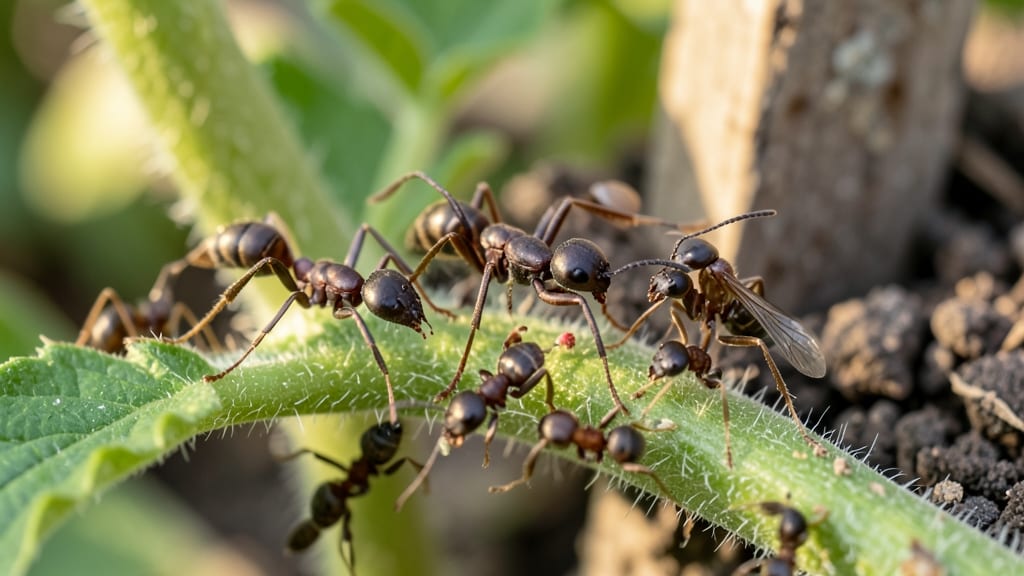
Ants on tomato plants aren't just annoying—they're a gateway pest that can sabotage your harvest. 🌱 I've watched these tiny invaders march straight through my prized tomato beds, and the real damage isn't from them—it's from what they bring along.
Those sugar trails? A direct invitation to aphids, whiteflies, and other sap-suckers that drain your plants' energy.
The good news? Ants don't directly harm tomatoes, but their presence signals an ecosystem imbalance. They farm aphids for honeydew, creating a vicious cycle where your plants get weakened while pests multiply.
The solution starts with understanding their trails and disrupting them before they become a full-blown infestation. It's all about breaking their system—without harming your plants or the environment.
Diatomaceous earth becomes your secret weapon here. Sprinkled lightly around the base of plants, it creates a barrier these tiny marchers can't cross. Within 24-48 hours, their trails disappear, and so do the pests they protect.
The best part? It's a one-time application that lasts through rain and works for several weeks—no chemicals, no fuss.
We'll also cover preventive measures like maintaining clean garden beds, using mulch strategically, and planting companion plants that naturally repel ants. These steps keep your tomato plants thriving while keeping the ant army at bay—for good. Let's get those trails disrupted!
The Hidden Reasons Ants Invade
Ants marching across your tomato plants aren’t just a nuisance—they’re often following a trail of trouble. Understanding why these tiny invaders show up in your garden is the first step to stopping them in their tracks. Let’s break down the science behind their behavior and uncover the real triggers.
Ants are drawn to tomato plants like bees to honey—because they’re literally farming for sugar. Tomato plants produce sweet nectar in their leaf joints and along stems, which ants harvest as a food source.
Some varieties, like Solanum lycopersicum, secrete extra nectar when stressed (e.g., from drought or pests), making them even more appealing. Additionally, aphids, whiteflies, and other sap-sucking insects leave behind sticky "honeydew," a high-sugar byproduct that ants ferry back to their colonies as a food source.
This mutualistic relationship is why you’ll often see ants protecting these pests—they’re essentially their gardeners.
Actionable insight: If you spot ants trailing along your tomato plants, check the undersides of leaves for tiny clusters of aphids or whiteflies. These pests are the real reason ants are visiting—they’re not just random visitors.
Ants need water, shade, and stable temperatures to thrive, and tomato plants provide all three. The dense foliage of a healthy tomato plant acts as a natural canopy, shielding ants from predators and harsh sunlight. Meanwhile, the soil around the base retains moisture—especially after watering—which ants use to hydrate.
Some species, like Lasius niger (black garden ants), even nest underground near tomato roots, using the plant as a highway to access food sources above.
Key trigger: Overwatering or poorly draining soil can concentrate ants near your plants. If your garden stays damp (e.g., from morning dew or irrigation), ants will see it as an all-you-can-eat buffet.
Here’s the real kicker: Ants don’t just like tomato plants—they farm them. By tending to sap-sucking pests (like aphids), ants create a food pipeline that sustains their entire colony. In exchange, the pests provide a constant sugar supply without the ants having to hunt.
This symbiotic relationship is why you’ll often see ants aggressively defending clusters of aphids on your tomatoes—they’re protecting their livestock.
Science deep dive: Studies show that ants can increase aphid populations by up to 50% by moving them to new plants and shielding them from predators. This mutualism is why simply spraying ants won’t solve the problem—you must disrupt the aphids first.
Ant activity spikes during warm, humid seasons (spring through early fall), when tomato plants are in peak growth. However, a few environmental factors can accelerate their arrival:
- Drought stress: When tomato plants wilts or struggles, they produce more nectar to attract pollinators—and ants.
- New plantings: Freshly transplanted tomatoes emit volatile organic compounds (VOCs) that ants detect as a signal of fresh resources.
- Nearby ant trails: If other plants (like citrus, fruit trees, or weeds) are already infested, ants will expand their territory to include your tomatoes.
- Organic mulch: Wood chips or grass clippings can attract moisture-loving ants that then migrate upward to feed on your plants.
Pro tip: If you’ve recently pruned or fertilized your tomatoes, ants may be drawn to the new growth or increased sap flow. Keep an eye out for sudden ant activity after garden maintenance.
Now that you know why ants are crashing your tomato party, the next step is how to evict them—without harming your plants. Stay tuned for natural, diatomaceous earth-based solutions that break their trails for good.
Effective Ways to Remove Ants
Ants on your tomato plants can feel like an unwelcome invasion, but the good news is that you can tackle this problem effectively with the right strategies.
Below, we’ll break down solutions based on the most common causes of ant infestations—so you can address the root of the issue and protect your garden.
Ants follow scent trails to reach sweet or sticky substances like aphids, nectar, or rotting fruit. To break their connection to your tomato plants:
- 🍳 Use Diatomaceous Earth (DE) Sprinkle food-grade diatomaceous earth around the base of your plants, the garden bed edges, and along ant trails. DE is a natural, non-toxic powder that dehydrates ants by damaging their exoskeletons.
Reapply after rain or watering. - Pro Tip: 💡 Lightly dust DE on the soil surface—don’t overdo it, as it can harm beneficial soil microbes if used excessively.
- 👨🍳 Create a Natural Barrier with Cinnamon or Chalk Ants dislike strong scents like cinnamon or chalk. Draw a line around your garden beds using:
- Ground cinnamon (reapply every few days)
- Chalk or crushed eggshells (acts as a physical and scent deterrent)
Ants are drawn to tomato plants because they farm aphids (for honeydew) or feast on overripe fruit. Cut off their supply:
- 🔪 Prune Infested Leaves & Remove Fruit Inspect your tomato plants for:
- Aphids (tiny green/black bugs on undersides of leaves)
- Overripe or damaged tomatoes (ants love fermenting fruit) Remove affected leaves and fallen fruit immediately.
- 🌡️ Trap & Remove Aphids
- Spray with soapy water (1 tsp mild soap + 1 quart water) to kill aphids.
- Introduce ladybugs (natural aphid predators) or neem oil spray (1 tbsp neem oil + 1 quart water + a drop of dish soap).
Once you’ve dealt with the current infestation, take steps to prevent future visits:
- 🌱 Maintain a Clean Garden
- Pick up fallen fruit and debris regularly.
- Avoid overwatering—ants seek out moist soil.
- 🌿 Plant Ant-Repelling Herbs Surround your tomato plants with:
- Mint, basil, or thyme (ants dislike their strong scents).
- Marigolds or garlic chives (natural ant deterrents).
- ✨ Use Ant Baits (Strategically!)
- Place borax or sugar-based ant baits away from your garden (ants will carry poison back to the nest).
- Warning: Avoid baits near pets or children.
If ants are swarming your plants or you see visible nests in the soil, act immediately:
- Locate the nest (follow the trail to the source).
- Pour boiling water directly into the nest (for ground nests).
- Apply DE or insecticidal soap to remaining trails.
Final Thought: 🌱 Ants on tomato plants are usually a sign of a bigger issue (like aphids or food waste), so addressing the root cause is key. With these methods, you’ll not only remove the ants but also create a healthier, pest-free garden for your tomatoes to thrive!
Frequently asked questions
Do ants actually harm tomato plants?
Ants themselves don't directly damage tomato plants, but they create a pest ecosystem that weakens them. They protect sap-sucking insects like aphids and whiteflies, which drain plant nutrients and spread diseases. The real danger comes from this indirect relationship—ants are essentially farmers that maintain harmful pest populations.
How quickly does diatomaceous earth work on ant trails?
You'll typically see results within 24-48 hours of application. The powder dehydrates ants by damaging their exoskeletons, and they avoid crossing treated areas. For best results, apply a thin layer around plant bases and along visible trails—reapply after rain or watering to maintain effectiveness.
Can I use vinegar to repel ants from tomato plants?
While vinegar can deter ants temporarily, it's not the most effective long-term solution. The strong smell may repel them for a few hours, but ants quickly adapt. For better results, combine vinegar with other methods like diatomaceous earth or cinnamon barriers, which create physical and scent-based deterrents that last longer.
What should I do if I find an ant nest near my tomato plants?
Locate the nest by following ant trails to their source, then eliminate it using one of these methods: Pour boiling water directly into ground nests, apply diatomaceous earth around the nest entrance, or use targeted ant baits placed away from your garden (ants will carry poison back to the colony). Always wear gloves when handling these solutions.
Will companion planting actually keep ants away?
Yes, strategic companion planting can significantly reduce ant activity. Plant mint, basil, or thyme around your tomatoes—their strong scents naturally repel ants. Other effective companions include marigolds and garlic chives, which disrupt ant trails through their aromatic properties. This creates a protective barrier while enhancing your garden's biodiversity.