
Planting
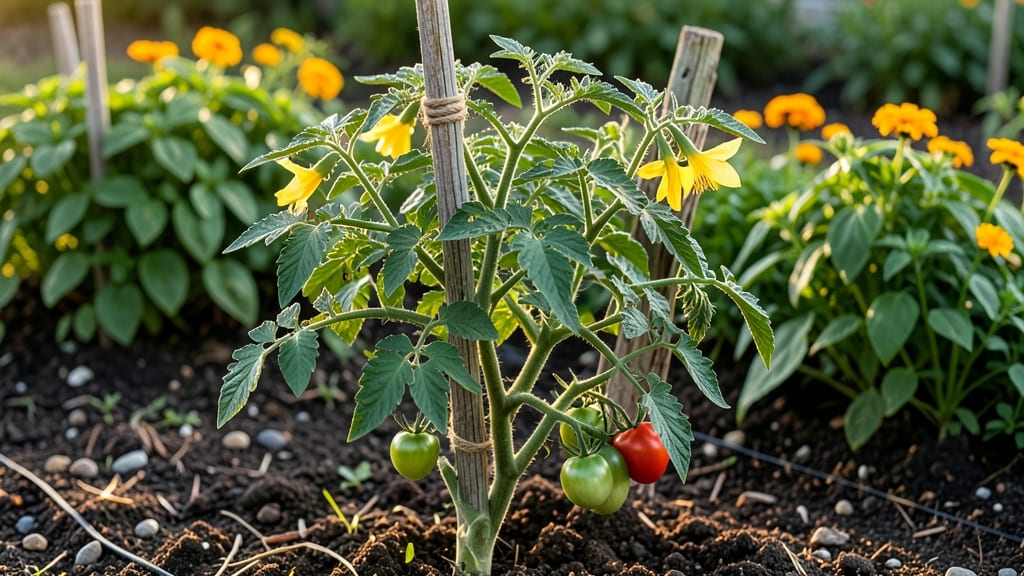
Tomato plant leaves look like they're dark green, oval-shaped with jagged edges, and alternate along the stem. Healthy foliage stays glossy and sturdy, while sick leaves develop yellow patches, spots, or curled edges based on the problem.
Recognizing healthy tomato leaves starts with their deep green hue and smooth, waxy surface, which helps them absorb sunlight efficiently. 🌱 The serrated edges and prominent veins are key identifiers—these features maximize photosynthesis while keeping the plant structurally strong.
When leaves start showing signs like brown spots or wilting, it's often a red flag that something's off, whether it's pests or disease.
What's fascinating is how quickly tomato leaves can change when stressed. A single night of cold temperatures might leave crispy edges, while overwatering can cause yellowing between veins. I always check the undersides of leaves first—this is where early signs of powdery mildew or spider mites often appear.
The good news? Catching these visual cues early gives you time to treat the problem before it spreads.
💡 In This Article
- Identifying Healthy Tomato Plant Leaf Characteristics
- Common Tomato Leaf Diseases and Their Visual Signs
Identifying healthy tomato plant leaf characteristics
Healthy tomato leaves showcase a deep, vibrant green color thanks to high chlorophyll content, which reaches concentrations of about 0.5-1.0% of leaf dry weight during peak photosynthesis. The leaves typically measure 2-6 inches long and 1-3 inches wide, with a slightly elongated oval shape that tapers toward the tip.
This shape maximizes surface area for sunlight absorption while maintaining structural integrity against wind and rain.
The serrated edges aren't just decorative—they create micro-environments that trap moisture and small insects, which can become food for beneficial predators like ladybugs.
The prominent central vein and secondary veins form a network that transports water and nutrients throughout the leaf, visible as a light green or yellowish pattern when held up to light.
This vein structure is crucial for the plant's vascular system, allowing water to travel from roots to leaves at speeds up to 10 meters per hour.
One of the most reliable indicators of health is the leaf's texture—healthy tomato leaves feel firm yet slightly flexible, almost like a well-oiled machine part. The upper surface has a glossy, waxy coating that reduces water loss through evaporation, while the undersides are slightly paler.
This waxy layer also helps repel dust and pests, creating a natural barrier. When you run your thumb along a healthy leaf, you'll feel a slightly rough texture from tiny hair-like structures called trichomes that deter insects.
The growth pattern is equally telling—tomato leaves grow alternately along the stem, meaning each leaf emerges at a different node rather than in opposite pairs. This arrangement allows each leaf to receive maximum sunlight exposure without shading its neighbors.
Young leaves often appear slightly curled as they unfurl, but should flatten out within 3-5 days as they mature. The spacing between leaves typically measures 1-2 inches apart along the stem, creating an optimal structure for air circulation.
Color variations can indicate specific growing conditions. Leaves exposed to full sunlight develop a richer green hue due to increased chlorophyll production, while those in partial shade may appear slightly lighter. However, any deviation from this deep green—like yellowing or purple tinges—can signal nutrient deficiencies or stress.
For example, nitrogen deficiency causes leaves to turn pale yellow, while phosphorus deficiency may produce dark green or purplish hues, particularly along the veins.
Temperature also plays a crucial role in leaf appearance. In ideal growing conditions (70-85°F), leaves maintain their vibrant color and firmness. But when temperatures drop below 50°F, you'll often see crispy edges or stunted growth as the plant conserves energy.
Conversely, heat stress above 90°F can cause leaves to wilt or develop a bleached appearance from sun scorch. These visual cues help gardeners adjust care routines before problems become severe.