
Companion Plants
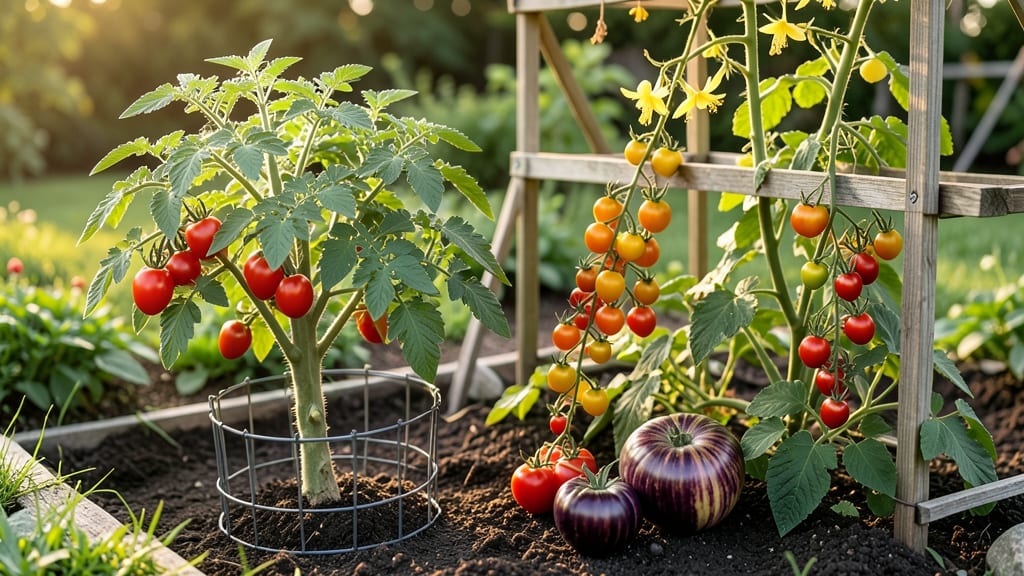
Types of tomato plants with pictures reveal two primary categories: determinate (bush) varieties that grow compactly and produce fruit in one massive harvest, and sprawling indeterminate (vining) types that keep yielding throughout the season. These growth habits create distinct gardening approaches and seasonal production patterns.
Understanding these tomato plant types helps you choose the right variety for your garden space and harvest goals. Determinate varieties like Roma and Celebrity grow to about 3-4 feet tall and produce all their fruit at once, making them ideal for canning or selling in bulk.
In contrast, indeterminate types such as Beefsteak or Sungold cherry tomatoes can grow 6-12 feet tall and continue flowering and fruiting until frost, perfect for continuous snacking or market sales. 🌱
Visual identification comes down to two key features: vine structure and fruit clusters. Determinate plants have a bushy shape with a main stem that stops growing after flowering, while indeterminate varieties keep growing upward and require staking or trellising.
Fruit clusters also differ—determinate types bear fruit in tight bunches at the ends of branches, while indeterminate plants produce single fruits along the vine. These differences directly impact how you'll need to support and prune your plants for maximum productivity.
💡 In This Article
- Determinate vs Indeterminate Tomato Growth Patterns Explained
- Best Tomato Varieties by Growth Type with Visual Identification Tips
Determinate vs indeterminate tomato growth patterns explained
Determinate tomato varieties grow in a compact, bush-like shape because they carry a genetic trait called "self-pruning." This means their main stem stops growing after reaching a certain height (typically 3-5 feet), and the plant focuses all its energy on producing fruit in one massive harvest.
The growth hormone ethylene triggers this behavior, causing the plant to shift from vegetative growth to reproductive mode. This process creates a dense canopy that maximizes sunlight exposure for the fruit clusters, which form at the terminal ends of branches.
Indeterminate tomatoes, on the other hand, lack this self-pruning gene and continue growing vertically throughout the season, sometimes reaching 6-12 feet or more. Their growth habit relies on a different hormonal balance where gibberellins (growth-promoting hormones) dominate, allowing them to keep producing new leaves and flowers.
This continuous growth means they produce fruit all season long, but each individual fruit develops more slowly compared to determinate varieties. The trade-off is that indeterminate plants require more support structures like cages or trellises to prevent sprawling and disease.
This growth difference directly impacts photosynthesis efficiency. Determinate plants have a shorter, more concentrated growing period, which means they must convert sunlight to energy quickly for a single harvest.
In contrast, indeterminate varieties have a longer growing season where they can gradually build energy reserves, often resulting in larger individual fruits like beefsteaks.
However, determinate plants typically ripen all their fruit within 2-3 weeks, creating a labor-intensive harvest window, while indeterminate plants provide a steady supply over 60-90 days or until frost.
The seasonal impact on yield is dramatic. Determinate varieties excel in shorter growing seasons where frost arrives early, as they produce all their fruit before the first cold snap. Their compact size also makes them ideal for container gardening or small spaces.
Indeterminate varieties shine in warm climates with extended growing seasons, where their continuous production can yield 2-3 times more tomatoes over the same period.
For example, a Sungold cherry tomato plant (indeterminate) might produce 500-1,000 fruits in a season, while a Roma plant (determinate) yields 20-30 pounds in a single harvest.
Here's what this means for your garden planning: Choose determinate varieties if you want a concentrated harvest for canning, selling, or preserving, or if you have limited space. Opt for indeterminate types if you prefer continuous fresh tomatoes throughout the summer or live in a warm climate.
The key is matching the plant's natural growth pattern to your specific needs and growing conditions. 🌱
One fascinating detail is how these growth patterns affect disease resistance. Determinate plants often have thicker stems and leaves, which can provide better protection against soil-borne diseases like blight. Indeterminate varieties, with their sprawling habit, are more susceptible to fungal diseases unless properly staked for airflow.
This structural difference explains why many heirloom varieties (often indeterminate) require more careful cultivation to achieve their full potential.