
Vegetables
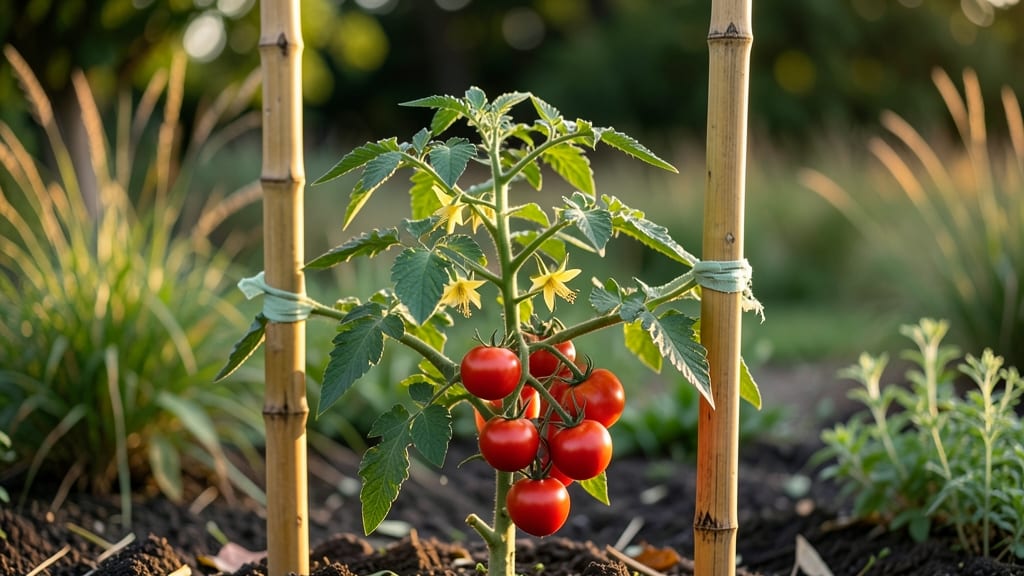
My tomato plants sagged under the weight of 6-pound tomatoes last summer—until I switched to heavy-duty stakes. 🌱 The difference was night and day: no snapped stems, no fruit rot on the ground, and vines that grew taller instead of sprawling.
Stakes aren’t just about looks; they keep your harvest intact and your plants healthy.
You’ll need stakes made of wood, bamboo, or metal—whatever holds up in wind and rain. For indeterminate varieties (like Sungold cherries), go for 6-8 feet tall; determinate types (like Roma) only need 3-4 feet.
Install them early, driving stakes 6 inches deep so they don’t wobble when laden with fruit. Spacing matters too: 18–24 inches apart keeps vines from crowding.
Tying techniques are where most people trip up. Soft ties (like old T-shirts or garden twine) work best—they stretch as vines grow without cutting into the stem. Avoid wire or tight knots, which can girdle the plant.
With the right setup, your vines will climb straight up, maximizing sunlight and airflow to prevent disease. The payoff? Bigger, riper tomatoes with fewer problems.
Still unsure? Try cages or trellises instead—they’re foolproof but take up more space. Or mix methods: use stakes for main support and clips for side branches.
Either way, you’ll end the season with plants that stand tall and a harvest that puts store-bought to shame. Let’s get those stakes in the ground!
📚 In This Guide
- What you need
- Instructions
- Tips and common mistakes
- Wrapping up and next steps
What you need
- ● Tomato vine stakes: 10–20 stakes per plant (depending on plant size and fruit weight)
- ● Recommended: 5–6 ft tall, 1–2 inches in diameter (bamboo, fiberglass, or treated wood work best)
- ● Garden twine or plant ties: 10–15 ft per plant (biodegradable or soft plastic to avoid vine damage)
- ● Gloves: A pair (to protect your hands from thorns and rough stakes)
- ● Pruning shears or scissors: For trimming excess foliage or adjusting stakes
- ● Measuring tape or ruler: To ensure stakes are spaced evenly
- ● Stake anchors or clips: To secure stakes to the ground (especially in windy areas)
- ● Mulch: Straw or shredded leaves to retain moisture and reduce weeds
- ● Plant cages or trellises: For smaller gardens or indeterminate varieties
- ● Watering can or hose: With a gentle spray nozzle for post-setup hydration
How to install tomato vine stakes for strong, sag-free plants
Here's the simple method I use to keep tomatoes upright and productive all season.
🪴 Step 1: Choose the Right Stakes for Your Variety
Select stakes that are at least 6 feet tall for most varieties, with 1-inch diameter for stability. Bamboo or fiberglass stakes work well—they're lightweight yet sturdy. For indeterminate tomatoes (the ones that grow continuously), go for 8-foot stakes since they can reach 10 feet tall.
I like to pre-drive stakes into the soil before planting. This prevents disturbing roots later when the plants get heavy. Place the stake 2-3 inches away from the main stem so you don't damage the plant when tying. For extra support, use two stakes on either side of the plant and tie them together with twine.
⏰ Step 2: Install Stakes at Planting Time
Push the stake into the soil 6-8 inches deep—deep enough it won't wobble when you tug it. The top of the stake should extend 1-2 feet above the plant's current height so it can grow into it. If your soil is rocky, dig a small hole to accommodate the stake without bending it.
Here's the thing—I always add a loop of twine or soft plant tie to the top of the stake before planting. This way, I can easily attach the tomato stem as soon as it reaches the loop. Don't tie it too tight; you want the plant to have room to grow without constriction.
🌿 Step 3: Tie Up Vines as They Grow
Start tying the main stem to the stake when it reaches 12-18 inches tall. Use soft plant ties or strips of old T-shirt fabric—these won't cut into the stem as the plant thickens. I like to make a loose figure-eight knot around both the stake and the stem, then leave a little slack so the plant can grow without binding.
You'll need to add new ties every 12-18 inches of growth. Watch for the plant to outgrow its current tie—when you see the stem bending away from the stake, it's time to add another. This keeps the plant upright and prevents fruit from sagging and rotting on the ground.
☀️ Step 4: Adjust and Reinforce Through the Season
Check your stakes after heavy rains or wind. If the stake leans or the soil erodes around it, push it back in firmly. For indeterminate varieties, you might need to add a second stake halfway up the plant as it grows taller—these vines get top-heavy with fruit.
Don't let the plant spiral around the stake like a corkscrew. Gently guide the stem upward as you tie it, keeping it straight. This ensures even light exposure and prevents weak, leggy growth. If a vine breaks or sags between ties, add an extra support loop immediately to prevent further damage.
✂️ Step 5: Prune and Support for Heavy Fruit Loads
As your tomatoes produce fruit, you'll need to adjust your support. Remove any suckers (the small shoots that grow in the leaf axils) that compete with the main stem for energy. This directs more nutrients to the fruit and keeps the plant manageable.
When clusters of tomatoes form, tie them gently to the stake with soft twine to prevent them from dragging on the ground. This keeps fruit clean and reduces the risk of disease. I also like to prune lower leaves that touch the soil—this improves airflow and reduces humidity around the base of the plant.
Tips & tricks for strong, sag-free tomato plants
These simple tricks help your tomato plants stay upright and productive all season long—no more flopping or fruit rot.
Stake Placement Matters: When pre-driving stakes in Step 1, place them 2-3 inches away from the main stem to prevent root damage during tying. For extra stability, especially with indeterminate varieties, use two stakes on opposite sides of the plant. Tie them together with twine at the top to create a sturdy "A-frame" that won't wobble when the plant gets heavy. This setup distributes weight evenly and prevents leaning.
The Tie-Up Technique: In Step 3, when tying the main stem, use soft materials like old T-shirt strips or plant ties instead of wire or plastic strips that can cut into the stem as it thickens. Make a loose figure-eight knot around both the stake and stem, leaving room for growth—you should be able to fit a finger between the tie and the stem. Tightening now will restrict growth and cause damage later. I always check ties weekly to ensure they're still loose enough.
Seasonal Reinforcement: After heavy rains or wind, check your stakes in Step 4—this is especially critical for indeterminate varieties that grow continuously. If a stake leans, push it back in firmly and add a temporary support loop made from twine or a garden stake tied to the existing one. For top-heavy plants, consider adding a second stake halfway up the plant to prevent mid-stem bending. This simple adjustment can save your harvest from breaking under fruit weight.
Pro Tips for Tomato Vine Stakes
- These simple tricks help your tomato plants stay upright and productive all season long—no more flopping or fruit rot.
- Stake Placement Matters: When pre-driving stakes in Step 1, place them 2-3 inches away from the main stem to prevent root damage during tying.
- The Tie-Up Technique: In Step 3, when tying the main stem, use soft materials like old T-shirt strips or plant ties instead of wire or plastic strips that can cut into the stem as it thickens.
Frequently asked questions
Got questions about keeping your tomato vines strong and your harvest upright? Here are some of the most common concerns—and their answers!
What’s the best time to install tomato vine stakes?
Plant stakes when transplanting seedlings (about 2–3 weeks after sowing indoors) or as soon as seedlings are 6–8 inches tall outdoors. Early support prevents wind damage and encourages vertical growth. If using them later, gently push stakes into the soil to avoid root disturbance.
Can I reuse tomato stakes from last year?
Yes, but sterilize them first! Soak stakes in a 10% bleach solution (1 part bleach to 9 parts water) for 10 minutes, then rinse. This kills bacteria/fungi that could linger from previous seasons. Wooden stakes may degrade over time, so check for cracks or splinters before reuse.
What if my tomato plants are already flopping—can stakes still help?
Act fast—gently tie sagging vines to stakes using soft cloth or plant ties (avoid wire, which can cut stems). For severely bent stems, prop them up with a second stake or a makeshift A-frame. Prune lower leaves to improve airflow and reduce weight strain on the main stem.
How tall should tomato stakes be?
Stakes should be at least 6–8 feet tall for indeterminate varieties (like ‘Sungold’ or ‘Brandywine’) and 4–5 feet for determinate types (e.g., ‘Roma’). Bury 1/3 of the stake underground for stability. For extra support, use two stakes per plant in a teepee or cage-like structure.
Why are my staked tomatoes still sagging despite support?
Check for these issues:
- Overwatering: Heavy, waterlogged soil makes vines top-heavy. Water deeply but less frequently.
- Under-pruning: Too many leaves = more weight. Remove suckers and lower leaves to lighten the load.
- Pests/disease: Weak stems from aphids or blight? Treat with neem oil or fungicide and reinforce stakes.
- Poor stake placement: If stakes lean or aren’t buried deep, they’ll fail. Reposition for vertical alignment.
What’s a good alternative to traditional stakes?
Try these space-saving options:
- Cages: Pre-made wire or plastic cages (great for determinate tomatoes).
- Trellis: String between posts or use a floppy file (a bent wire frame) for indeterminate vines.
- Bamboo or rebar: Cheaper than metal stakes and just as sturdy.
- DIY teepees: Drive 4–6 stakes in a circle and weave twine for a natural support system.
Pro tip: For heavy fruit loads, combine stakes with soft ties (like old T-shirts) to avoid stem damage.
Wrapping up and next steps
Investing in sturdy tomato vine stakes is a game-changer for gardeners aiming to grow healthier, more productive plants. Whether you’re a seasoned pro or a beginner, proper support transforms floppy vines into thriving, high-yielding tomato towers. 🌱
Ready to elevate your garden? Start by choosing the right stakes for your tomato variety and installing them early—before vines get too heavy. With a little prep, you’ll enjoy bountiful harvests and fewer headaches! 🍅✨