
Pruning
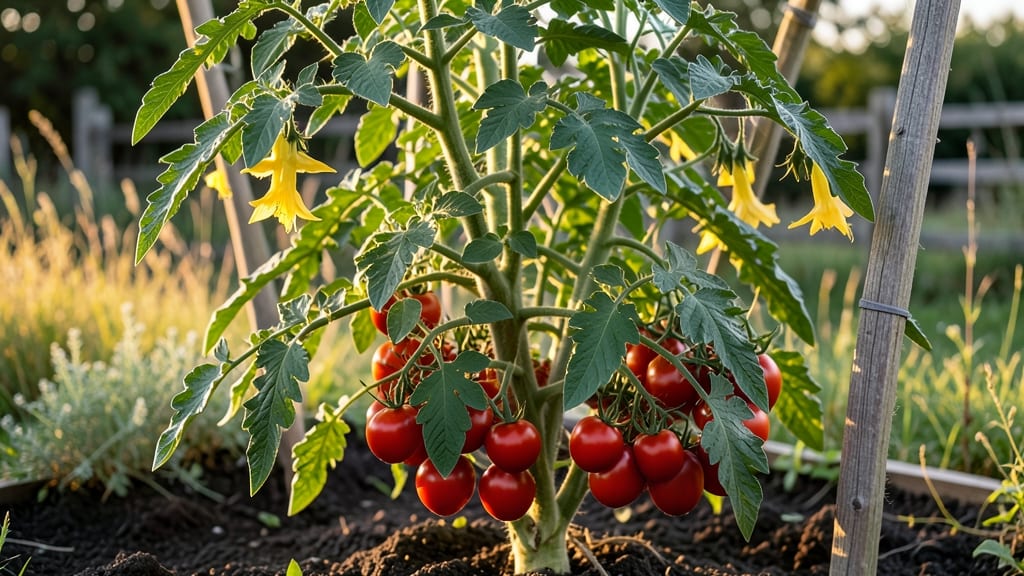
Growing a tomato tree giant variety transforms your garden into a living sculpture—tall, dramatic, and loaded with fruit. 🌿 I’ve wrestled with these towering vines, and the key to their success isn’t brute strength but strategic pruning that keeps them upright while maximizing yield.
Without proper training, they’ll flop into a tangled mess by midsummer, but with the right approach, you’ll end up with a sturdy, productive centerpiece that turns heads at neighborhood potlucks.
The secret lies in pruning early and often—think of it like sculpting a living trellis. You’ll start with a strong 3-foot-tall stake or cage, then prune suckers (those little shoots in the leaf axils) to encourage upward growth.
Most gardeners over-prune or wait too long, but the sweet spot is removing 1-2 suckers per week once the plant hits 18 inches. This keeps the vine’s energy focused on fruit production rather than wild, unmanageable growth. The payoff?
A plant that stays 6-10 feet tall without toppling, with branches heavy enough to bend—but not break—under the weight of tomatoes.
By late summer, you’ll have a tomato-laden masterpiece that’s easier to harvest than a sprawling bush. The fruit itself is a game-changer: these giants produce 2-3 pound tomatoes that rival heirlooms in flavor but with the disease resistance of modern varieties.
The real magic happens when you prune the top 12 inches of the main stem in early fall—this triggers a final flush of blossoms that ripen just in time for canning or winter storage. No more sad, undersized tomatoes at the end of the season.
Here’s the twist: this method works for any giant variety—from ‘Big Beef’ to ‘Solar Fire’—and adapts to containers if your space is limited. The only rule? Be consistent. Skimp on pruning early, and you’ll spend all summer wrestling with a vine that’s more vine than tomato.
But nail the timing, and you’ll have a plant that’s both a conversation starter and a kitchen workhorse. Ready to turn your garden into a tomato tower?
📚 In This Guide
- What you need
- Instructions
- Tips and common mistakes
- Wrapping up and next steps
What you need
- ● Pruning shears: Bypass pruners (sharp, clean, and sterilized with rubbing alcohol) for clean cuts on smaller stems.
- ● Loppers: Heavy-duty, 8-10" loppers for thicker vines (up to 2" in diameter).
- ● Pruning saw: A folding handsaw or curved pruning saw for stubborn, thick branches.
- ● Gloves: Sturdy, cut-resistant gloves (e.g., mechanics’ gloves or gardening gloves with reinforced palms).
- ● Disinfectant: 70% isopropyl alcohol or a pruning sealant (e.g., Tanglefoot Tree Wound Pruning Sealer) to prevent disease.
- ● Support structures: Trellis: 6-8 ft tall, galvanized metal or wooden lattice (e.g., Tomato Tower Trellis).
- ● Stakes: 2-3 T-posts or bamboo stakes (6 ft tall) + twine or soft plant ties.
- ● Cage: 5-6 ft tall tomato cage (heavy-duty, powder-coated steel).
- ● Container (if potted): Large fabric grow bag (5+ gallons) or 5-gallon bucket with drainage holes.
- ● Hose or spray bottle: For rinsing tools between cuts (prevents cross-contamination).
- ● Plant food: Balanced fertilizer (10-10-10) or compost tea to boost recovery post-pruning.
- ● Reflective tape: Wrap around stakes to deter pests (e.g., deer or rabbits).
- ● Garden twine or Velcro ties: Softer alternatives to twine for securing vines without damage.
Step-by-Step pruning guide for your tomato tree giant
Here's how to train your towering tomato vines into a sturdy, productive "tree" shape—no flopping allowed.
✂️ Step 1: Identify the Main Stem and First Branches
Start by locating the primary stem—the thickest vertical vine growing directly from the base. This will be your trunk. Look for the first 6-8 inches of growth where side shoots begin to emerge. These early lateral branches are critical for shaping your "tree."
Use sharp pruning shears to remove any suckers (small shoots growing in the leaf axils) below the first flower cluster. These early suckers drain energy from fruit production. I like to make clean cuts at a 45-degree angle just above a leaf node to prevent water from pooling on the wound.
✂️ Step 2: Establish the Scaffolding Branches
Select 3-4 strong lateral branches spaced evenly around the main stem. These will become your "limbs." Prune all other side shoots growing below these branches, leaving only the ones you've chosen. This forces the plant to focus energy on developing sturdy, upward-growing limbs rather than weak, sprawling vines.
Here's the thing—you want these branches to grow at a 45-60 degree angle from the main stem. If a branch grows too vertically, it'll be top-heavy and prone to breaking. Gently tie the growing tips to a small stake or trellis at this angle to encourage proper growth. Watch for new suckers forming at the base of these branches and remove them immediately.
✂️ Step 3: Prune for Airflow and Fruit Production
As your tomato tree grows, focus on maintaining an open, airy structure. Remove any branches that grow inward or cross over each other—these create shaded areas where disease thrives. You'll see this as vines growing toward the center of the plant or rubbing against each other. Cut these back to just above a leaf node with outward-facing growth.
Leave only the strongest, most vigorous branches. A good rule of thumb is to aim for 3-5 main limbs with 2-3 secondary branches per limb. This creates a balanced structure that supports the weight of fruit without collapsing. Thin out clusters of flowers so each remaining cluster has 3-5 flowers max—this ensures larger, healthier tomatoes.
✂️ Step 4: Support and Maintain the Structure
Install a sturdy trellis or cage system as your plant grows. I recommend a 5-6 foot tall tomato tree cage with wide spacing between the wires—this gives your branches room to spread without binding. Tie the main stem to the center support and each primary branch to the cage wires at 12-18 inch intervals.
Throughout the growing season, continue monitoring for new suckers and removing them promptly. You'll also want to prune any branches that show signs of disease (yellowing leaves, spots, or wilting). Always make cuts just above a leaf node where new growth can emerge. This keeps your tomato tree healthy and productive all season long.
⏰ Step 5: Late-Season Pruning for Harvest and Winter Prep
When your tomatoes begin to ripen, focus on removing any remaining suckers and pruning back overly vigorous growth. This redirects the plant's energy toward ripening existing fruit rather than producing new leaves. You'll know you're on track when you see 75% of your fruit turning color—this is your cue to stop aggressive pruning.
In late fall, after the first frost, cut back the entire plant to within 6-12 inches of the ground. This encourages new growth from the base next season. Remove all plant debris from the area to prevent disease overwintering. I like to mark the spot with a small stake so I know where to plant next year—consistency in location helps your tomato tree establish its root system more quickly.
Tips & tricks for perfect tomato tree pruning
Transforming sprawling tomato vines into a sturdy "tree" structure takes precision—and a few key tricks to keep your plant thriving. Here's what I've learned after years of trial and error with these towering plants.
Timing is Everything: Prune your tomato tree in the morning when the plants are well-hydrated and temperatures are cooler. This reduces stress on the plant and gives it time to recover before the heat of the day. I've found that pruning after heavy rain can cause the cuts to take longer to heal, making your plant more susceptible to disease. Always schedule your pruning sessions for dry, sunny mornings when the plants are actively growing.
The Angle Matters: When making cuts, remember that the 45-degree angle isn't just about aesthetics—it's about plant health. This angle prevents water from pooling in the wound, which could lead to rot or fungal infections. I also recommend using sterilized pruning shears between cuts to prevent spreading any potential diseases from one part of the plant to another. For larger branches, you might want to make a second cut just outside the branch collar to avoid tearing the bark.
Branch Selection Strategy: When choosing your 3-5 main limbs in Step 2, look for branches that are growing outward from the main stem. These will naturally create that beautiful tree-like structure. If you're unsure which branches to keep, remember that the goal is to create an open, airy framework that allows sunlight to reach all parts of the plant. This not only improves fruit production but also helps prevent those dreaded fungal diseases that thrive in shaded, humid conditions.
Support System Check: Your 5-6 foot tall tomato tree cage should be installed early in the season before the plant gets too top-heavy. I've seen too many beautiful tomato trees collapse under the weight of their own fruit because the support wasn't sturdy enough. Make sure your cage has wide spacing between the wires—about 4-6 inches apart—to give your branches room to grow without getting tangled. This spacing also makes it easier to tie your branches without damaging them.
Pro Tips for Tomato Tree Giant
- Transforming sprawling tomato vines into a sturdy "tree" structure takes precision—and a few key tricks to keep your plant thriving.
- Timing is Everything: Prune your tomato tree in the morning when the plants are well-hydrated and temperatures are cooler.
- The Angle Matters: When making cuts, remember that the 45-degree angle isn't just about aesthetics—it's about plant health.
Frequently asked questions
Got questions about growing and pruning your Tomato Tree Giant? You’re not alone!
Here are some of the most common queries—plus straightforward answers to keep your towering vine thriving.
How tall can the Tomato Tree Giant grow if left unpruned?
The Tomato Tree Giant can reach 10–15 feet tall (or even higher!) if unpruned, but its branches may become top-heavy and flop under the weight of fruit. Pruning early—especially to encourage a sturdy central stem—helps manage height while boosting yield. Aim for 6–8 feet for easier maintenance and better airflow.
When is the best time to prune for maximum fruit production?
Prune early and often—start when the plant is 12–18 inches tall and continue throughout the growing season. Focus on:
- Removing suckers (side shoots between the main stem and branches) to direct energy to fruit.
- Trimming lower leaves (up to 12 inches from the ground) to prevent soil-borne diseases.
- Thinning overcrowded branches in late summer to improve air circulation.
Can I prune too much? What are the signs?
Yes! Over-pruning stresses the plant, leading to:
- Stunted growth or yellowing leaves.
- Fewer flowers/fruit (the plant diverts energy to regrowth).
- Weak stems that flop under fruit weight.
What’s a good alternative if I don’t want a giant vine?
If the Tomato Tree Giant’s height is daunting, try these space-saving alternatives:
- Determinate varieties (e.g., Roma or Celebrity): Bushier, compact, and self-supporting (3–4 feet tall).
- Dwarf or patio tomatoes (e.g., Tiny Tim or Micro Tom): Perfect for containers—stay under 2 feet!
- Cordon-trained hybrids (e.g., Sungold): Grow vertically but stay under 6 feet with minimal pruning.
Why are my leaves turning yellow after pruning?
Yellowing leaves post-pruning usually mean nutrient deficiency or stress. Fix it with:
- Balanced fertilizer (high in potassium and phosphorus) to support regrowth.
- Watering deeply (1–2 inches per week) to prevent shock.
- Mulching around the base to retain moisture and cool roots.
Wrapping up and next steps
Growing a tomato tree giant is an exciting challenge, but with the right pruning techniques, you’ll keep those towering vines strong and productive! Remember, balance is key—trim strategically to encourage airflow, support growth, and prevent flopping.
Whether you’re a seasoned gardener or just starting, your efforts will pay off with bountiful, healthy tomatoes all season long.
Ready to take your tomato tree giant to new heights? Start small—pick one vine to practice pruning this week, and soon you’ll be a pro! 🌱✂️