
Diseases
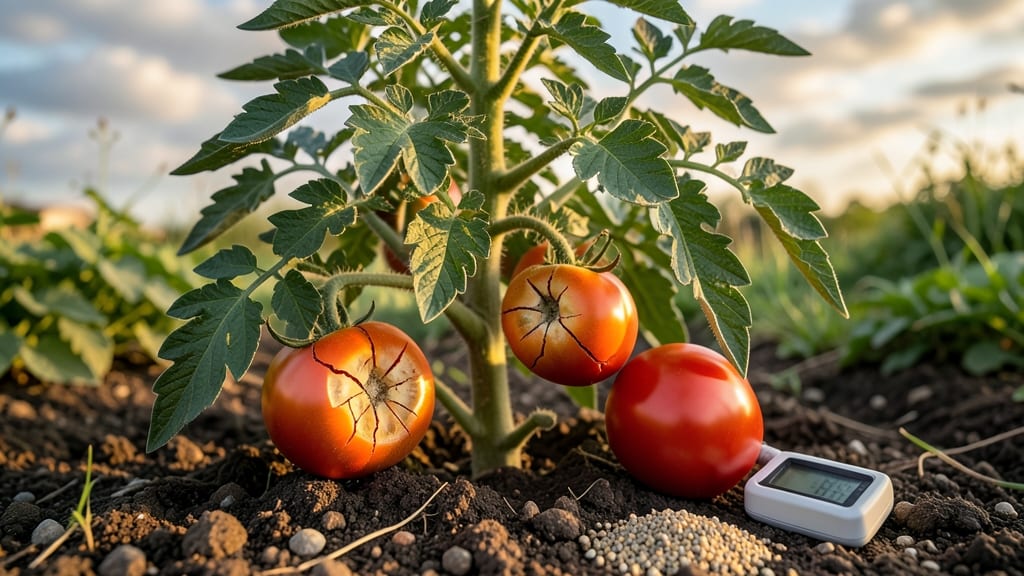
Tomato fruit cracking is due to a deficiency of calcium—specifically, a condition called blossom-end rot that turns your ripe tomatoes into a sad, cracked mess. 🌱 I’ve seen this ruin otherwise perfect harvests, and the fix is simpler than you’d think: a little Epsom salt spray and consistent moisture management.
The problem starts when calcium can’t reach the fruit fast enough, often because of uneven watering or compacted soil. Young plants need extra help establishing strong roots, and older plants struggle when soil moisture fluctuates wildly.
That’s why I swear by a weekly Epsom salt spray (1 tablespoon per gallon) during fruiting—it’s like giving your tomatoes a calcium IV drip. You’ll notice the difference within 2-3 weeks: fewer cracks, firmer fruit, and tomatoes that stay intact from vine to table.
The key is consistency—water deeply but evenly, and keep those roots happy with mulch to lock in moisture. Works for backyard gardens, containers, and even greenhouse tomatoes. Let’s get those fruits looking perfect again!
Root Causes Of Tomato Cracking
Tomato fruit cracking is a frustrating issue for gardeners, but it’s often rooted in a few key deficiencies—especially calcium—alongside environmental and physiological triggers. Understanding these causes helps you take precise action to prevent future damage. Let’s break down the science behind why your tomatoes split open.
Calcium is the most critical mineral for cell wall strength in tomatoes. Without enough, the fruit’s skin becomes brittle and unable to expand evenly as it grows. This leads to radial cracking (splits radiating from the stem) or concentric cracking (ring-like splits around the fruit).
- Why it happens: Calcium is immobile in plants, meaning it can’t be redistributed from older leaves to new fruit when demand spikes. If soil calcium is low—or if water uptake is uneven—young tomatoes lack the structural support they need.
- Common triggers:
- 🌱 Poor soil structure: Compacted or waterlogged soil blocks root absorption of calcium.
- 💧 Inconsistent watering: Rapid hydration after drought causes cells to swell too fast, overwhelming the fruit’s ability to adapt.
- ❄️ Temperature stress: Hot days followed by cool nights disrupt calcium uptake.
- Actionable fix: Apply calcium-rich amendments like crushed eggshells, lime, or calcium nitrate (1 tbsp/gallon of water, sprayed on leaves). Epsom salt (magnesium sulfate) can also help if magnesium is limiting calcium’s effectiveness.
Magnesium is the centerpiece of chlorophyll and acts as a calcium “partner” in cell wall stability. A deficiency weakens the fruit’s ability to utilize calcium efficiently, leading to interveinal chlorosis (yellowing between leaf veins) and cracked tomatoes.
- Why it happens: Magnesium is leached from soil by excess watering or acidic conditions. Since tomatoes are heavy feeders, they deplete soil magnesium quickly, especially in sandy or peaty soils.
- Signs to watch for:
- 🍃 Yellowing lower leaves: Older leaves turn yellow while veins stay green (a classic magnesium deficiency symptom).
- 🍅 Blossom-end rot look-alike: Cracks may mimic calcium deficiency but occur after magnesium levels drop.
- Actionable fix: Use Epsom salt spray (1 tbsp per gallon of water, applied every 2 weeks) or magnesium sulfate granules worked into the soil. Pair this with balanced fertilization (e.g., 10-10-10) to avoid overloading nitrogen.
Fluctuating water levels are the #1 environmental cause of tomato cracking. Uneven moisture disrupts the fruit’s growth rate, causing cells to burst as they try to keep up with rapid expansion.
| Scenario | Effect on Tomatoes | Resulting Cracks |
|---|---|---|
| 💦 Overwatering after drought | Cells absorb water too quickly, swelling beyond their structural limits. | Radial cracks (star-shaped splits near the stem). |
| 🌞 Hot days + dry soil | Fruit shrivels slightly, then swells when watered, causing internal pressure. | Concentric cracks (ring-like splits). |
| 🌧️ Heavy rain after dry spell | Sudden influx of water overwhelms root uptake, diluting calcium availability. | Both radial and concentric cracks. |
Pro tip: 💡 Use drip irrigation or soaker hoses to deliver water slowly at the base of plants. Aim for 1–1.5 inches of water per week and mulch heavily to retain moisture.
Too much nitrogen promotes leafy growth at the expense of fruit development, while too little stunts the plant’s ability to transport calcium to the fruit. Both extremes contribute to cracking.
- Why it happens:
- ⚖️ Excess nitrogen: Shifts energy toward foliage, leaving fruit undersupplied with calcium.
- 🌱 Deficient nitrogen: Weakens root systems, reducing overall nutrient (including calcium) uptake.
- Signs of imbalance:
- 🍃 Too much N: Lush green leaves but few tomatoes; existing fruit cracks easily.
- 🍂 Too little N: Yellowing leaves (starting with older ones) and stunted growth.
- Actionable fix:
- 🔄 Balance your fertilizer: Switch to a low-nitrogen, high-calcium formula (e.g., 5-10-10) or use compost tea for gradual nutrient release.
- 🌿 Side-dress with compost: Mix aged compost into the soil around plants to provide slow-release nitrogen without overwhelming the system.
Key takeaway: Tomato cracking is almost always a combination of calcium/magnesium deficiency plus environmental stress. Addressing both—through soil amendments and consistent watering—will give you the best results. 🌱✨
Fixing Cracked Tomatoes Naturally
Cracked tomatoes aren’t just unsightly—they’re a sign your plants are struggling, often due to calcium deficiency or uneven watering. The good news? With a few simple adjustments, you can save your harvest and prevent future issues.
Below, we’ve mapped out practical solutions based on the root cause, along with prevention tips to keep your tomatoes firm and flavorful.
Calcium is the backbone of tomato cell walls, and a deficiency makes fruit prone to splitting. Here’s how to boost calcium levels and strengthen your plants:
💧 Use Calcium-Rich Fertilizers or Sprays
Tomatoes need 0.1–0.2% calcium in their soil for optimal growth.
If your soil is deficient (common in sandy or acidic soils), try these: - Epsom salt spray (magnesium sulfate + calcium): Mix 1 tbsp Epsom salt + 1 tbsp crushed eggshells in 1 gallon of water.
Spray leaves every 2 weeks during fruiting. - Calcium nitrate solution: Dissolve 1 tbsp calcium nitrate in 1 gallon of water and apply as a foliar spray or soil drench. - Crushed eggshells: Bury 1 inch of crushed eggshells around the base of plants (they decompose slowly, releasing calcium).
✨ Pro Tip: Avoid over-fertilizing with nitrogen—it can worsen calcium uptake. Stick to a balanced 10-10-10 or 5-10-10 fertilizer during flowering/fruiting.
🌿 Improve Soil Drainage & Aeration
Poor drainage prevents roots from absorbing calcium efficiently.
Fix it with: - Raised beds (if your soil is clay-heavy). - Compost or aged manure (adds organic calcium and improves structure). - Gypsum (calcium sulfate): Work 1–2 lbs per 100 sq ft into the soil 2–3 weeks before planting.
💧 Water Smartly (No More Splits!) Uneven watering is the #1 cause of cracking.
Follow this watering hack: - Deep, consistent watering: Water once daily (early morning) for 10–15 minutes to encourage deep root growth. - Avoid wetting leaves: Use drip irrigation or soaker hoses to keep foliage dry (prevents fungal diseases that stress plants). - Mulch heavily: Apply 3–4 inches of straw or wood chips to retain moisture and cool roots.
Fluctuating moisture levels cause tomatoes to expand and split like overinflated balloons. Here’s how to stabilize soil moisture:
🔥 Establish a Watering Routine
- Morning is best: Water before 10 AM so leaves dry quickly.
- Check soil moisture: Stick your finger 1 inch deep—if dry, water. If soggy, wait.
- Use a moisture meter for precision (especially in pots).
👨🍳 Upgrade Your Irrigation System
- Drip irrigation (best for gardens) delivers water slowly and directly to roots.
- Self-watering planters (great for containers) maintain steady moisture.
- Avoid overhead sprinklers—they cause leaf wetness and uneven absorption.
🌡️ Adjust for Extreme Weather
- Heatwaves? Water more frequently but shallower to prevent stress.
- Heavy rain? Let soil dry slightly between waterings to avoid root suffocation.
Once you’ve fixed the issue, lock in success with these long-term strategies:
| Problem | Prevention Fix | When to Do It |
|---|---|---|
| Calcium deficiency | Side-dress with crushed eggshells | Every 4–6 weeks during growth |
| Poor soil structure | Add compost + gypsum | Before planting or early season |
| Inconsistent watering | Install drip irrigation | Before first flowers appear |
| Rapid growth spurts | Prune suckers to balance plant energy | Weekly during fruiting season |
| Over-fertilizing nitrogen | Switch to low-nitrogen, high-calcium | When flowers form |
💡 Pro Tip: Harvest early—pick tomatoes before they fully ripen if cracks appear. Store them in a paper bag with a banana (ethylene gas speeds ripening indoors).
By addressing the root cause (calcium or water) and adjusting your care routine, your tomatoes will stay plump, crack-free, and bursting with flavor. 🍅✨ Now go enjoy that homegrown harvest—no splits allowed!
Frequently asked questions
Why do my tomato fruits crack even when I water consistently?
Even with steady watering, cracks often appear due to calcium deficiency or rapid growth spurts. Uneven calcium distribution (especially in hot weather) causes cell walls to weaken. Try applying Epsom salt spray (1 tbsp/gallon) every 2 weeks and mulch heavily to stabilize soil moisture.
Can I use coffee grounds to fix tomato cracking?
Coffee grounds add nitrogen but won’t directly solve calcium issues—they can actually worsen cracking by promoting leafy growth over fruit development. Instead, use crushed eggshells (for calcium) or gypsum (for soil structure) to prevent splits while still benefiting from compost.
How do I know if my tomato plants need magnesium?
Look for yellowing between leaf veins (interveinal chlorosis) on older leaves—this is a classic magnesium deficiency sign. If you see this, mix 1 tbsp Epsom salt per gallon of water and spray foliage weekly. Magnesium helps calcium absorption, so it’s a two-for-one fix!
Will cracked tomatoes still ripen on the vine?
Yes! Cracked tomatoes can still ripen, but they’re more prone to rot and pests. Harvest them when 50-75% ripe and store in a paper bag with a banana to speed up ripening indoors. The flavor won’t suffer—just avoid using them in recipes where texture matters (like fresh salads).
Can I fix cracking in heirloom tomatoes differently than hybrids?
Heirlooms often crack more easily due to their thinner skins and slower growth. For heirlooms, focus on soaker hoses (to prevent leaf wetness) and shade cloth during heatwaves. Hybrids handle stress better, but both benefit from weekly calcium sprays and consistent mulching.