
Plants
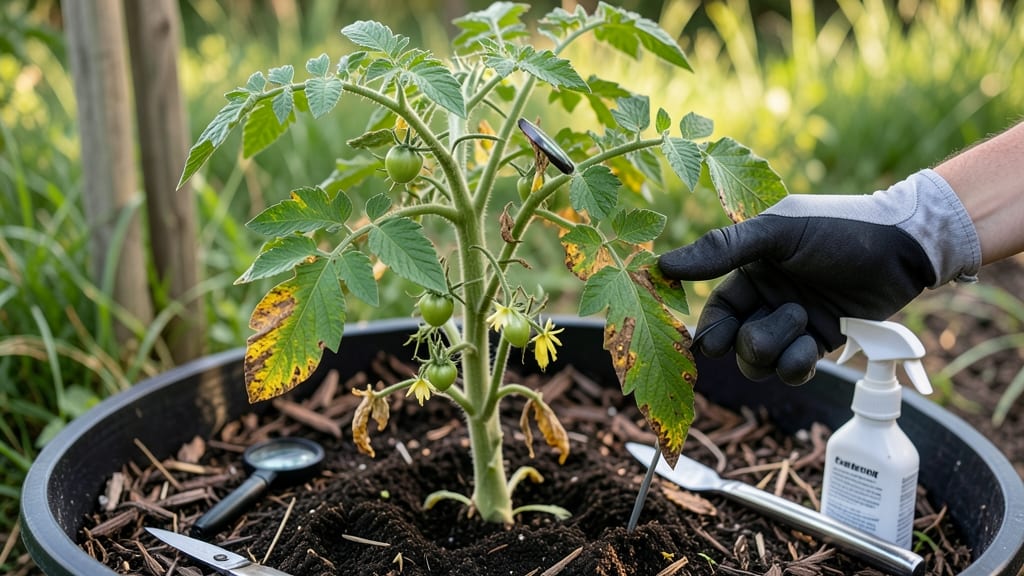
When tomato plants have brown spots, the issue is usually fungal infections like early blight or late blight, environmental stress, or overwatering. Check the spot pattern—targeted (disease), scattered (sunburn), or ringed (virus)—to choose fixes like pruning, fungicide, or adjusting watering schedules right away.
Brown spots on tomato leaves aren't just unsightly—they're often a warning sign your plants are fighting for survival. 🌱 The key to saving your harvest lies in recognizing the pattern: concentric rings suggest early blight, while greasy dark spots signal late blight.
I've found that catching these early makes all the difference—sometimes just improving airflow by spacing plants 18-24 inches apart prevents future outbreaks. For existing spots, a homemade spray of 1 teaspoon baking soda + 1 quart water + a drop of dish soap works wonders as a preventative measure.
What many gardeners overlook is how watering habits contribute to these problems. Watering from above creates ideal conditions for fungal spores to spread, while morning watering gives leaves time to dry completely.
I always recommend using drip irrigation or soaker hoses to keep foliage dry—a small change that can dramatically reduce spot development.
💡 In This Article
- Diagnosing Brown Spots by Shape and Location
- Preventative Care for Healthy Tomato Leaves
Diagnosing brown spots by shape and location
Fungal diseases like early blight and late blight leave distinct visual clues that help you identify the problem quickly. Early blight, caused by Alternaria solani, creates concentric rings of brown spots that start on lower leaves and spread upward.
These spots often have a target-like pattern, with darker edges and lighter centers, measuring about 1/4 to 1/2 inch wide. The key difference?
Early blight spots appear dry and papery, while late blight (from Phytophthora infestans) looks greasy and dark, often with a water-soaked appearance that spreads rapidly in humid conditions.
Sunscald, on the other hand, shows up as irregular brown patches with ragged edges, typically on leaves exposed to direct sunlight.
These spots often occur on the upper leaves or fruit and feel slightly leathery to the touch. 🌞 Unlike fungal spots, sunscald doesn't spread to other leaves and usually appears on plants that are too crowded or have insufficient shade.
Nutrient deficiencies, like a lack of magnesium or potassium, cause yellowing between leaf veins with brown edges—a pattern that starts on older leaves and moves upward.
Location matters too. Early blight targets lower leaves first, while late blight can appear anywhere, even on stems and fruit. Viral infections, like tomato mosaic virus, create ringed or mottled patterns that often appear on younger leaves.
The key is to examine both the shape and where the spots appear—this tells you whether to focus on fungal control, environmental adjustments, or plant spacing.
For example, if you see greasy spots on both leaves and stems, late blight is likely spreading, and you'll need to act fast with copper-based fungicides.
Here's a quick visual guide to help you diagnose:
- Concentric rings: Early blight (dry, papery spots)
- Greasy, dark spots: Late blight (spreads rapidly in humidity)
- Irregular, ragged edges: Sunscald (sun-exposed areas)
- Yellowing between veins: Nutrient deficiency (magnesium/potassium)
- Ringed/mottled patterns: Viral infection (often on younger leaves)
Once you've identified the issue, the next step is to address it based on the root cause. For example, early blight thrives in wet conditions, so improving airflow by pruning crowded branches or removing lower leaves can make a big difference.
Late blight, however, requires immediate action—removing infected plants and applying fungicides like copper soap or neem oil within 48 hours can prevent the disease from spreading to your entire crop.
Don't overlook the role of humidity and temperature. Early blight spreads fastest in 75-85°F temperatures with high humidity, while late blight thrives in cooler, wet conditions (60-70°F).
If you're seeing spots during these conditions, focus on reducing moisture around the plants—mulching with straw or using drip irrigation can help. The sooner you act, the better your chances of saving your tomato harvest.