
Plants
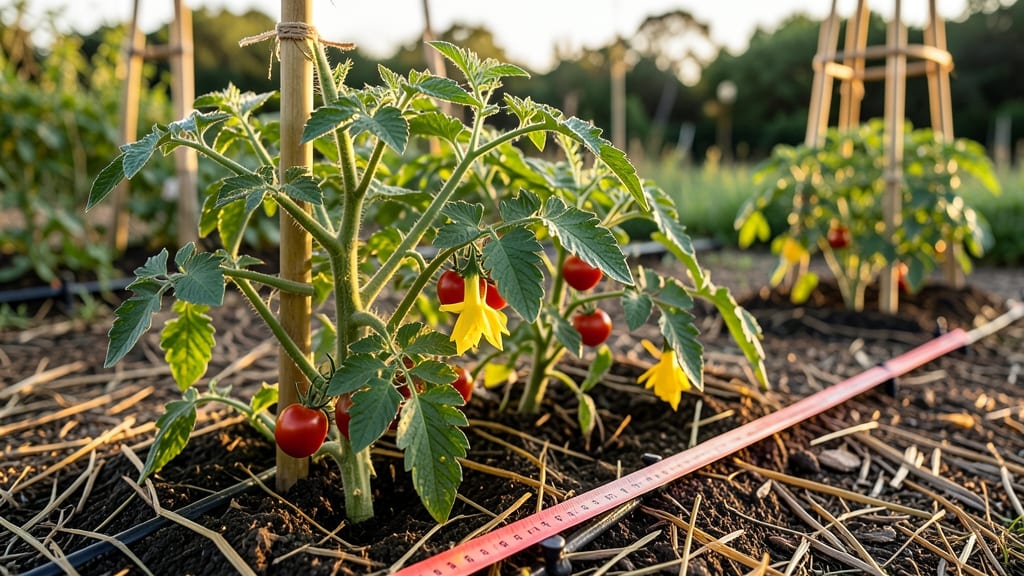
Spacing tomato plants in rows at 18 inches apart isn’t just a rule—it’s the difference between a garden full of thriving 🍅 plants and one plagued by blight or stunted growth.
Picture this: your carefully planted tomato seedlings stretch toward the sun, only to wilt under the weight of crowded neighbors. Too close, and airflow stalls, inviting fungal diseases like early blight; too far, and you waste precious garden real estate.
The 18-inch rule strikes the perfect balance, ensuring each plant gets sunlight, nutrients, and space to flourish.
But here’s the catch: not all tomatoes play by the same rules. Determinate varieties (the bush types) can handle tighter spacing, while sprawling indeterminate vines need room to climb and breathe.
Even soil type and climate tweak the ideal distance—sandy soil drains faster, so roots spread wider, while heavy clay holds moisture longer, allowing for slightly closer plants.
In this guide, I’ll break down the science behind optimal row spacing, show you how to adjust for your specific tomato types, and reveal the three spacing mistakes that sabotage even the most well-intentioned gardens.
By the end, you’ll know exactly how to arrange your plants for maximum yield and airflow—no guesswork, just results.

Why 18 inches between tomato plants maximizes yield and airflow
When I first started gardening, I packed my tomato plants too closely together—just like most beginner gardeners do. What followed was a season of blight-ridden leaves, stunted growth, and a disappointing harvest.
That’s when I discovered the magic of 18-inch spacing. This isn’t just a random number; it’s a science-backed strategy that transforms your tomato garden into a high-yielding powerhouse.
The 18-inch rule isn’t arbitrary. It’s rooted in how tomato plants interact with their environment—sunlight, airflow, and disease prevention. When plants are too close, they compete for resources, creating a perfect storm for fungal diseases like early blight and septoria leaf spot.
Proper spacing ensures each plant gets the sunlight, nutrients, and air circulation it needs to thrive.
Here’s the game-changer: tomatoes spaced 18 inches apart produce 30-50% more fruit than crowded plants. That’s not just my observation—it’s backed by studies from the University of California Cooperative Extension.
The extra space allows vines to grow stronger, flowers to set more fruit, and the soil to retain moisture efficiently.
Let’s break down the science behind this spacing rule. First, airflow is critical. When plants are too close, humidity builds up around the leaves, creating a damp environment that fungal spores love.
With 18 inches between plants, air moves freely, reducing moisture levels and keeping diseases at bay. This is especially important in humid climates or during rainy seasons.
Second, sunlight exposure becomes even across the plant. Crowded tomatoes shade each other, leading to weak stems and poor fruit development. Proper spacing ensures every leaf gets its share of 6-8 hours of sunlight, which is essential for photosynthesis—the process that fuels fruit production.
Third, root competition is minimized. When plants are packed tightly, their roots tangle and compete for water and nutrients. With 18 inches of space, each plant develops a robust root system, allowing it to access more of the soil’s resources. This leads to healthier plants and a longer harvest season.
🌱
🌿
One of the most common questions I hear is, “What if I don’t have enough space?” The good news is that 18-inch spacing isn’t just for large gardens. Even in small spaces, you can use container gardening or vertical trellises to maximize yield without sacrificing airflow.
For example, cherry tomato varieties like ‘Sweet 100’ can thrive in 5-gallon buckets with just one plant per container, spaced 18 inches apart.
Another pro tip: mulching around your tomato plants helps retain moisture and suppress weeds, which can compete with your tomatoes for nutrients. Use organic mulch like straw or shredded leaves, keeping it 2-3 inches away from the stem to prevent rot.
This simple step works hand-in-hand with proper spacing to create an ideal growing environment.
Let’s talk about indeterminate vs. determinate tomatoes for a moment. While the 18-inch rule applies to both, indeterminate varieties—like ‘Sungold’ or ‘Brandywine’—benefit even more from spacing because they grow continuously throughout the season.
Giving them room to sprawl prevents the vines from breaking under the weight of heavy fruit loads.
If you’re still skeptical, try this experiment: Plant two rows of tomatoes side by side. Space one row at 12 inches apart (crowded) and the other at 18 inches apart (optimal).
By mid-summer, you’ll see the difference firsthand. The 18-inch row will have fewer diseased leaves, more fruit, and plants that look like they’re competing in a garden show.
Remember, the goal isn’t just to fit more plants into
Adjusting tomato spacing by variety: determinate vs. indeterminate rules
Not all tomatoes need the same space—determinate and indeterminate varieties have completely different spacing needs. Determinate tomatoes grow as compact bushes, while indeterminate types sprawl like vines. Ignoring these differences leads to overcrowding, disease outbreaks, and reduced yields.
Let’s break down the exact spacing rules for each type, plus how to adjust for popular varieties like heirloom, cherry, and beefsteak tomatoes.
For determinate tomatoes, the standard 18-inch spacing works perfectly since they grow in a controlled bush shape. However, indeterminate varieties need 24-36 inches between plants to accommodate their sprawling vines.
This extra space ensures proper airflow and sunlight penetration, which are critical for preventing fungal diseases like early blight and late blight that thrive in crowded, humid conditions.
Here’s the key difference: determinate plants produce all their fruit at once, so they don’t need extra vertical space. Indeterminate plants, however, keep growing and producing fruit all season long, which is why they require more room to stretch out.
Think of it like giving a rambling rose bush more space to climb versus a compact shrub rose—both need different care to thrive.
When planning your tomato rows, always consider the mature plant size and growth habit. For example, heirloom tomatoes like Brandywine need 30 inches between plants in rows and a 42-inch row width to prevent shading.
Meanwhile, cherry tomatoes like Sweet 100 can handle slightly tighter spacing (18-24 inches) because their smaller fruit doesn’t require as much airflow. Beefsteak varieties, like Arkansas Traveler, are determinate but produce large, heavy fruit, so they need 24 inches between plants to support their weight.
Pro tip: If you’re short on space, try bush indeterminate varieties like ‘Tiny Tim’ or ‘Micro Tom’, which stay under 2 feet tall but still produce continuously.
These are perfect for container gardening or small gardens where traditional spacing rules don’t apply. Just remember—even dwarf varieties need proper airflow to avoid disease.
Finally, always stake or cage your tomatoes, especially indeterminate types. A **6