
Blooming
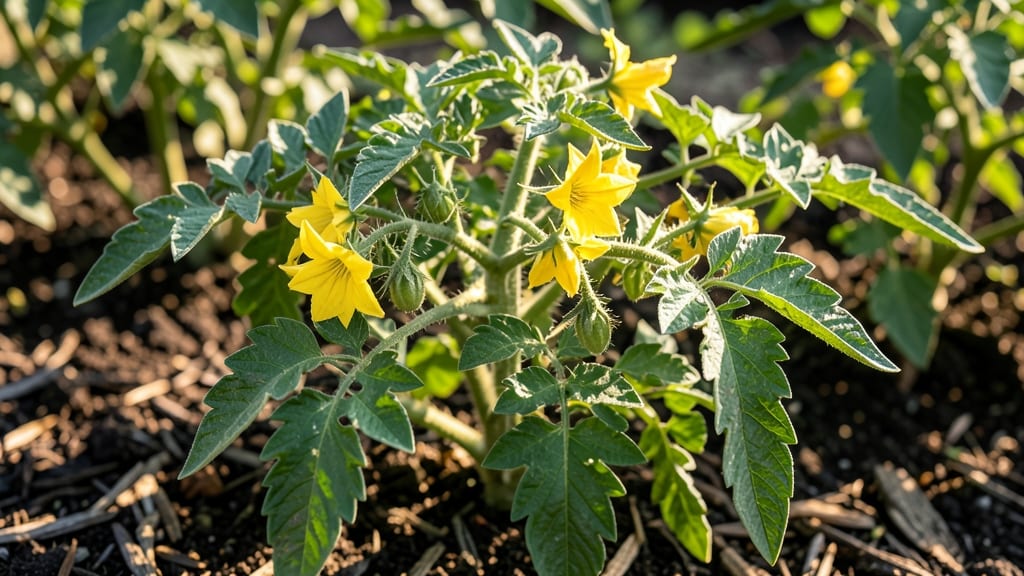
When tomato plants bloom early, it usually means they're responding to stress or perfect growing conditions—but it can cut your harvest short. To fix this, prune suckers aggressively, use shade cloth during heatwaves, and switch to slow-release fertilizer to balance growth and fruit production for a longer season.
Early blooming in tomatoes often happens when plants experience sudden temperature changes, too much sunlight, or inconsistent watering. 🌱 These conditions trick the plant into thinking it's time to fruit before it's fully matured, which can lead to smaller yields or even dropped blossoms.
I've seen this most commonly in greenhouses where heat builds up quickly or in outdoor gardens during unpredictable spring weather. The key is to monitor your plants closely and adjust care routines to encourage slower, more controlled growth.
What's interesting is that some early blooming can actually be a good sign—it means your plant is healthy and thriving. However, the challenge becomes managing that energy so the plant doesn't exhaust itself too quickly.
That's where proper pruning and fertilizer timing come into play to help extend the flowering period and give you more time to enjoy those juicy tomatoes.
💡 In This Article
- Why Tomato Plants Bloom Prematurely
- Proven Techniques to Delay Early Blooming
Why tomato plants bloom prematurely
Tomato plants typically bloom when they've reached a mature height of about 18-24 inches, but early blooming often occurs when the plant experiences rapid growth spurts triggered by environmental factors.
The most common culprit is temperature fluctuations—when daytime highs reach 75-85°F but drop sharply at night, it confuses the plant's internal clock. This phenomenon, called "vernalization," tricks the plant into thinking winter has passed and it's time to flower, even though it's not yet fully developed. 🌡️
Light exposure plays a crucial role too. Tomatoes need 12-16 hours of sunlight daily, but if they receive too much intense light—especially during heatwaves—it can accelerate flowering. The plant's photoperiod receptors detect long daylight periods and signal hormone changes that promote blooming.
Another factor is water stress: inconsistent watering (either too much or too little) forces the plant to prioritize reproduction over vegetative growth, leading to early flowers. I've noticed this most dramatically in container-grown tomatoes where soil moisture fluctuates quickly.
The science behind this involves plant hormones called florigenes, which travel from leaves to the shoot tips to trigger flowering. When environmental stress occurs, the plant's ethylene production spikes, accelerating this process.
This is why you might see small, weak flowers appear before the plant has developed strong stems or extensive root systems. These early blooms often result in smaller, less flavorful fruits—or worse, blossom end rot if the plant can't support proper fruit development. 🌸
Genetics also play a role, especially in hybrid varieties bred for early production. Some determinate tomatoes (like 'Early Girl') are genetically programmed to flower quickly, while indeterminate varieties (like 'Sungold') may take longer. However, even indeterminate plants can bolt prematurely if stressed.
The key difference is that indeterminate types can continue producing flowers if managed properly, while determinate types set all their flowers at once, leading to a single, shorter harvest window.
One visual clue that your tomato plant is blooming early is the appearance of flowers on the lower stems before the plant reaches 3 feet tall. These early flowers often produce small, underdeveloped fruits that may never ripen properly.
The plant's energy gets diverted from building strong stems and roots to supporting these premature flowers, which can weaken the overall structure and reduce future yields. This is why experienced gardeners often recommend removing the first few flower clusters to encourage more robust growth. 🌱
Interestingly, some early blooming can be beneficial in cooler climates where the growing season is short. In these cases, the plant's rapid flowering helps it take advantage of the limited warm period.
However, in most temperate regions, premature blooming usually means the plant will exhaust its energy before producing a full harvest. The challenge becomes identifying whether the early blooming is due to ideal conditions (which you might want to encourage) or stress (which needs correction).