
Vegetables
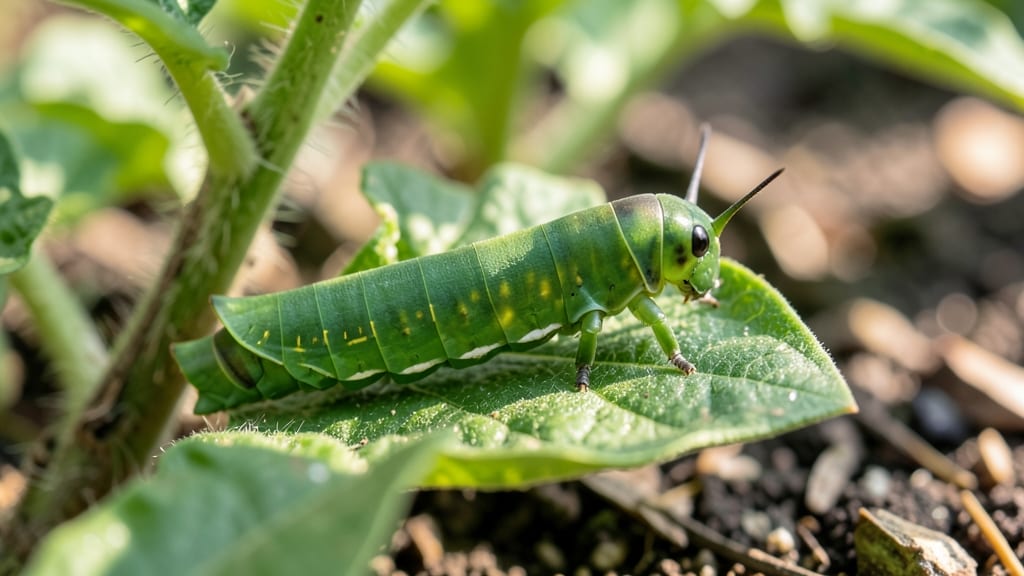
Those 5-inch tomato green hornworms can strip your tomato plants bare overnight—unless you act fast. 🌱 I learned the hard way when my prized heirloom tomatoes vanished in days, leaving only skeleton stems behind. The good news? You can stop them without chemicals or harming your garden's balance.
Green hornworms thrive because they're nature's perfect stealth predators—camouflaged as leaves, growing overnight, and disappearing when you turn your back. But their lifecycle is predictable: eggs hatch into caterpillars in 2-3 weeks, and they devour everything in sight until pupating into harmless sphinx moths.
Here's the swift solution: drop them into soapy water (no need for pesticides) or handpick them after sunset when they're sluggish. A few minutes daily keeps your plants thriving—no need for harsh sprays that kill beneficial insects too.
Prevention is even simpler: plant basil nearby (hornworms hate it), encourage ladybugs and parasitic wasps, and inspect leaves every other day during peak season (June-August). Your tomatoes will thank you.
The Real Culprits Behind Infestations
If your tomato plants are suddenly under siege by voracious green caterpillars, the culprit is almost certainly the Manduca sexta, better known as the tomato green hornworm. But why do these striped, leaf-munching menaces show up in the first place?
The answer lies in a mix of environmental factors, plant attractants, and the hornworm’s own life cycle. Let’s break down the key reasons these pests invade your garden—and how to understand their behavior to outsmart them.
The tomato green hornworm isn’t picky—it’s a specialist that thrives on plants in the Solanaceae family, which includes:
- Tomatoes (their favorite)
- Peppers
- Eggplants
- Potatoes
- Tobacco (yes, even ornamental varieties)
Why? These plants produce volatile organic compounds (VOCs) when damaged, which act like a dinner bell for adult moths.
Once they lay eggs near these plants, the caterpillars hatch and immediately start feeding. Pro tip: If your garden is a buffet of solanaceous plants, it’s an open invitation for hornworms. 💡 Solution: Interplant with basil, marigolds, or dill to mask the scent and deter moths.
Adult tomato hornworm moths are nocturnal pollinators with excellent night vision. They use:
- Moonlight and starlight to orient themselves
- Pheromone trails from other moths (yes, they “talk” chemically)
- Heat signatures from warm garden soil (they prefer night-blooming flowers like Datura)
If your garden is well-lit at night (even with porch lights), moths may get confused and avoid it.
But in dark, moonlit gardens, they’ll home in on your tomatoes like a GPS. 🌙 Actionable fix: Use yellow bug lights (which attract fewer pests) or install motion-activated lights that only turn on when needed.
Green hornworms are warm-weather pests. Here’s how temperature plays a role:
| Temperature Range | Effect on Hornworms |
|---|---|
| Below 50°F (10°C) | Moths go dormant; eggs don’t hatch |
| 50–70°F (10–21°C) | Slow development; 1–2 generations per season |
| 70–90°F (21–32°C) | Optimal conditions—eggs hatch in 3–5 days, caterpillars grow rapidly |
| Above 90°F (32°C) | Pupation speeds up, but drought stress can kill larvae |
In humid climates, their skin stays moist, reducing desiccation risks. Heat + humidity = hornworm highway. 🌡️ Work with the weather: In hot zones, mulch heavily to retain moisture for your plants (not the pests) and water deeply in the morning to evaporate excess humidity by evening.
In a balanced ecosystem, green hornworms face dozens of predators, including:
- 🐝 Parasitic wasps (like Cotesia congregata, which lay eggs inside hornworms)
- 🦋 Ladybugs and lacewings (they eat hornworm eggs)
- 🐍 Spiders and birds (they snack on young caterpillars)
- 🐸 Toads and frogs (they gobble up anything that moves)
But if your garden lacks diverse plantings, water sources, or hiding spots for these predators, the hornworms thrive unchecked. 🐝 Boost biodiversity: Add native wildflowers, leaf litter, and small water features to attract beneficial insects and amphibians.
Understanding these triggers doesn’t just explain the problem—it gives you leverage to disrupt their life cycle. Next, we’ll cover organic removal methods that target these exact weaknesses. 🚀
Quick Fixes for Garden Pests
When you spot a tomato green hornworm munching on your plants, swift action is key—but you don’t need harsh chemicals to win the battle. Below are practical, organic solutions tailored to the root cause of your pest problem, from immediate removal to long-term prevention.
Each method is designed to protect your plants while keeping your garden thriving.
If you’ve already spotted damage, these steps will help you eliminate the threat fast without harming your tomatoes or the environment.
👨🍳 Manual Pick-Off (Best for Small Infestations)
- Timing is everything – Wait until the hornworm is fully grown (about 3–4 inches long) but before it pupates. This makes it easier to spot and remove.
- Wear gloves (optional but helpful) and gently pluck the worm from the plant.
Drop it into a bucket of soapy water (1 tbsp dish soap per gallon) to ensure it doesn’t wriggle away. 3. Check daily – These pests grow fast, so repeat this process every 24–48 hours until no more are visible.
✨ Pro Tip: Look under leaves and near stems—hornworms are masters of camouflage!
🐛 Beneficial Insects: Nature’s Pest Control
Introduce parasitic wasps (like Cotesia congregata), which naturally lay eggs inside hornworms.
The larvae then consume the worm from the inside out—no chemicals needed! - How to attract them: Plant dill, fennel, or parsley nearby to lure these helpful wasps. - Bonus: They won’t harm your tomatoes or other plants.
🍳 Neem Oil Spray (For Heavy Infestations)
Neem oil disrupts the hornworm’s feeding and growth cycles while being safe for plants and beneficial insects when used correctly. 1. Mix 1 tbsp neem oil + 1 tsp mild soap + 1 quart water in a spray bottle.
- Spray thoroughly on both sides of leaves (especially where damage is visible).
- Reapply every 5–7 days until the infestation clears.
💡 Pro Tip: Apply in the early morning or late evening to avoid harming bees.
The best defense is a strong, healthy garden that pests avoid. Use these low-effort strategies to prevent future hornworm attacks.
🌡️ Companion Planting (Confuse & Repel)
Hornworms hate certain smells—use these plants to mask your tomatoes:
- Basil, marigolds, or thyme planted near tomatoes deter egg-laying moths.
- Nasturtiums act as a trap crop, luring hornworms away from your main plants.
🛡️ Physical Barriers (Early Season Protection)
- Row covers (fine mesh fabric) placed over young tomato plants block moths from laying eggs.
- Copper tape wrapped around stems can repel adult moths (though this is less common for hornworms).
🌿 Healthy Soil = Strong Plants Hornworms target stressed or weak plants.
Boost your tomatoes’ resilience with: - Balanced fertilizer (too much nitrogen = softer leaves = easier meals for pests). - Regular pruning to improve airflow and reduce hiding spots. - Mulch (straw or grass clippings) to suppress weeds (which can attract moths).
✨ Pro Tip: Rotate crops—if you’ve had hornworm issues in the past, avoid planting tomatoes in the same spot next year.
| Time of Year | Action Needed |
|---|---|
| Early Spring | Apply row covers or neem oil as a preventative spray. |
| Mid-Summer | Daily checks for eggs (tiny green ovals) and larvae. |
| Late Summer | Watch for pupation—if you see brown cocoons, remove them before adult moths emerge. |
By combining immediate removal with preventative care, you’ll keep your tomato plants hornworm-free—without resorting to harmful pesticides. 🍅🚫🐛
Frequently asked questions
How do I tell if my tomato plant has green hornworm eggs?
Look for tiny, green oval eggs (about 1/16-inch long) laid singly on the undersides of leaves or stems. They blend perfectly with foliage, so use a magnifying glass and check every 2-3 days during peak season (June-August). Early detection is key—remove eggs by hand or wipe them off with a damp cloth.
Are green hornworms harmful to humans or pets?
No, they're completely harmless to humans and pets. While they might look intimidating, these caterpillars are plant-eaters only. The only risk comes from their droppings, which can spread fungal diseases to your plants. Always wear gloves when handling them to avoid transferring any potential pathogens.
Can I use diatomaceous earth on tomato plants with green hornworms?
Yes, but with caution. Lightly dust food-grade diatomaceous earth on leaves (avoid stems to protect beneficial insects). It dehydrates the hornworms' waxy skin, but must stay dry to work. Reapply after rain. For best results, combine with neem oil or hand-picking—diatomaceous earth works slowly (3-5 days) and can harm pollinators if overused.
Why do I keep seeing them even after removing them?
One adult female moth can lay up to 2,000 eggs in her lifetime! If you're seeing repeated infestations, you're likely dealing with multiple generations or nearby wild plants (like nightshade) attracting moths. Focus on prevention: use row covers early, plant basil nearby, and encourage parasitic wasps with dill or fennel. Consistency is key—check plants daily during peak season.
What's the best time of day to handpick green hornworms?
Early morning or late evening (after sunset) when they're sluggish from cooler temperatures. Avoid midday heat when they're most active. Pro tip: Use a flashlight at night—they're easier to spot against dark foliage. Drop them into soapy water immediately to prevent escape.