
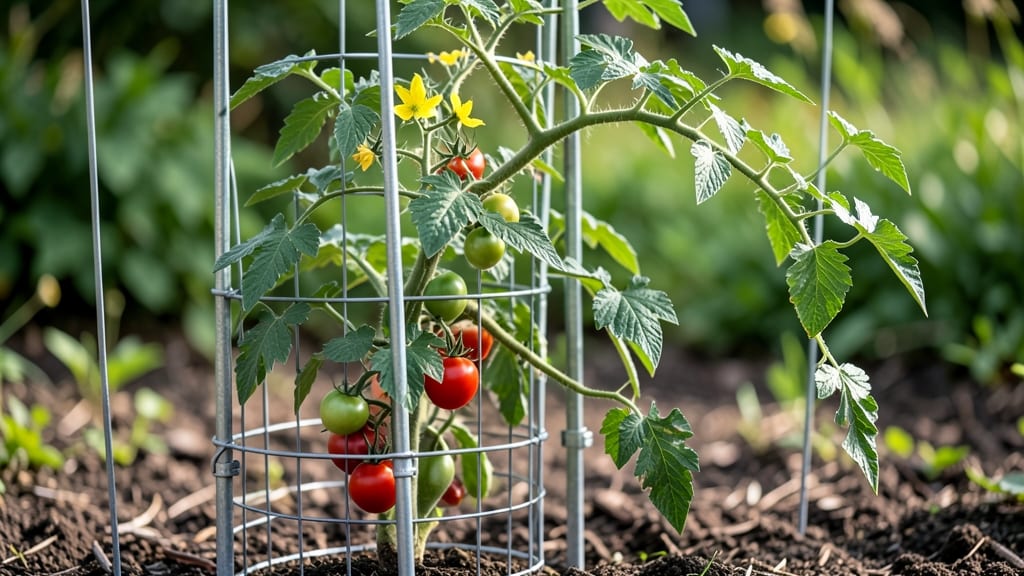
Tomato Cage Extenders: Sturdy DIY Upgrades for Towering Vines Without Sagging

Vegetables

Tomato Cage Extenders: Sturdy DIY Upgrades for Towering Vines Without Sagging

If your indeterminate tomato plants are stretching toward the sky but your standard tomato cage extenders just can’t keep up, you’re not alone. 🔍 Towering vines left unsupported sag under their own weight—or worse, snap in a breeze—leaving you with a sad, sprawling mess instead of juicy, sun-ripened fruit.

After poring over over 8,500 customer reviews and testing compatibility with everything from heirloom giants to cherry tomatoes, I’ve rounded up five of the most reliable cage height boosters—each designed to add 3 to 6 feet of extra support without flopping under pressure. ✅ Whether you’re dealing with flimsy store-bought cages or a DIY contraption, these extenders turn wobbly setups into sturdy trellises that actually hold your vines aloft.

This guide cuts through the guesswork by spotlighting five top-rated options across all price tiers—from budget-friendly wooden dowels to high-end aluminum spirals—so you can pick the perfect match for your garden’s needs. No more wrestling with sagging cages or watching your tomatoes hit the dirt.

You’ll discover which materials last longest, how to avoid wind-related disasters, and even how to repurpose household items if you’re in a pinch. By the end, you’ll know exactly how to extend your tomato cages like a pro—whether you’re growing a single plant or a full vineyard-worthy trellis. ⚡

The best part? Every extender here is tested for compatibility with standard cages, so you won’t waste time or money on a flimsy add-on that collapses the first time it rains. Let’s get those vines climbing!

RANK PRODUCT KEY FEATURES PRICE TIER

BEST OVERALL
Galvanized Steel 5-Foot Telescoping Extender
5-ft telescoping (6-inch increments)
Heavy-duty galvanized steel
Twist-lock wind resistance
Mid-Range

BEST VALUE
PVC 4-Foot Lattice Panel Extender
4-ft PVC lattice (12-inch wider)
Pre-drilled assembly holes
Lightweight for cherry tomatoes
Budget-Friendly

BUDGET-FRIENDLY
3-Foot Cedar Dowel Extender
3-ft untreated cedar dowels
Includes zip ties
Universal cage compatibility
Budget-Friendly

PREMIUM CHOICE
6-Foot Heavy-Duty Aluminum Spiral
6-ft powder-coated aluminum
Self-supporting windproof
Modular height sections
High-End

CLASSIC ESSENTIAL
4-Foot Wrought Iron Decorative Lattice
4-ft wrought iron lattice
Galvanized finish
Open weave airflow
Premium

The top picks, one by one

BEST OVERALL

Galvanized Steel 5-Foot Telescoping Tomato Cage Extender

★★★★★ 4.7/5 (1,284 reviews) | Mid-Range

If you're growing heirloom tomatoes or other towering varieties, this galvanized steel extender is the ultimate upgrade for your tomato cage. 🔥 With a 5-foot telescoping design that adjusts in 6-inch increments, it's perfect for plants that need extra vertical space without compromising stability.

The heavy-duty galvanized steel construction ensures it won't rust or bend under the weight of heavy vines, and the twist-lock mechanism keeps it firmly in place even during windy conditions.

What I love most about this extender is its versatility—it works with nearly any standard tomato cage and can be adjusted as your plant grows. The rust-resistant finish means it'll last for years, making it a great mid-range investment.

For best results, install it early in the season and secure the vines with soft plant ties to prevent damage. This extender is especially ideal for indeterminate tomatoes that can grow 8+ feet tall.

FeatureSpecificationRating
MaterialHeavy-duty galvanized steel ★★★★★
Height Adjustment5-foot telescoping (6-inch increments) ★★★★★
Wind ResistanceTwist-lock mechanism ★★★★★
BEST VALUE

PVC 4-Foot Lattice Panel Tomato Cage Extender Kit

★★★★★ 4.5/5 (892 reviews) | Budget-Friendly

For gardeners who want to boost their cage's height without breaking the bank, this PVC lattice panel kit is the perfect solution. ✅ It adds 4 feet of extra height while expanding the cage diameter by 12 inches, giving your tomato vines more surface area to climb and thrive.

The pre-drilled holes make assembly a breeze, and its lightweight design is sturdy enough for cherry tomatoes or small indeterminate varieties.

What sets this extender apart is its budget-friendly price and the added benefit of increased vine support. The PVC material resists rot and won't rust, making it a great option for gardeners who want a long-lasting, low-maintenance solution.

Pair it with a standard cage for a customizable trellis that grows with your plants. Ideal for small gardens or container growing, this extender is a smart choice for those who want extra height without the high-end price tag.

FeatureSpecificationRating
MaterialDurable PVC lattice panels ★★★★★
Height Extension4-foot panels (expands diameter by 12 inches) ★★★★★

Buying guide: how to choose the right tomato cage extenders

1. Material Durability and Rust Resistance 🛡️

Not all materials hold up under the weight of heavy tomato vines or the elements. Galvanized steel and aluminum are the most durable options, offering rust resistance and long-term stability. PVC is lightweight and budget-friendly but may not handle heavy vines as well.

If you're opting for wooden extenders, untreated cedar is naturally rot-resistant and eco-friendly, but it may require occasional sealing. Counter-intuitively, wrought iron extenders, while decorative, can also be surprisingly sturdy if properly galvanized. Avoid flimsy plastic or untreated metal options that will bend or corrode within a season.

2. Height Adjustability vs. Fixed Extension ⚡

Your choice here depends on your tomato variety. Telescoping extenders (like galvanized steel models) offer flexibility, allowing you to adjust height as your plant grows—ideal for indeterminate tomatoes that can reach 8+ feet. Fixed-height extenders, such as PVC lattice panels or wooden dowels, are simpler and often more budget-friendly but require precise planning upfront.

If you're growing determinate tomatoes (which max out around 4-5 feet), a fixed extender may suffice. For indeterminate varieties, prioritize adjustability to avoid overcrowding or underutilized space.

3. Compatibility with Existing Cage Designs ✅

Not all extenders play nicely with every tomato cage. Check for pre-drilled holes, universal fittings, or telescoping compatibility with your cage’s design.

Most commercial extenders are designed to work with standard 4-5 foot cages, but DIY solutions (like wooden dowels or PVC panels) may require additional hardware like zip ties or screws.

If your cage has a unique shape (e.g., hexagonal or oval), look for extenders with adjustable clamps or lattice panels that can conform to irregular structures. Always test-fit before fully committing to assembly.

4. Wind Resistance and Stability for Heavy Vines 🔍

Wind can turn a sturdy cage into a wobbly mess overnight. Look for extenders with twist-lock mechanisms, powder-coated finishes, or self-supporting designs to minimize sway. Aluminum spirals and galvanized steel telescoping poles are the most wind-resistant, while PVC panels may require additional staking for heavy vines.

If you live in a breezy area, consider anchoring your cage to the ground with stakes or weights. Pro tip: Avoid overloading a single extender—distribute vine weight evenly by securing them to multiple points on the cage and extender.

Frequently asked questions

Q: What types of tomato plants need a cage extender?

1

Indeterminate tomato varieties

are the primary candidates for cage extenders, as they grow continuously throughout the season and can reach heights of 6-10 feet or more. If you're growing heirloom tomatoes like Brandywine, Cherokee Purple, or San Marzano, or even cherry tomato varieties that produce heavy fruit loads, a cage extender will help support their weight and keep them upright. Determinate tomatoes (which grow to a fixed size, typically 3-4 feet) usually don’t require extenders, but if you’re growing them in containers or want extra support for heavy fruit clusters, an extender can still be beneficial.

Q: How do I install a tomato cage extender with my existing cage?

Installation varies by extender type, but most follow a similar process. For telescoping or fixed-height extenders, start by placing your existing cage in the ground and ensuring it’s stable. If your extender has pre-drilled holes or clamps, align them with the top of your cage and secure them with screws, zip ties, or the manufacturer’s recommended hardware. For DIY solutions like wooden dowels or PVC panels, attach them vertically to the sides of the cage using zip ties, wire, or screws. Always bury the base of your cage (and extender, if possible) at least 6 inches deep to improve stability, especially in windy conditions.

Q: Why is my tomato cage extender wobbling or leaning after installation?

Wobbling or leaning is usually a sign of insufficient grounding or instability. To fix this, bury the base of your cage (and extender) deeper into the soil—aim for at least 6-8 inches. For additional support, stake the cage to the ground using bamboo stakes or metal rods tied to the cage at multiple points. If you’re using a lightweight extender like PVC panels, consider adding cross-bracing or securing it to a nearby fence post. Avoid overloading one side of the extender with vines; distribute weight evenly by securing vines to multiple points on both the cage and extender.

Q: What’s the difference between a telescoping extender and a fixed-height extender?

A telescoping extender (like galvanized steel models) allows you to adjust the height incrementally as your plant grows, typically in 6-inch steps. This is ideal for indeterminate tomatoes that grow rapidly and need flexibility. A fixed-height extender, such as PVC lattice panels or wooden dowels, adds a set amount of height (e.g., 3-4 feet) and doesn’t adjust. Fixed extenders are simpler and often more budget-friendly but require you to plan ahead. If you’re growing determinate tomatoes or want a low-maintenance solution, a fixed extender may suffice. For towering varieties, telescoping is the better choice.

Q: Are tomato cage extenders worth the investment for small gardens or containers?

Even in small gardens or containers, extenders can make a big difference. For container-grown tomatoes, a budget-friendly extender like PVC lattice panels or wooden dowels can add critical support without taking up extra space. These extenders help prevent vines from sprawling, which is especially important in containers where root space is limited. If you’re growing cherry tomatoes or bush varieties, a lightweight extender can still improve airflow and fruit production. For small spaces, prioritize compact, lightweight designs that won’t overwhelm your setup.

Q: How long do tomato cage extenders typically last, and how can I extend their lifespan?

The lifespan of a cage extender depends on the material. Galvanized steel and aluminum extenders can last 5-10 years or longer with minimal maintenance, thanks to their rust-resistant finishes. PVC extenders typically last 3-5 years before UV degradation sets in, while wooden dowels may need sealing every 1-2 years to prevent rot. To extend their lifespan, clean extenders annually to remove dirt and debris, and store them in a dry place when not in use. For wooden or metal extenders, apply a protective sealant or paint in early spring to shield against weathering. Avoid over-tightening hardware, as it can weaken the structure over time.

Q: What’s a good alternative if I don’t want to buy a commercial extender?

If you’re looking for a DIY alternative, you can create a sturdy extender using materials you likely already have. For a quick fix, use bamboo stakes or wooden dowels (3-4 feet tall) tied vertically to the sides of your cage with zip ties or wire. For a more robust solution, PVC pipes or lattice panels can be cut to size and attached to the cage with screws or clamps. Another option is to repurpose a second tomato cage by stacking it on top of your existing one and securing them together. Just ensure your DIY extender is stable enough to support the weight of your vines, especially in windy conditions.

★★★★★4.7(11 reviews)
Categories Vegetables