
Companion Plants
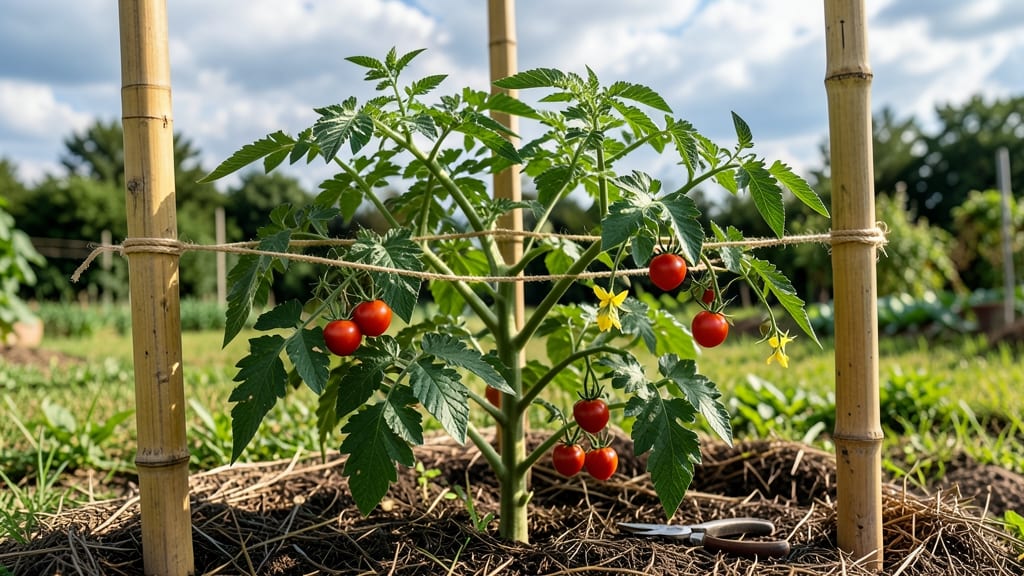
Indeterminate tomatoes can reach 10 feet tall and produce fruit all season—but without proper staking, those heavy vines snap under their own weight. 🌱 I’ve seen sprawling plants collapse mid-summer, turning a potential harvest into a tangled mess.
The secret isn’t just tying them up; it’s guiding growth so the plant supports itself while maximizing fruit production.
Start staking early, before the plant needs it—think 3-4 feet tall, when the first flowers appear. Use wooden stakes, trellises, or cages (each has trade-offs: stakes are sturdy but require more tying, cages are low-maintenance but can crowd small varieties).
The key is spacing: give indeterminates 2-3 feet between plants so airflow prevents disease, and prune suckers aggressively to focus energy upward.
With the right setup, you’ll end up with vines that climb like vines in a jungle, fruit hanging where you can reach it, and no more broken stems. The payoff? More tomatoes, easier harvesting, and plants that look like they’re thriving—not struggling.
Whether you’re working with limited space or a full sunbed, these methods adapt. The only mistake worse than not staking? Waiting until the plant is already sagging. Let’s get those vines supported before they need it.
📚 In This Guide
- What you need
- Instructions
- Tips and common mistakes
- Wrapping up and next steps
What you need
- ● Stakes: 6–8 ft tall bamboo stakes (1–2 inches in diameter) – 1 per plant (or more for windy areas).
- ● Metal or wooden dowels (alternative, if bamboo isn’t available).
- ○ Trellis or Cage (Optional but Helpful): Commercial tomato cages (5–6 ft tall, 12–18 inches wide) – 1 per plant.
- ● DIY wire or wooden trellis (4–5 ft tall, with 6–8 vertical wires or slats).
- ● Tying Supplies: Soft plant ties (fabric or plastic, not wire) – 3–5 per plant.
- ● Twist ties (if fabric ties aren’t available).
- ● Pruning Shears: Clean, sharp bypass pruners (for trimming suckers and excess growth).
- ● Healthy indeterminate tomato plants (transplanted or grown from seed).
- ● Well-draining soil (amend with compost if needed).
- ● Sunny location (6–8+ hours of direct sunlight daily).
- ● Watering can or hose (for post-staking hydration).
How to stake indeterminate tomatoes for maximum yield
Here’s the method I’ve used for years to keep my indeterminate tomatoes producing heavy fruit without breaking stems.
🌱 Step 1: Choose the Right Staking System for Your Variety
Indeterminate tomatoes need strong support because their vines grow 6-12 feet tall and bear fruit continuously. I recommend wooden stakes (5-6 feet tall) for single plants or a tomato cage (6-8 feet tall) for easier maintenance. For heavy producers like 'Sungold' or 'Brandywine,' I use two 5-foot stakes tied together in an "A" frame—this distributes weight better than a single stake.
Drive stakes 6-8 inches deep into the soil 2-3 inches from the main stem to avoid damaging roots. If using cages, place them before planting so roots grow through the wire without restriction. The key is stability—wobbly stakes snap under fruit weight, and you’ll lose your harvest overnight.
✂️ Step 2: Train the Main Stem Early
When your tomato plant reaches 12-18 inches tall, tie the main stem to the stake gently but firmly with soft plant ties or old T-shirts (never wire—it cuts into stems). I like to loop the tie around the stake once and the stem twice, then adjust as the plant grows. The goal is to guide, not restrict—you want the vine to grow upward naturally.
Here’s the thing—don’t wait until the plant is heavy with fruit to stake it. If you skip this step, the stem will bend or break under the weight of a single tomato cluster. Check ties weekly and adjust as the stem thickens. You’ll see the plant grow straighter and stronger within days.
🌿 Step 3: Prune and Tie Side Shoots Strategically
Indeterminate tomatoes produce suckers (side shoots) in the leaf axils. Remove all suckers below the first flower cluster—these drain energy from fruit production. Leave suckers above the first cluster to encourage bushier growth. Tie these side shoots to the stake every 6-8 inches as they grow to prevent them from sagging.
I prune with clean, sharp shears and sterilize them with rubbing alcohol between cuts to prevent disease. Watch for new growth at the base of leaves—these are your suckers. If left unchecked, they’ll create a tangled mess that’s impossible to support. Pruning might seem harsh, but it doubles your yield by directing energy to fruit instead of foliage.
💧 Step 4: Water and Fertilize for Strong Stems
Staked tomatoes need consistent moisture—fluctuations cause weak stems that can’t support heavy fruit. Water deeply 2-3 times per week, aiming for 1-1.5 inches of water per week. I water at the base of the plant in the morning to reduce disease risk. Avoid wetting leaves, which encourages blight.
Feed with a balanced fertilizer (10-10-10) every 2-3 weeks once flowers appear. I switch to a low-nitrogen, high-phosphorus formula (5-10-10) when fruit sets to boost sugar development. Strong stems need calcium, so I add crushed eggshells to the soil monthly. Weak stems split easily under fruit weight—this is your insurance policy.
☀️ Step 5: Monitor and Adjust as Fruit Develops
When tomatoes reach golf-ball size, they’re 80% of their final weight—this is when stakes are most critical. Check ties every 3-4 days during heavy fruiting. If a branch bows more than 45 degrees, add a secondary tie immediately. I’ve seen 1-pound tomatoes snap stems overnight if left untied.
Watch for overcrowded clusters—if two trusses (fruit clusters) are within 6 inches of each other, prune the smaller one. This prevents splitting and ensures even ripening. Harvest regularly to encourage more blooms. The goal is to keep the plant upright, balanced, and supported—not just tied to a stake.
Tips & tricks for staking indeterminate tomatoes
These game-changing techniques will help you avoid common pitfalls and maximize your harvest.
Stability is Everything: When driving your 5-6 foot wooden stakes 6-8 inches deep, use a mallet for even pressure—don't just pound with a hammer. I've seen stakes lean after planting because they weren't seated properly. For extra security, especially in windy areas, drive stakes in a slight outward angle (about 5 degrees) to create a natural tension system when tied. This simple adjustment prevents stakes from pulling out when heavy fruit loads develop.
Tie Technique That Works: The once around stake, twice around stem method from Step 2 is perfect, but here's the secret: use a figure-eight pattern when tying. This creates more surface contact without constricting growth. I've found that old T-shirts work best because they stretch as the plant grows—no need to retie weekly. For side shoots, wrap ties around the stem below the leaf axil where suckers emerge to prevent damage during pruning.
Pruning with Precision: When removing suckers below the first flower cluster, focus on the angle of the cut. Make a clean diagonal cut just above the leaf axil where the sucker emerges. This prevents water from pooling in the wound, which can cause rot. I sterilize my shears between cuts with rubbing alcohol, but if you're short on time, wipe them with a damp cloth—just don't skip this step entirely. The cleaner the cut, the faster the plant recovers and redirects energy to fruit production.
Fruit Development Watch: At the golf-ball size stage (when tomatoes are 80% of final weight), switch to checking ties every 2-3 days instead of weekly. This is when stems experience maximum stress. I've lost entire clusters when a branch bowed past 45 degrees—adding a secondary tie at this stage prevents catastrophic failure. For extra peace of mind, consider using velcro plant ties which can be easily adjusted without damaging stems.
Pro Tips for Staking Indeterminate Tomato Plants
- These game-changing techniques will help you avoid common pitfalls and maximize your harvest.
- Stability is Everything: When driving your 5-6 foot wooden stakes 6-8 inches deep, use a mallet for even pressure—don't just pound with a hammer.
- Tie Technique That Works: The once around stake, twice around stem method from Step 2 is perfect, but here's the secret: use a figure-eight pattern when tying.
Frequently asked questions
Got questions about staking indeterminate tomatoes?
You’re not alone—this step can feel tricky, but we’ve got answers to help you grow like a pro! Here are the most common concerns and quick fixes to keep your plants thriving.
When is the best time to stake indeterminate tomato plants?
Stake your plants early—as soon as they’re 6–12 inches tall (about 2–3 weeks after transplanting). Indeterminate varieties grow tall and fast, so securing them early prevents stress. Use soft ties or cloth strips to avoid damaging stems. Pro tip: If you miss the window, stake them ASAP, but expect slower recovery.
What if my tomato plants are already sagging?
Don’t panic! Sagging often means underwatering, overripe fruit, or weak stems. First, water deeply at the base (not the leaves) and remove any overripe tomatoes to lighten the load. Then, gently tie the plant to a sturdy stake or trellis, adding support gradually to avoid snapping stems. If the plant is severely stressed, prune some lower leaves to reduce weight.
Can I use anything other than traditional stakes?
Indeterminate tomatoes love support, so get creative:
- Trellises: Great for small spaces—use bamboo, metal, or DIY wooden frames.
- Cages: Pre-made wire cages work but may need reinforcement for heavy fruit.
- String/Overhead Lines: Tie plants to a horizontal line (like a clothesline) for a "Florida weave" look.
- Bamboo or Reed Sticks: Bundle 3–4 sticks together for flexibility and strength.
How often should I adjust or tighten the ties?
Check your ties every 1–2 weeks (or after heavy rain/wind). As plants grow, the stems thicken, and ties can cut into the bark if too tight. Loosen and readjust gently—use soft materials like old T-shirts, strips of fabric, or velcro ties to prevent damage. Pro tip: Avoid wire or zip ties; they can girdle the stem over time.
Will staking affect my tomato yield or flavor?
Not at all! Staking improves air circulation, reducing disease risk (like blight), and helps fruit ripen evenly. Proper support actually boosts yields by directing energy upward instead of sprawling. Flavor stays the same—focus on sun, water, and soil health for sweetness! Just avoid over-pruning; let the plant channel energy into fruit production.
Wrapping up and next steps
Staking indeterminate tomato plants isn’t just about keeping vines upright—it’s about unlocking their full potential for bountiful, disease-free harvests. Whether you’re using cages, stakes, or trellises, the right support transforms your garden into a thriving vertical paradise.
With these trellis secrets, you’re well on your way to enjoying heavier fruit, better airflow, and easier maintenance.
Ready to see your tomatoes reach new heights? Grab your supplies and get staking—your future juicy, vine-ripened rewards are waiting! 🌱✨