
Pests and Diseases
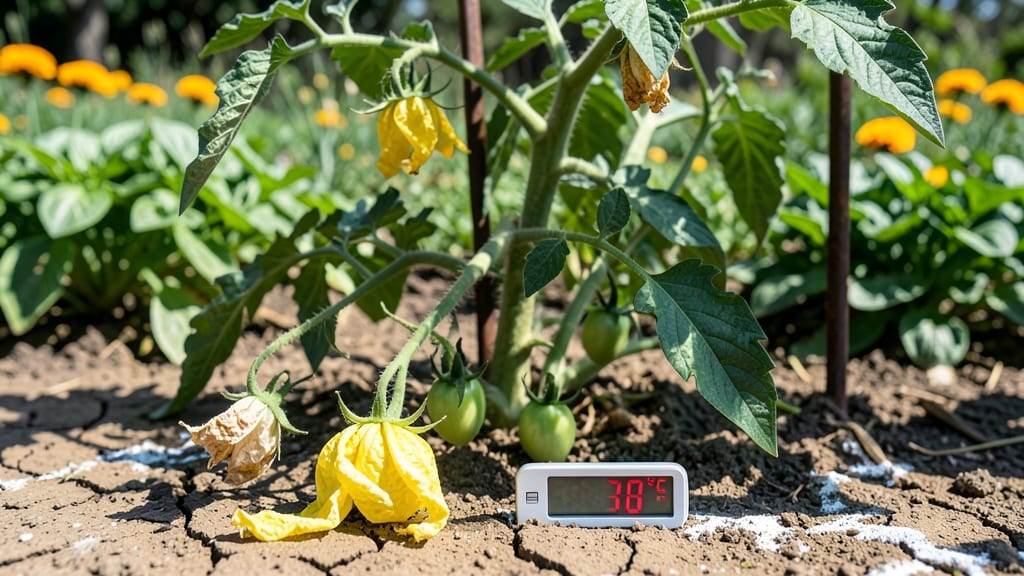
When your tomato blooms fall off before turning into fruit, your plants are essentially shouting for help. 🌱 I’ve watched this happen more times than I’d like—especially during scorching summers—where what should be a bounty of tomatoes turns into a sad parade of dropped flowers.
The good news? This isn’t a death sentence, just a signal that your plants need a little TLC to bounce back.
Most of the time, it’s heat stress or poor pollination causing the problem. Tomatoes need consistent temperatures between 60-85°F to set fruit, and sudden spikes above 90°F can make them drop blooms faster than you can say “salsa.”
Even low humidity or windy conditions can prevent pollen from reaching the flowers, leaving you with empty stems. The fix isn’t complicated—just targeted adjustments that trick your plants into focusing on fruit instead of survival mode.
By the end of this, you’ll have a foolproof three-step plan to revive your plants: shade solutions to cool things down, hand-pollination tricks to ensure every bloom gets a chance, and a quick nutrient boost to keep them strong.
No fancy tools or secret potions—just practical moves that work even for beginners. The best part? You’ll see results in as little as 3-5 days if you act fast.
Whether you’re dealing with a backyard garden, containers on a patio, or even a single plant in a raised bed, these steps adapt easily. The key is catching the problem early and giving your tomatoes the support they need to turn those blooms into the juicy harvest you’re dreaming of.
Let’s get those fruits growing!
Root Causes Of Dropping Blooms
If your tomato plants are dropping blooms before they can turn into fruit, the issue likely stems from one (or more) of these common environmental or physiological triggers.
Understanding the why behind the problem is the first step toward fixing it—so let’s break it down scientifically, with actionable insights for each cause.
Tomatoes are tropical plants at heart, but they hate sudden, intense heat—especially when temperatures climb above 90°F (32°C) during the day or stay above 75°F (24°C) at night. When blooms encounter heat stress, they trigger a natural abscission (dropping) response to conserve energy for survival.
Why it happens: When heat spikes, the plant’s ethylene production (a natural plant hormone) surges, signaling blooms to detach. This is a survival mechanism—tomatoes prioritize keeping the plant alive over fruit production when conditions become too harsh.
Actionable fix:
- Provide afternoon shade: Use shade cloth (30-50%) to block direct sunlight during peak heat (12 PM–4 PM).
- Mulch heavily: Apply 2–3 inches of organic mulch (straw, wood chips) to keep soil cool and retain moisture.
- Avoid overhead watering: Water deeply at the base in the early morning to reduce heat stress on leaves and blooms.
- Choose heat-tolerant varieties: Look for determinate types like ‘Heatmaster’ or ‘Solar Fire’ if you’re in a hot climate.
Pro tip: 🌡️ If temps exceed 95°F (35°C) for more than a few days, blooms may drop regardless of other care—shade is non-negotiable!
Tomatoes are thirsty plants, and fluctuations in soil moisture—whether underwatering or overwatering—can cause blooms to fall prematurely. The issue isn’t just drought; it’s stress from instability.
Why it happens: Tomato blooms are highly sensitive to water stress. When soil moisture drops too low, the plant’s vascular system struggles to transport nutrients and hormones to the flowers. Conversely, sudden heavy watering can drown roots, disrupting hormone balance and triggering abscission.
Actionable fix:
- Water deeply and consistently: Aim for 1–1.5 inches of water per week, delivered at the soil level (not leaves). Use a drip irrigation system for precision.
- Check soil moisture daily: Stick your finger 2 inches deep—if it’s dry, water. If it’s soggy, wait.
- Avoid wetting foliage: Wet leaves can promote fungal diseases (like blight), adding to bloom stress.
- Use soaker hoses or mulch: Both help maintain even moisture levels and reduce evaporation.
Pro tip: 💡 Morning watering is ideal—it allows foliage to dry before evening, reducing disease risk while keeping roots hydrated.
Tomatoes are heavy feeders, and their blooms need a precise balance of nutrients to thrive. Too little nitrogen, phosphorus, or potassium—or an excess of salts—can send blooms packing.
Why it happens:
- Low phosphorus (P): Critical for flower and fruit development. Without enough P, blooms won’t set properly and may drop.
- High nitrogen (N) late in the season: Nitrogen promotes leafy growth but starves blooms of energy. A late-season nitrogen boost can cause flowers to abort.
- Potassium (K) deficiency: Weakens the plant’s ability to transport nutrients, leading to poor bloom retention.
- Salt buildup: From over-fertilizing or poor-quality water, salts can burn roots, disrupting hormone signals.
Actionable fix:
- Test your soil: Use a DIY soil test kit to check pH (ideal: 6.0–6.8) and nutrient levels.
- Balance your fertilizer: Switch to a low-nitrogen, high-phosphorus formula (e.g., 5-10-10) when blooms appear.
- Flush the soil: If you suspect salt buildup, water heavily for 10–15 minutes to leach excess salts.
- Avoid over-fertilizing: More fertilizer ≠ more fruit. Follow package instructions precisely.
Pro tip: 🌱 Compost or worm castings can gently supply micronutrients without risking salt buildup or imbalance.
Tomatoes are delicate when it comes to stability. Strong winds, cold drafts, or abrupt temperature swings can physically damage blooms or disrupt their development.
Why it happens:
- Wind damage: Physically shakes off small, unsecured blooms before pollination.
- Cold snaps: Temperatures below 50°F (10°C) at night can stun blooms, causing them to drop.
- Drafts or fans: While airflow helps prevent disease, constant strong breezes can stress blooms.
Actionable fix:
- Protect from wind: Plant tomatoes near a windbreak (fence, trellis, or tall plants like corn).
- Avoid late-season cold exposure: Use row covers or move potted plants to a sheltered spot if a cold front is forecasted.
- Stabilize plants: For indeterminate varieties, stake or cage plants to prevent wind from swaying blooms.
- Monitor airflow: If using fans for disease prevention, ensure they’re not blowing directly on blooms.
Pro tip: 🌡️ Extend the growing season with cloches or cold frames if your region has unpredictable spring/fall temps.
Next up: Once you’ve addressed the root cause, the real magic happens in 3 simple steps to save your blooms and boost fruit production—even in a heatwave!
Fixing Dropped Tomato Flowers
When your tomato blooms start falling off before they can turn into fruit, it’s a sign your plants are under stress—especially during heatwaves. But don’t worry! With the right adjustments, you can help your tomatoes recover and keep those blooms from dropping.
Below, we’ve mapped out practical fixes for the most common causes, along with prevention tips to keep your plants thriving.
Signs: Flowers drop within hours of blooming, leaves wilt slightly, or plants look "limp" in the afternoon.
How to Fix It: 🔥 Provide Shade Cloth – Use 30-50% shade cloth during peak sun (11 AM–4 PM) to reduce heat stress. Secure it loosely so airflow isn’t blocked. 💧 Deep Watering Early – Water deeply in the morning (1–2 inches per week) to encourage strong root growth. Avoid wetting leaves to prevent sunburn. 🌬️ Improve Airflow – Space plants 18–24 inches apart and prune lower leaves to reduce humidity around the fruit. 🌱 Mulch Heavily – Apply 2–3 inches of straw or grass clippings to retain soil moisture and cool roots.
💡 Prevention Tip: If you’re in a hot climate, choose heat-tolerant varieties like ‘Solar Fire’ or ‘Heatmaster’ tomatoes.
Signs: Flowers drop suddenly, soil feels dry 1–2 inches deep, or leaves curl at the edges.
How to Fix It: 🍳 Water at the Base – Use a drip irrigation system or soaker hose to deliver water slowly and directly to the roots. Avoid overhead sprinklers. ⏰ Stick to a Schedule – Water every 2–3 days (adjust based on heat) rather than sporadically. Morning is best—evening watering can encourage fungal issues. 🌡️ Check Soil Moisture – Stick your finger 2 inches into the soil. If it’s dry, water thoroughly. If it’s soggy, wait a day. 🔄 Adjust for Rainy Spells – If rain is forecast, reduce watering to avoid root rot.
💡 Prevention Tip: Use a moisture meter to track soil conditions—consistency is key!
Signs: Lush green leaves but no flowers or fruit, or blooms drop early. Soil may smell overly "fresh."
How to Fix It: 🍽️ Switch to a Bloom Booster – Stop using high-nitrogen fertilizers (like lawn fertilizer) and switch to a balanced 5-10-10 or 10-20-20 formula (higher in phosphorus). 🥗 Add Compost or Bone Meal – Mix 1–2 cups of bone meal (high in phosphorus) into the soil around plants to encourage flowering. 🍅 Folate Spray (Optional) – For a quick boost, spray leaves with a foliar feed like fish emulsion or seaweed extract (rich in micronutrients). 🚫 Avoid Over-Fertilizing – More isn’t better! Follow package instructions to prevent root burn.
💡 Prevention Tip: Do a soil test every 2–3 years to check nutrient levels—many gardens are over-fertilized with nitrogen.
Signs: Flowers appear but no fruit sets, or blooms drop without swelling.
How to Fix It: 🐝 Hand-Pollinate – Gently tap each flower cluster with a small brush or your finger to release pollen. Do this early in the morning when blooms are open. 🍯 Attract Pollinators – Plant bee-friendly flowers (like marigolds, basil, or borage) near your tomatoes to lure bees naturally. 🌬️ Stir the Air – If growing indoors, use a small fan on low speed near plants to mimic wind pollination. ⏳ Be Patient – Some varieties (like ‘Indeterminate’ tomatoes) may take 5–7 days to set fruit after pollination.
💡 Prevention Tip: Avoid heavy pruning near blooms—it can disrupt pollinator access.
Signs: Sticky residue on leaves, wilting, or black spots on flowers/blooms.
How to Fix It: 🔪 Spray with Neem Oil – Mix 1 tbsp neem oil + 1 tsp mild soap per quart of water and spray early morning/evening to deter pests. 🚿 Rinse Off Pests – Use a strong stream of water to knock off aphids or whiteflies (do this before 10 AM). 🌿 Remove Infested Leaves – Prune and dispose of heavily damaged foliage to prevent spread. 🍄 Prevent Fungal Issues – Space plants for airflow, avoid overhead watering, and apply copper fungicide if needed.
💡 Prevention Tip: Rotate crops yearly to prevent soil-borne diseases from building up.
Final Thought: Most dropped tomato blooms are fixable with quick adjustments—focus on consistent watering, balanced nutrients, and stress relief for your plants. Once you get the hang of it, you’ll be enjoying bountiful tomato harvests in no time! 🍅✨
Frequently asked questions
Why do my tomato blooms fall off even when I water them regularly?
Even with consistent watering, blooms may drop due to heat stress (above 90°F) or nutrient imbalances. Tomatoes need stable conditions—check for afternoon shade and switch to a low-nitrogen, high-phosphorus fertilizer (like 5-10-10) to support flowering.
Can I save tomato blooms that have already fallen?
No, but you can prevent future drops! Focus on hand-pollination (tap blooms gently with a brush) and consistent care (morning watering, shade cloth). If blooms are already gone, new ones will form in 7–10 days with proper conditions.
Are some tomato varieties less likely to drop blooms in heat?
Yes! Heat-tolerant varieties like ‘Heatmaster’ or ‘Solar Fire’ handle high temps better. Determinate types (like ‘Roma’) also produce fruit faster, reducing stress. For containers, choose ‘Patio’ or ‘Micro Tom’ varieties—they’re more resilient.
Will pruning help stop blooms from falling off?
Pruning can help—focus on removing lower leaves to improve airflow and reduce humidity. Avoid heavy pruning near blooms, though! Instead, prune suckers (side shoots) to redirect energy to existing flowers. Never prune more than 1/3 of the plant at once.
How long does it take to see results after fixing the problem?
With immediate fixes (shade, watering, hand-pollination), you’ll see new blooms in 3–5 days. For nutrient adjustments, wait 7–10 days for roots to recover. Patience is key—consistency matters more than speed!