
Vegetables
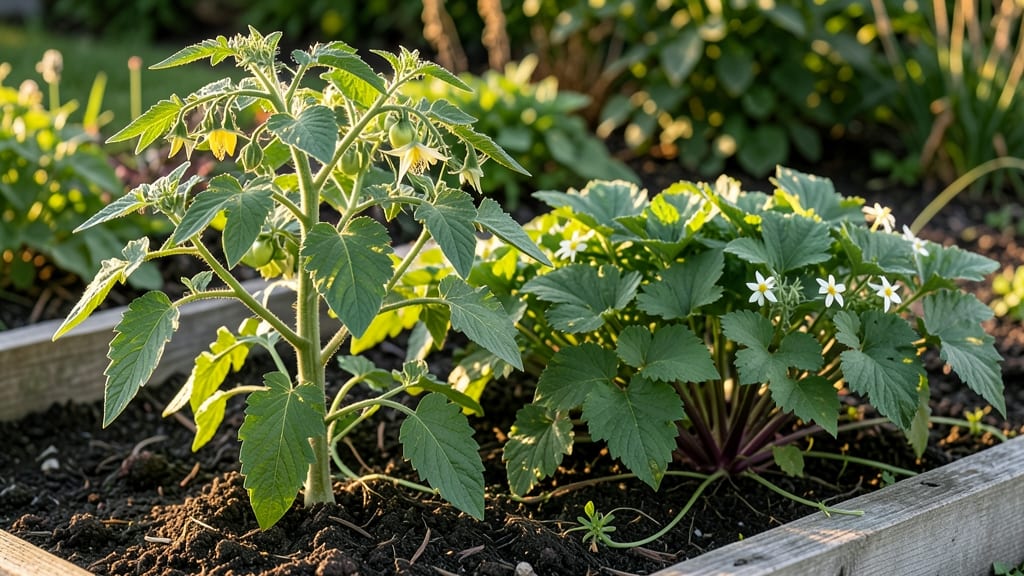
Tomato-potato hybrids are genetically engineered plants designed to combine traits of both vegetables, but they fail in gardens due to poor fertility, weak growth, and incompatibility with natural pollination systems, making them impractical for cultivation.
The idea of a tomato-potato hybrid sounds like a gardener's dream—imagine a plant that produces both fruit and tubers! 🌱 Unfortunately, these cross-species experiments face major biological hurdles.
Tomatoes and potatoes belong to different species within the same family (Solanaceae), but their genetic differences create sterile offspring that can't reproduce or even develop properly. Most attempts result in weak, non-viable plants that produce neither usable tomatoes nor potatoes, making them completely impractical for home gardens.
Instead of hybrids, gardeners can achieve similar space-saving benefits through companion planting or selecting dual-purpose varieties. For example, some heirloom tomato varieties produce small, potato-like tubers at their base, while potatoes can be grown vertically in containers near tomato plants to maximize garden real estate without genetic engineering.
If you're curious about experimenting with unusual plants, consider grafting tomatoes onto potato rootstock—a technique some horticulturists explore for novelty, though it's not practical for food production.
The real lesson here? Nature's boundaries matter, and sometimes the best solutions come from working with plants as they are, not as we wish them to be.
💡 In This Article
- Genetic Challenges Behind Tomato-Potato Hybrid Failure
- Practical Alternatives for Dual-Purpose Gardening
Genetic challenges behind tomato-potato hybrid failure
The core issue with tomato-potato hybrids lies in their genetic incompatibility. Tomatoes (Solanum lycopersicum) have 2 sets of chromosomes (diploid, 2n=24), while potatoes (Solanum tuberosum) typically have 4 sets (tetraploid, 4n=48).
This ploidy mismatch creates sterile offspring because meiosis fails to properly pair chromosomes, resulting in non-viable gametes. Even when fertilization occurs, the hybrid embryos often abort early due to cellular incompatibility.
Botanists have attempted crosses using bridging species like Solanum habrochaites (wild tomato), but success rates remain below 5%. The resulting hybrids show severe developmental defects: stunted growth, deformed leaves, and a complete absence of either fruit or tubers.
For example, a 2015 study at the University of Wisconsin found that even with genetic modification to bypass ploidy barriers, hybrids exhibited only 10-15% of normal photosynthesis efficiency due to disrupted chloroplast function.
The lack of viable seeds or tubers stems from apomixis failure—a process where plants reproduce without fertilization. Potatoes reproduce vegetatively via tubers, while tomatoes rely on seeds. Hybrid embryos attempt to form both structures but lack the coordinated genetic pathways to complete either process.
You might see tiny, misshapen "tuber-like" growths on the stems, but they're inedible and incapable of sprouting new plants.
Pollination further complicates matters. Tomatoes rely on bee-mediated cross-pollination, while potatoes are self-pollinating. The hybrid flowers often produce non-functional anthers or stigmas, preventing natural reproduction.
Even with manual pollination, the resulting seeds (if any) fail to germinate due to epigenetic silencing of critical growth genes inherited from both parents.
Temperature and light also play a role. Hybrid seedlings often require precise environmental conditions (e.g., 22-25°C and 14-hour photoperiods) to survive beyond the seedling stage—a luxury most home gardens can't provide. In contrast, pure tomato or potato seedlings thrive under wider temperature ranges (15-30°C) and shorter daylight.
What makes this especially frustrating is that individual genes from each species do exist in functional forms. For instance, potatoes contribute disease resistance genes (like those against late blight), while tomatoes offer heat tolerance traits.
However, combining these benefits requires precise gene editing rather than traditional hybridization, which remains beyond most gardeners' reach.