
Pruning
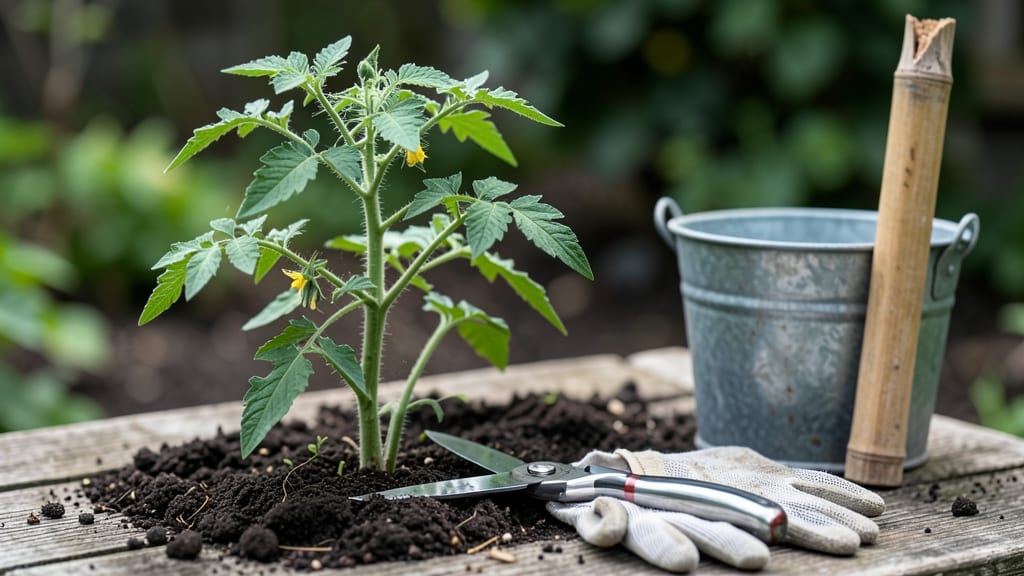
Pruning young tomato plants transforms those spindly seedlings into sturdy, productive bushes. ✂️ I used to skip this step, thinking it would stress the plants—until I saw how much bigger my fruit got after just a few pinches.
The key is timing and technique, and once you master it, you’ll never go back to unpruned plants.
You only need two things: sharp scissors or pruning shears (cleaned with rubbing alcohol) and a sunny morning to work. Start when plants are about 12 inches tall, focusing on the top sets of leaves where new growth appears.
These are called suckers, and removing them early directs energy to the main stem and fruit clusters.
What you’ll end up with is a tomato plant that’s stronger, bushier, and loaded with larger fruit—not to mention fewer diseases from better air circulation. The first harvest comes sooner, and the plants stay upright even as they get heavy with tomatoes.
It’s the difference between a handful of small fruit and a basketful of juicy, vine-ripened beauties.
Works for both determinate (bush) and indeterminate (vining) varieties, though the pruning approach differs slightly. For indeterminate types, keep pruning throughout the season to encourage continuous blooming. Here’s exactly how to do it without overcomplicating things.
📚 In This Guide
- What you need
- Instructions
- Tips and common mistakes
- Wrapping up and next steps
What you need
- ● Sharp pruning shears or scissors: Clean, sterilized (70% isopropyl alcohol or bleach solution), and sharp to avoid damaging plant tissue. Bypass pruners work best for clean cuts.
- ○ Gloves (optional but recommended): Nitrile or garden gloves to protect your hands from thorns and dirt.
- ● Disinfectant (70% isopropyl alcohol or bleach solution): 1 part bleach to 9 parts water for sterilizing tools between cuts.
- ● Garden twine or plant ties (if needed): Soft, biodegradable twine to support stems if pruning encourages heavy growth.
- ● Watering can or hose (for post-pruning care): To help plants recover by keeping soil moist.
- ○ Plant growth regulator (optional): Follow label instructions if using to promote bushier growth post-pruning.
- ● Mulch (straw, grass clippings, or shredded leaves): To retain moisture and protect roots after pruning.
- ● Plant marker or notebook: To track pruning dates and plant responses for future reference.
Step-by-Step guide to pruning young tomato plants
Here’s how I turn leggy seedlings into sturdy, productive plants with just a few snips.
🌱 Step 1: Wait Until Plants Have 4-6 True Leaves
Don’t rush—wait until your tomato seedlings show their first true leaves (the second set after the initial cotyledons). These leaves look like miniature versions of mature foliage, not the rounded seed leaves. You’ll know they’re ready when the stem has 4-6 true leaves and the plant is about 6-8 inches tall.
Pruning too early stresses young plants. I always check for healthy, vibrant green leaves—if they’re pale or yellowing, hold off. The goal is to encourage bushier growth, not stunt development. This is the moment that matters: once you see those true leaves, you’re ready to pinch.
✂️ Step 2: Pinch Off the Top Set of Leaves
Use clean, sharp scissors or your fingers to pinch the very top set of leaves and the stem just above a leaf node. This node is where new branches will grow. Look for the small bump where leaves attach—this is your target spot. You’ll be removing about 1/3 of the plant’s height, but trust the process.
Here’s the thing—this might look drastic, but it forces the plant to focus energy on lateral branches instead of growing taller. You’ll see new side shoots emerge within 7-10 days. If you’re unsure which leaves to pinch, count down from the top: the first set of leaves you see is the one to remove.
🌿 Step 3: Encourage Side Shoots to Develop
After pinching, watch for small side shoots (suckers) that form in the leaf axils—the junction where leaves meet the stem. These are your future branches. Let the strongest 2-3 suckers grow while pinching off any others that appear. You’ll know they’re strong when they’re at least 2 inches long and have a thick stem.
Don’t let these suckers grow too long before pinching—wait until they’re about 1-2 inches tall. If you let them get too big, they’ll compete with your main branches for energy. I always check my plants every 3-4 days during their early growth phase to stay on top of this.
☀️ Step 4: Provide Support and Continue Pruning
As your tomato plants grow, they’ll need support. Install a stake or cage early—around 10-12 inches tall—to prevent stems from snapping under the weight of fruit. Tie the main stem loosely to the support with soft plant ties, leaving room to grow. You don’t want to strangle the plant as it thickens.
Keep pinching suckers regularly as the plant grows. Focus on removing any that appear below the first flower cluster—these steal energy from fruit production. You’ll see your plant transform from a single stem into a bushy, productive plant with multiple branches bearing fruit. This is the payoff for your early pinching.
⏰ Step 5: Adjust for Flowering and Fruit Set
Once your plant starts flowering, shift your focus to fruit development. Remove any suckers that appear below the first flower cluster, but leave those above to support more branches. You’ll know your plant is thriving when it has 3-5 main stems with flowers and fruit forming along them.
Real talk: pruning young tomato plants is an ongoing process. Check your plants weekly during their growing season. The goal is to balance bushiness with fruit production—too many stems can overcrowd the plant, while too few won’t maximize yield. You’ll find your rhythm after a few seasons.
Tips & tricks for pruning young tomato plants
These simple tricks will help you transform leggy seedlings into productive, bushy tomato plants that yield bigger fruit.
Timing is Everything: The 4-6 true leaves stage is your golden window—pruning too early stresses young plants, while waiting too long lets them become top-heavy. I've seen plants that were 8 inches tall but only had 3 true leaves struggle to recover after pinching. Look for those healthy, vibrant leaves that look like miniature versions of mature foliage, not the initial seed leaves.
The Pinch Technique: When you're ready to pinch in Step 2, focus on making clean cuts just above the leaf node where you want new branches to grow. I use my fingernail to gently press and pinch rather than cutting with scissors—it's more precise and less damaging to the plant. This technique creates less stress and encourages faster regrowth of those important side shoots you'll see emerge within 7-10 days.
Sucker Management: In Step 3, you'll want to let only the strongest 2-3 suckers grow while removing others. I've learned the hard way that letting too many suckers grow weakens the plant. Look for suckers that are at least 2 inches long with thick stems—they'll be the ones that contribute most to your plant's structure. Check your plants every 3-4 days during early growth to stay on top of this.
Support System: Don't wait until your plants are 12 inches tall to add support in Step 4. Install stakes or cages earlier if your plants are growing particularly fast or in windy conditions. I've seen plants snap under fruit weight when they weren't properly supported. Use soft plant ties and leave room for growth—you don't want to strangle the plant as it thickens.
Pro Tips for Prune Young Tomato Plants
- These simple tricks will help you transform leggy seedlings into productive, bushy tomato plants that yield bigger fruit.
- Timing is Everything: The 4-6 true leaves stage is your golden window—pruning too early stresses young plants, while waiting too long lets them become top-heavy.
- The Pinch Technique: When you're ready to pinch in Step 2, focus on making clean cuts just above the leaf node where you want new branches to grow.
Frequently asked questions
Got questions about pruning young tomato plants? You’re not alone! Here are answers to the most common concerns—so you can confidently shape your plants for a bountiful harvest.
When should I start pruning my tomato seedlings?
Begin pruning once your seedlings have 2-3 sets of true leaves (not the tiny seed leaves). This is usually after they’ve been transplanted into the garden or larger pots. Early pruning encourages stronger stems and more vigorous growth. Just pinch off the top leaves above the second or third leaf set—it’s that simple!
What if I wait too long to prune my tomato plants?
No worries! While early pruning is ideal, you can still shape your plants later. If you miss the seedling stage, focus on removing suckers (the small shoots in the leaf axils) as they appear. Just avoid heavy pruning once flowers or fruit form—this can stress the plant and reduce yields. Think of it as a gentle nudge, not a drastic overhaul.
Do I need special tools to prune tomato plants?
Not at all! A clean pair of sharp scissors or pruning shears works perfectly for larger plants. For seedlings, your fingers are enough—just pinch the stem just above the leaf node. Sterilize your tools with rubbing alcohol between plants to prevent disease spread. Pro tip: Wear gloves if your plants have thorns!
Will pruning my tomato plants reduce my harvest?
Actually, the opposite! Proper pruning boosts fruit production by directing energy to fewer, larger tomatoes. It also improves airflow, reducing disease risk. Just avoid over-pruning—leave 3-4 main stems for indeterminate varieties and prune lightly for determinate (bush) types. Think of it like giving your plant a spa day: healthier = happier harvest!
What should I do with the pruned leaves and suckers?
Toss them into your compost pile! Pruned material is nutrient-rich and breaks down quickly. Avoid piling them near the base of your plants (they can harbor pests or diseases), but don’t waste this free fertilizer. For extra care, mulch around the base with straw or grass clippings to retain moisture and keep weeds at bay.
My tomato plant looks sad after pruning. Did I do it wrong?
Not necessarily! Plants may look wilted for 24-48 hours after pruning, but they’ll bounce back. If yellowing leaves or wilting persists, check for over-pruning (too many cuts at once) or underwatering. Give it time, water deeply, and avoid pruning during extreme heat. If the problem lingers, inspect for pests or disease—sometimes pruning reveals hidden issues!
Wrapping up and next steps
Pruning young tomato plants might feel intimidating at first, but with the right technique, you’ll unlock bushier growth, stronger vines, and a bountiful harvest! 🌱 Remember, the key is to pinch early, prune strategically, and remove suckers consistently—your plants will thank you with healthier, more productive foliage.
Now that you’re armed with these tips, grab your pruners and get ready to give your tomatoes the care they deserve.
Ready to take the next step? Monitor your plants weekly and adjust your pruning as they grow—soon, you’ll be enjoying homegrown tomatoes that are the talk of the neighborhood! 🍅