
How To
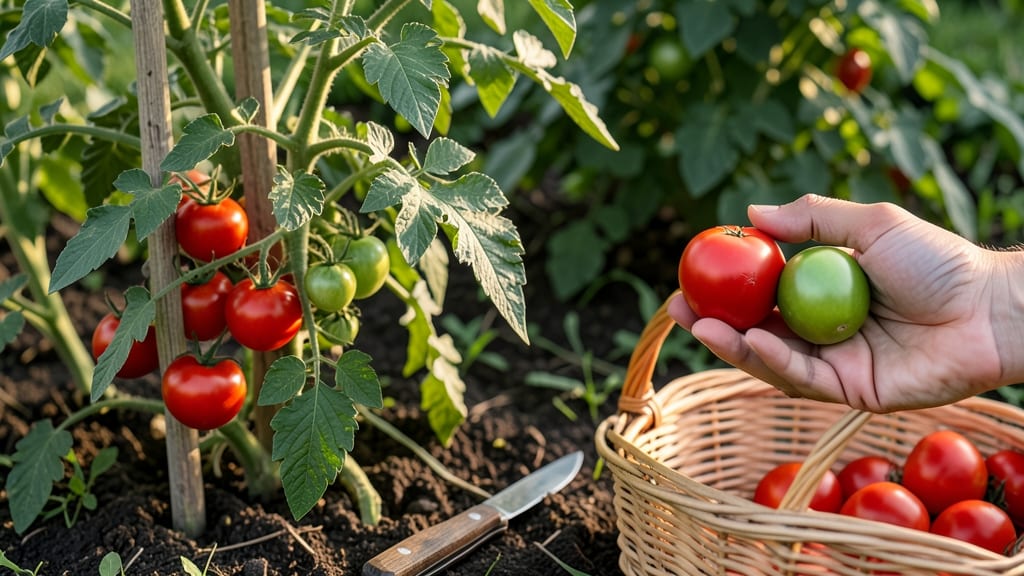
Knowing if a tomato 🍅 is ready to pick means catching that sweet, juicy moment before it turns mealy or splits—so here’s how to spot the perfect time without guessing.
Picture this: you’ve been watching your plants all season, and now the fruit is changing color. But how do you tell if it’s truly ripe or still hardening on the vine? The answer lies in a mix of color, touch, and even scent—details most gardeners overlook until it’s too late.
In this guide, I’ll break down the color stages for heirloom and hybrid varieties, the gentle touch test that reveals ripeness, and when to harvest green tomatoes for cooking. No more second-guessing at the dinner table!
By the end, you’ll recognize the exact signs of a perfectly ripe tomato—so you can pick it at its peak and enjoy that burst of flavor you’ve been waiting for.


Tomato ripeness stages: the color guide to perfect picking timing
Understanding tomato ripeness stages is key to harvesting fruit at peak flavor and texture.
While most gardeners focus on color changes, the ripening process involves more than just turning red. Heirloom varieties like Brandywine develop deep, rich hues, while hybrid types such as Early Girl ripen faster with brighter tones.
Each stage reveals critical clues about sugar content, acidity balance, and ideal harvest timing.
The journey from green to ripe can take anywhere from 50 to 90 days depending on variety and growing conditions. Color progression isn't linear—some tomatoes develop pink or orange hues before full ripeness, while others stay green until nearly ready. Temperature fluctuations and sunlight exposure further influence when and how tomatoes ripen, making color your most reliable guide.
Here’s how to decode the color spectrum of tomato ripeness, from immature green to fully ripe fruit, including what each stage tells you about flavor development and harvest readiness:
Heirloom varieties like Cherokee Purple or Black Krim often require 2-3 weeks longer to ripen than hybrids, so patience pays off. Their deep, complex flavors develop fully only when fully colored. Hybrid types such as Sungold or Super Sweet 100 ripen in 50-60 days and are best picked when bright orange or red, respectively. Always prioritize color consistency—uneven hues signal uneven ripeness.
Temperature plays a crucial role in color development. Cool nights below 60°F slow ripening, while hot days above 90°F can cause sunscald or uneven color. Morning harvests prevent heat damage and preserve flavor integrity.
If your tomatoes aren’t ripening by late summer, consider picking green and ripening indoors with ethylene exposure (e.g., placing them in a paper bag with a banana).
Never judge ripeness by size alone—some cherry tomatoes like Sweet 100 ripen small but intensely sweet, while beefsteak varieties need full color despite their larger size. Gently squeeze the tomato: ripe fruit yields slightly to pressure but doesn’t feel mushy.
A dry, brown stem indicates readiness, while a green stem means it’s not ripe yet. Pay attention to aroma too—ripe tomatoes emit a sweet, floral scent near the stem.
For container-grown tomatoes, ripening stages may accelerate due to limited root space and heat retention. <
5 Key ripeness tests beyond color (touch, scent, and stem checks)
While tomato color is the first clue, true ripeness often hides in subtle sensory details. Heirloom varieties like Brandywine or hybrid types such as Early Girl reveal their readiness through texture, scent, and stem behavior—signals that go beyond the obvious red or yellow hue.
I’ve learned the hard way that relying solely on color leads to either underripe tomatoes (tart and mealy) or overripe ones (mushy and seedy). The secret lies in combining touch tests, aroma cues, and stem checks to pinpoint the perfect moment for harvest.
- 👆 1. Gentle Squeeze Test: Press your thumb gently—ripe tomatoes yield slightly but don’t dent. Firm = underripe, soft = overripe.
- 🌡️ 2. Stem Separation: Twist the tomato gently at the stem. It should detach cleanly with minimal force. A stubborn stem means it’s not ready.
- 👃 3. Aroma Check: Hold a tomato near your nose. A sweet, fruity scent confirms ripeness, while a neutral or sour smell signals underripeness.
- 📏 4. Size-to-Variety Ratio: Compare the tomato’s size to its expected mature size. A cherry tomato should be plump but not shriveled; beefsteaks should match their variety’s typical weight.
- 🌿 5. Stem Color Shift: The stem end should turn yellow or brown—a sign sugars are converting. A green stem end means it’s still maturing on the vine.
One common mistake I see is picking tomatoes based on size alone. A large tomato might still be hard and green inside if it hasn’t developed the right internal sugars. Always combine the squeeze test with the stem check to avoid disappointment.
For heirloom varieties, pay extra attention to the aroma—they often develop complex scents like tropical fruit or berries when fully ripe. Hybrid varieties, on the other hand, may ripen more uniformly by color, but the stem separation test still applies.
If you’re harvesting for long-term storage, aim for tomatoes that pass 4 out of 5 tests. For immediate use, prioritize the squeeze and scent—these two cues are the most reliable indicators of peak flavor.
Remember, overripe tomatoes bruise easily, so handle them with care. The gentle twist at the stem is the kindest way to harvest without damaging the fruit or the plant.