
Watering
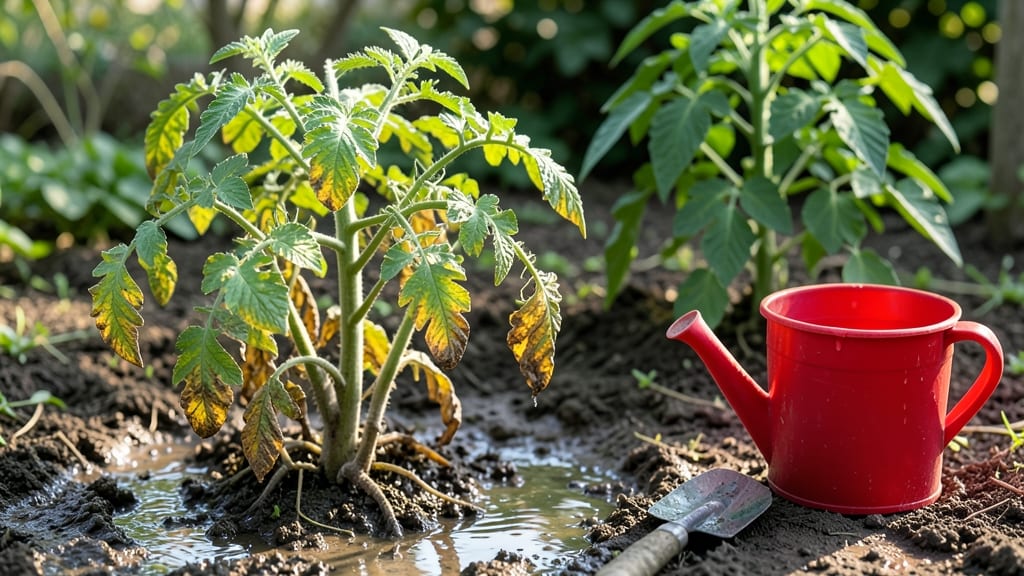
Here are early stage pictures of overwatered tomato plants—look for these subtle clues before the damage becomes irreversible. Yellowing lower leaves, limp stems, and a musty smell at the soil surface are dead giveaways that your plants need less water, not more.
The good news? With quick adjustments, you can revive them before fungal diseases or root rot take hold.
Overwatering happens when soil stays soggy for days, cutting off oxygen to roots and inviting pests like fungus gnats. My first clue was the wilting despite damp soil—classic overwatering red flag. The fix starts with checking soil moisture: stick your finger in 1-2 inches deep.
If it’s wet, hold off on watering. Drainage matters too—containers need holes, and garden beds should have amended soil to prevent compaction.
Cut back on watering immediately and let the top 2-3 inches of soil dry out between sessions. If your plants are already droopy, trim any blackened leaves (they’re past saving) and repot if drainage is poor.
Within a week, you’ll see firmer stems and new growth—proof your tomatoes are bouncing back. The key is consistency: water deeply but less often, especially in humid weather.
Prevention is easier than cleanup: mulch to regulate moisture, water at the base (not overhead), and monitor weather forecasts. Overwatered plants recover faster when you act fast—don’t wait for the classic brown stems and stunted growth. Your tomatoes will thank you with juicy, flavorful fruit all season long.
Root Causes of Overwatering
Overwatering your tomato plants in their early stages can turn your garden into a soggy mess—literally. But why does this happen? The issue often stems from a mix of well-intentioned habits, environmental factors, and a lack of understanding about how tomato plants really thrive.
Let’s break down the science (and the mistakes) behind it.
Tomatoes are thirsty plants, but that doesn’t mean they need a daily bath. Many gardeners—especially beginners—fall into the trap of watering on a strict schedule without checking soil conditions. Here’s what goes wrong:
- Misjudging Soil Moisture: Sandy or loamy soils drain quickly, while clay or compacted soil holds excess water. If you water the same amount every time without testing moisture, roots suffocate in saturated soil. - Confusing Thirst for Hunger: Wilting can signal both underwatering and overwatering.
Since tomatoes droop when thirsty, some gardeners overcompensate by drowning the plant—only to create root rot. - Ignoring Weather Patterns: Heavy rain or humidity can trick you into thinking your plants need less water. A sudden downpour followed by a cloudy day might leave soil waterlogged for days.
Pro Tip: 💡 Stick your finger 1-2 inches into the soil—if it’s damp, wait. If it’s dry, water deeply but infrequently.
Tomatoes hate "wet feet." If your containers or garden beds lack proper drainage, water pools at the roots, cutting off oxygen and inviting fungal diseases like Phytophthora or Pythium.
- Clogged Drains or No Holes: Pots without drainage holes or soil packed too tightly trap water. Even raised beds can suffer if the underlying soil is impermeable. - Compacted Soil: Heavy foot traffic, machinery, or poor soil structure (like too much clay) prevents water from draining.
Roots in waterlogged soil can’t absorb nutrients, leading to yellowing leaves and stunted growth. - Mulch Gone Wrong: While mulch conserves moisture, too much (especially thick layers of organic mulch) can smother soil and trap humidity against the plant.
Fix It: ✨ Use perforated pots, amend clay soil with compost or perlite, and keep mulch 2-3 inches away from the stem.
Young tomato plants have delicate, shallow root networks. Unlike mature plants, they can’t handle excess water because:
- Limited Oxygen Uptake: Roots need air pockets to breathe. Soggy soil forces them to "drown," slowing growth and inviting rot. - Nutrient Lockout: Overwatering leaches vital nutrients (like nitrogen and potassium) out of reach.
The plant may look lush but is actually starving. - Fungal Infections: Weak roots are easy targets for pathogens. Early signs? Dark, mushy stems or leaves that yellow and curl at the edges.
Action Step: 🌱 For seedlings, water only when the top inch of soil is dry, and use small pots to encourage deeper root growth before transplanting.
Tomatoes thrive in warm, dry conditions. When humidity spikes or temps drop, the plant’s ability to regulate moisture falters:
- High Humidity: Traps moisture on leaves, creating a breeding ground for fungal diseases like early blight or powdery mildew. Overwatering in these conditions accelerates rot. - Cool Nights: Tomatoes struggle to transpire (release water) when temps dip below 50°F (10°C).
If you water on cool evenings, the soil stays soggy overnight. - Greenhouse Effects: Plastic covers or dense foliage can turn your garden into a sauna. Without airflow, water evaporates slowly, keeping roots wet for days.
Solution: 🌡️ Water in the early morning, avoid overhead sprinkling, and ensure good airflow around plants (prune if needed).
Not all watering methods are equal. Some common tools or approaches do more harm than good:
- Fine Mist Sprays: Mimic rain but don’t penetrate soil deeply. They wet leaves excessively, promoting disease. - Drip Irrigation Gone Rogue: While efficient, clogged emitters or overwatering schedules can drown plants.
Always check flow rates! - Hose Ends on High Pressure: Blasts of water can erode soil structure, creating crusts that prevent drainage.
Upgrade Your Game: 🔥 Use soaker hoses or drip lines placed at the base of plants, and shut off water once the top 6 inches of soil are moist.
Timing and depth matter more than you think:
- Cold Soil: Planting tomatoes in chilly soil (below 60°F/15°C) stalls root growth.
Overwatering in these conditions stresses the plant. - Buried Stems: If stems are planted too deep, they develop weak, waterlogged roots at the base, prone to rot. - Shallow Root Zones: Young plants in small containers or poor soil struggle to establish deep roots, making them vulnerable to overwatering.
Rule of Thumb: 🎯 Plant when soil is warm, bury stems only up to the first true leaves, and use larger pots (5+ gallons) for containers.
Revive Your Tomatoes Quickly
Overwatered tomato plants can look sad and wilted, but with the right steps, you can nurse them back to health—even in early stages. The key is acting fast and addressing the root cause (literally!).
Below are practical, step-by-step solutions tailored to common issues, plus prevention tips to keep your plants thriving.
Problem: Yellowing leaves, soggy soil, or limp stems signal overwatering. Tomatoes hate "wet feet"—excess moisture cuts off oxygen, leading to root rot.
How to Fix It:
- 🔥 Pause Watering Immediately
- Stop adding water until the soil dries out. Let the top 1–2 inches of soil become slightly dry before watering again. Stick your finger in the soil—if it’s damp past your first knuckle, wait.
- 🍳 Improve Drainage Fast
- If your pots lack drainage holes, move your plants to well-draining containers (or add a layer of gravel at the bottom).
- For in-ground plants, amend the soil with compost or perlite to loosen heavy clay.
- 👨🍳 Air It Out
- Gently loosen the top 2–3 inches of soil around the base to help excess water evaporate.
- If roots are visible (white or pale), they’re healthy. If they’re brown/mushy, trim the damaged parts with sterilized scissors.
- ⏰ Adjust Your Watering Schedule
- Morning watering (before 10 AM) is best—it gives foliage time to dry, reducing fungal risks.
- Water deeply but infrequently: Aim for 1–1.5 inches per week (including rain). Use a moisture meter if you’re unsure.
💡 Pro Tip: Mulch with straw or shredded leaves to retain moisture without suffocating roots—just keep it 2–3 inches away from the stem.
Problem: Overwatered plants in cool, humid weather invite blight, mold, or bacterial spots. Dark spots on leaves or stems? That’s your warning.
How to Fix It:
- ✂️ Prune the Problem Areas
- Remove yellow, spotted, or wilting leaves with clean shears. Dispose of them in the trash (not compost)—fungus spreads easily.
- 🔥 Boost Airflow
- Space plants 18–24 inches apart to improve circulation. If growing in containers, thin out crowded foliage.
- 🌿 Fungicide Spray (Natural or Store-Bought) - DIY spray: Mix 1 tsp baking soda + 1 quart water + a drop of dish soap.
Spray undersides of leaves (where spores hide). - Store-bought: Copper fungicide or neem oil (apply in the early morning or evening to avoid leaf burn).
- 🎯 Sunlight Rescue
- Move plants to a sunnier spot (tomatoes need 6–8 hours of direct sun). A reflective surface (like white plastic) can bounce extra light onto shaded areas.
🔥 Warning: If blight appears (brown, crusty spots), remove the entire plant—it’s contagious to other tomatoes.
Problem: Overwatering flushes out nutrients, leaving plants weak despite excess moisture. Stunted growth or purple stems? Your tomatoes are hungry.
How to Fix It:
- 📊 Feed Them Right
- Use a balanced fertilizer (like 10-10-10) diluted to half-strength. Apply every 2–3 weeks during growing season.
- Organic boost: Mix compost tea or fish emulsion into water for a gentle nutrient kick.
- 🥗 Flush the Soil
- Water the plant thoroughly with plain water to rinse out excess salts (from fertilizers or tap water). Let it drain completely.
- 🌱 Support Recovery with Epsom Salt
- 1 tbsp Epsom salt per gallon of water (spray on leaves or soil) provides magnesium, which helps stressed plants rebound.
💡 Pro Tip: Worm castings are a tomato plant’s best friend—mix them into the soil to improve structure and nutrient availability.
Once your tomatoes are back on track, prevent relapse with these habits:
- 🌡️ Check soil moisture before watering—never on a schedule.
- 🎯 Use self-watering pots or drip irrigation for consistent (not excessive) moisture.
- 🌧️ Adjust for weather: Skip watering if rain is forecasted, and reduce frequency in winter.
- 🔍 Monitor leaves: Yellowing between veins? Overwatering. Brown edges? Underwatering or salt buildup.
Remember: Tomatoes are resilient! With proper drainage, smart watering, and a little TLC, your plants will bounce back—and you’ll be harvesting juicy, vine-ripened tomatoes in no time. 🍅✨
Frequently asked questions
What do early stage overwatered tomato seedlings look like?
Look for yellowing lower leaves first, followed by limp stems that feel soft when touched. The soil may appear damp even days after watering, and you might notice a musty smell at the base. Unlike underwatered plants, these won't perk up after watering—they'll stay droopy even with wet soil.
Can overwatered tomato plants recover completely?
Yes, but only if you catch it early! Stop watering immediately and let the top 2-3 inches of soil dry out. Trim any blackened leaves (they're dead) and repot if drainage is poor. Within 5-7 days, you should see firmer stems and new growth—proof your plant is recovering!
Why do my tomato leaves turn yellow when I water them?
This is a classic overwatering sign! When roots suffocate from excess moisture, they can't absorb nutrients, causing chlorosis (yellowing between leaf veins). The yellowing starts at the oldest leaves because they're first to show nutrient deficiencies. Check soil moisture—if it's damp past 1-2 inches deep, you're overwatering.
How often should I water young tomato plants?
For seedlings, water only when the top inch of soil is dry—about every 2-3 days in warm weather, but check first! Use your finger as a moisture gauge. Mature plants need 1-1.5 inches per week, but young plants have shallower roots and need less frequent deep watering.
What's the difference between overwatered and underwatered tomato plants?
Both can wilt, but the key difference is soil moisture! Overwatered plants have soggy soil that stays wet for days, while underwatered plants have dry, cracked soil. Overwatered leaves yellow between veins, while underwatered leaves curl and feel crispy. The fix is opposite: reduce water for overwatered, increase for underwatered.