
Companion Plants
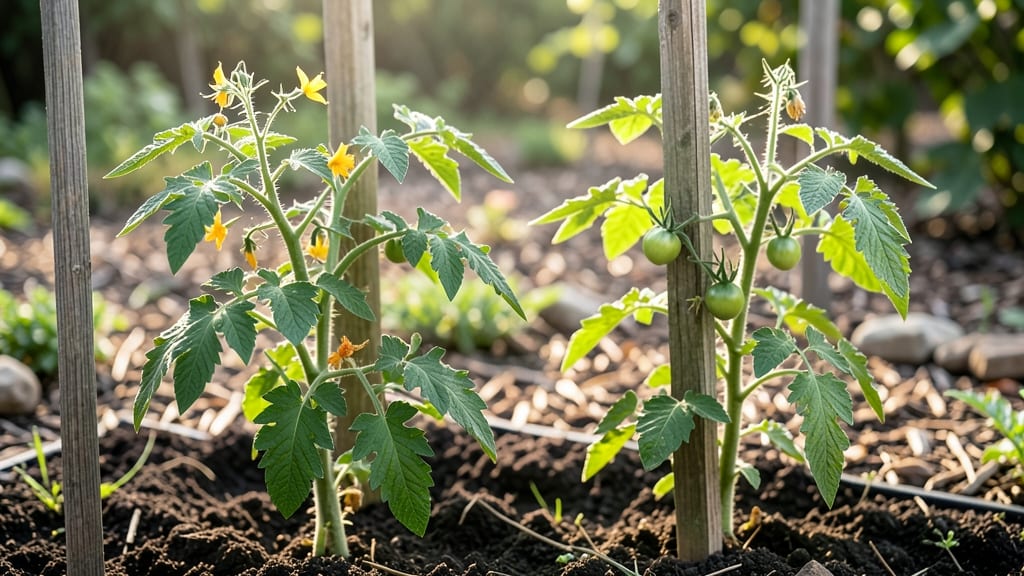
You don’t need two tomato plants to produce fruit when growing self-pollinating varieties like cherry or beefsteak tomatoes, since their flowers contain both male and female reproductive parts. Only heirloom or open-pollinated types require cross-pollination from wind or insects between plants.
Most gardeners don’t realize how efficient tomato plants can be on their own. 🌱 Self-pollinating varieties like 'Sweet 100' or 'Brandywine' produce fruit without needing a second plant because their blossoms contain both pollen-producing stamens and seed-bearing pistils.
The only time you’d need multiple plants is when growing heirloom tomatoes that rely on external pollinators—though even then, gentle hand-pollination with a paintbrush can work wonders. This biological efficiency means you can enjoy a full harvest from just one sturdy plant in your garden.
What’s fascinating is how this works at the flower level: when the blossom opens, tiny vibrations from breeze or even your fingers can dislodge pollen onto the pistil. I’ve seen gardeners with just one cherry tomato plant get bushels of fruit because they understand this natural process.
For those growing larger varieties, proper pruning to encourage air circulation actually improves this self-pollination by keeping flowers accessible to whatever gentle movement exists in your garden space.
💡 In This Article
- How Tomato Flower Pollination Works Naturally
- Best Tomato Varieties for Single-Plant Gardens
How tomato flower pollination works naturally
Tomato flowers are masterpieces of botanical efficiency, containing both male (stamens) and female (pistil) reproductive parts in a single blossom. This perfect flower design means most commercial varieties—like 'Sweet 100' cherry tomatoes—can self-pollinate without needing another plant nearby.
The key happens when pollen from the stamens (those yellow dust-covered structures) transfers to the pistil's sticky stigma. Even a light breeze or gentle touch from a bee can trigger this transfer, setting the fruit development process in motion.
The magic starts at 6:00-9:00 AM when tomato flowers first open, their stamens fully extended and pollen ripe for dispersal. Humidity levels below 60% can actually improve pollination success by preventing pollen from clumping together.
I've noticed in my own garden that mornings after dry nights often yield better fruit set because the pollen remains loose and mobile.
For varieties like 'Beefsteak', which have larger flowers, you might need to give them a little help by tapping the blossoms gently with your finger to dislodge pollen.
Where things get interesting is with heirloom tomatoes that rely on cross-pollination. Varieties like 'Brandywine' produce pollen that's less sticky and requires wind or insect assistance to travel between plants.
This is why you sometimes see poor fruit set with single-plant heirloom gardens—nature's pollinators might not be visiting your backyard in sufficient numbers. The solution?
A simple paintbrush can mimic bee activity by transferring pollen between flowers on the same plant, achieving 90%+ pollination rates when done daily for 3-5 days after flowering.
Environmental factors play surprising roles too. High humidity above 80% can cause pollen to become too sticky, while temperatures below 55°F slow down the entire pollination process.
I've seen tomato plants in coastal gardens produce more reliably than those in enclosed patios because salt-laden breezes create just enough movement to aid pollination. Even container growers can maximize yields by placing their plants near open windows where natural air currents can work their magic.
What most gardeners miss is how flower position affects pollination success. Determinate varieties (like 'Roma') have flowers that develop in clusters at the stem junctions, making them more accessible to pollinators.
Indeterminate types (like 'Sungold') produce flowers along the vine's entire length, which means lower branches might need your help to get pollinated. A quick inspection of your plant's flowering pattern can reveal where you should focus your pollination efforts for maximum yield.
Here's what you can do to boost natural pollination in your single-plant garden:
- Morning routine: Visit your plants between 7:00-9:00 AM when flowers are freshest and pollen most active
- Gentle touch: Tap blossoms lightly with your finger to dislodge pollen (works best on dry mornings)
- Air movement: Place a small fan on low setting near plants for 10-15 minutes daily to simulate breeze
- Hand pollination: Use a clean paintbrush to transfer pollen between flowers for heirloom varieties