
Planting
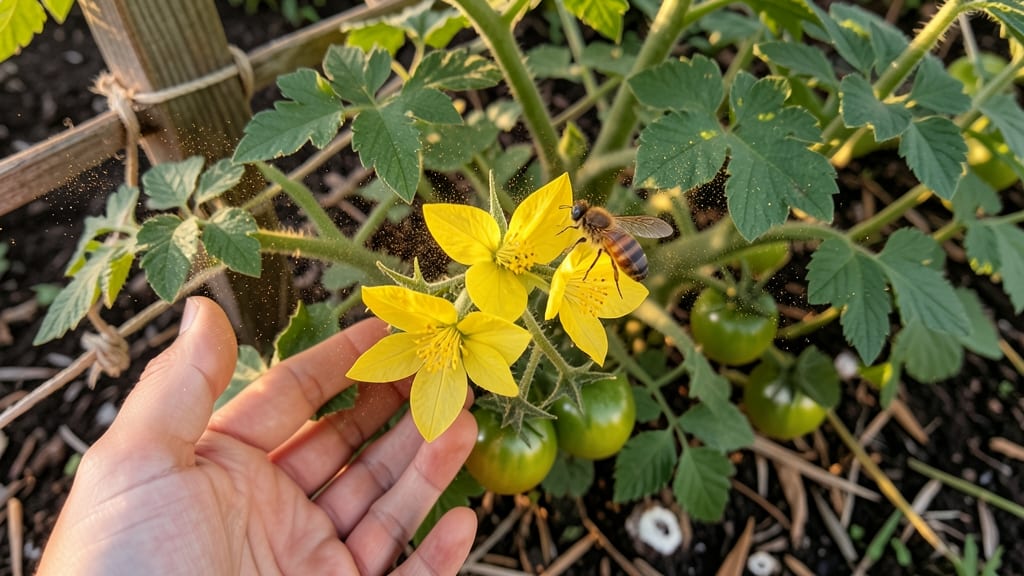
Tomato plant pollination requires gentle shaking or hand-pollination to transfer pollen from anthers to stigmas, especially in greenhouses or during poor weather. Use a small brush or tap flowers lightly to improve fruit set and prevent blossom drop.
Tomatoes rely on pollen transfer between flower parts to develop fruit, and when nature falls short—like in enclosed spaces or rainy days—you'll need to step in. 🌱 The process involves moving pollen from the male anthers to the female stigma, which triggers fertilization.
I've found that morning hours work best for hand-pollination, as flowers are freshest and pollen is most viable. For stubborn varieties, a soft paintbrush or even a gentle finger tap can work wonders, though timing matters most to avoid wasting energy on already-pollinated blooms.
This manual intervention becomes especially critical for greenhouse-grown tomatoes, where wind and insects are absent.
Without proper pollination, flowers may drop off without forming fruit, leaving you with fewer tomatoes than expected. 💫 Understanding your plants' needs can turn a potential loss into a bountiful harvest—just a few minutes of attention can make all the difference.
💡 In This Article
- Natural Tomato Pollination Process Explained
- Step-by-Step Guide to Hand-Pollinating Tomatoes
Natural tomato pollination process explained
Tomato flowers have a fascinating two-part system for reproduction. The male parts, called anthers, produce yellow pollen that sits on top of the flower's center. Below them, the female stigma (the sticky, cone-shaped tip) waits to receive this pollen.
In nature, bees and wind handle this transfer—bees brush against anthers while collecting nectar, picking up pollen that sticks to their fuzzy bodies, then transfer it to stigmas when visiting other flowers. This process is called cross-pollination, which often creates stronger, more flavorful tomatoes.
The challenge indoors comes from pollen's delicate nature. Pollen grains must land on the stigma within 30 minutes of release to remain viable, and they're highly sensitive to humidity levels below 40% or temperatures above 85°F.
In greenhouses, where airflow is limited, pollen often falls straight to the flower's base instead of reaching the stigma. Even outdoor plants suffer during rainy weather when pollen gets wet and clumps together, making transfer impossible. The result?
Flowers drop off without forming fruit—a frustrating sight for gardeners who've invested time in growing plants.
Here's where plant biology gets interesting: tomato flowers are self-pollinating, meaning they can fertilize themselves if pollen reaches the stigma. However, the flower's structure makes this difficult. The anthers hang above the stigma, creating a physical barrier that wind alone can't overcome.
This is why nature relies on external forces like bees—each visit increases the chances of successful pollination by 30-50% compared to relying on gravity alone. In your garden, this means even "easy" tomato varieties often need a helping hand when growing conditions aren't ideal.
Temperature plays a surprising role too. Pollen production peaks at 70-75°F—above this range, flowers may open but produce little viable pollen. I've noticed this firsthand when growing cherry tomatoes in summer heat: flowers would open beautifully but rarely set fruit.
The solution? Moving plants to partial shade during peak afternoon heat (when temps exceed 80°F) can dramatically improve pollination success. Even a simple fan creating gentle airflow can mimic natural wind patterns, helping pollen reach stigmas more effectively.
What most gardeners don't realize is how quickly this process happens. After successful pollination, you'll see the stigma turn from white to green within 24-48 hours—this is your first sign of fertilization. The ovary at the flower's base will then swell into a tiny tomato within a week.
Missing this window means wasted energy from the plant, as it will drop the flower to conserve resources. This biological efficiency is why hand-pollination pays off so well—you're essentially giving your plants a second chance at reproduction when nature falls short.
For visual learners, imagine this: a tomato flower's stigma looks like a tiny green mushroom cap. When pollen lands here, it triggers a chemical signal that transforms the flower's reproductive cells. Without this contact, the flower's life cycle ends prematurely.
The good news? This entire process happens at the microscopic level—what we see as a simple flower is actually a complex biological machine designed for efficient reproduction, but one that needs our help when growing conditions aren't perfect.