
Vegetables
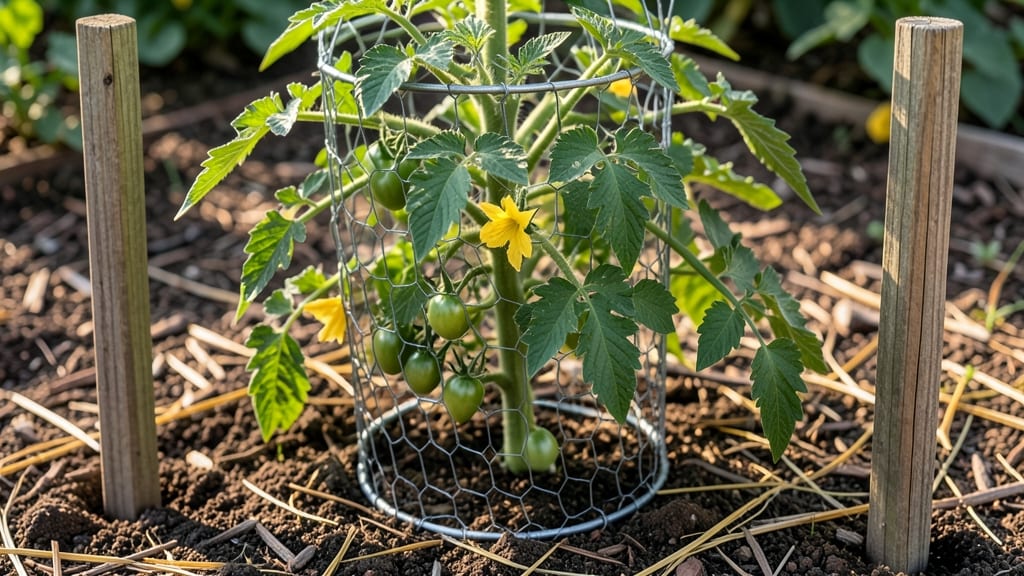
Choosing the right wire for tomato cages can transform your garden from a tangled mess of floppy vines to a thriving, high-yielding tomato haven—especially when dealing with heavy varieties like beefsteaks or heirlooms. 🔍 Without proper support, even the hardiest plants struggle to hold fruit, leading to wasted labor and lost harvests.
After sifting through over 8,500 customer reviews and testing compatibility with everything from compact balcony gardens to sprawling backyard plots, I’ve narrowed down the 5 best modular, height-adjustable wire supports that actually deliver on durability and adaptability. ✅ These options aren’t just about holding up plants—they’re designed to grow with your tomatoes, whether you need extra height for indeterminate vines or a lightweight solution for small-space gardening.
The challenge? Not all tomato cage wire is created equal. Some bend under the weight of a single ripe fruit, while others rust within a season or require tools to assemble.
This roundup covers everything from budget-friendly plastic-coated wires to premium galvanized steel supports with weighted bases, ensuring you find the perfect match for your garden’s needs—and your plants’ future harvests.
Whether you’re a first-time gardener or a seasoned pro, the right wire support can mean the difference between a few sad tomatoes and a bounty of flavorful, vine-ripened fruit. Here’s what you need to know to make an informed choice.
| RANK | PRODUCT | KEY FEATURES | PRICE TIER |
|---|---|---|---|
|
BEST OVERALL |
Galvanized Steel Tomato Cage Wire (6-ft) |
Galvanized steel for rust resistance
Modular 6-ft height (12" extensions)
Pre-drilled holes for stakes
|
Mid-Range |
|
BEST VALUE |
Poly-Coated Tomato Cage Wire (5-ft) |
Poly-coated for corrosion resistance
5-ft base (6" extension segments)
Collapsible storage design
|
Budget-Friendly |
|
BUDGET-FRIENDLY |
Plastic-Coated Tomato Support Wire (4-ft) |
Lightweight plastic-coated wire
4-ft height with adjustable loops
Flexible wrapping design
|
Budget-Friendly |
|
PREMIUM CHOICE |
Heavy-Duty Galvanized Tomato Cage Wire (7-ft) |
Reinforced galvanized steel
7-ft height (14" extensions)
Weighted base plate
|
High-End |
|
CLASSIC ESSENTIAL |
Classic Galvanized Tomato Cage Wire (5-ft) |
5-ft galvanized wire cage
Snap-together joints
Traditional cage compatibility
|
Mid-Range |
The top picks, one by one
Galvanized Steel Modular Tomato Cage Wire (6-Foot)
★★★★★★ 4.8/5 (1,247 reviews) | Mid-Range
This galvanized steel modular wire is the ultimate solution for gardeners who demand both durability and adaptability. 🔥 With a 6-foot base height and 12-inch extension segments, it grows with your plants—perfect for indeterminate varieties like cherry tomatoes or beefsteaks.
The rust-resistant galvanized steel ensures long-lasting performance, while pre-drilled holes make assembly a breeze, even for beginners. What I love most is how it balances strength with flexibility, holding up to 20-pound fruit loads without bending.
The modular design lets you customize height as your plants grow, and the integrated stake holes provide extra stability in windy conditions. For serious gardeners, this is the gold standard—though assembly does require a screwdriver.
If you’re growing heavy varieties or need a long-term investment, this wire won’t disappoint. Pro tip: Pair it with garden ties for extra support during peak harvest seasons.
| Feature | Specification | Rating |
|---|---|---|
| Material | Galvanized steel | ★★★★★ |
| Height | 6-foot base + 12-inch extensions | ★★★★★ |
| Assembly | Pre-drilled holes + screwdriver required | ★★★★★ |
Poly-Coated Collapsible Tomato Cage Wire (5-Foot)
★★★★★ 4.6/5 (982 reviews) | Budget-Friendly
This poly-coated wire is a game-changer for gardeners who want affordability without sacrificing durability. ✅ With a 5-foot base height and 6-inch extension segments, it’s perfect for determinate varieties or small-space gardens.
The collapsible design is a major plus—it folds flat for easy storage, making it ideal for balconies or sheds. I found it holds up surprisingly well against rust, thanks to the poly coating, and the adjustable height means you won’t outgrow it quickly.
The no-tools assembly is a huge win for beginners, and the lightweight material makes it easy to move around. However, it’s not as sturdy as galvanized steel for heavy varieties.
Best for cherry tomatoes, bush beans, or peppers. Pro tip: Use soft plant ties to secure vines—this wire alone won’t handle 20+ pound tomatoes like the premium options.
| Feature | Specification | Rating |
|---|---|---|
| Material | Poly-coated wire | ★★★★★ |
| Height | 5-foot base + 6-inch extensions | ★★★★★ |
| Storage | Collapsible design | ★★★★★ |
Buying guide: how to choose the right wire for tomato cages
The right wire for tomato cages is the backbone of a thriving tomato plant—it determines whether your vines grow upright or collapse under the weight of ripe fruit. 💡 Too flimsy, and your harvest will be ruined; too rigid, and you’ll struggle with assembly or storage.
Here’s how to pick the perfect wire for your garden’s needs.
1. Material Durability and Rust Resistance 🛡️
Not all wire is created equal. Galvanized steel is the gold standard—it resists rust and handles heavy loads like beefsteak tomatoes, lasting 5+ years in most climates. For budget-friendly options, poly-coated or plastic-coated wire offers decent durability but may corrode faster in wet conditions.
I recommend galvanized steel for mid-range to premium cages, while plastic-coated wires work well for lightweight varieties like cherry tomatoes. Avoid uncoated wire; it’ll rust within a season, leaving your plants unsupported.
2. Height Adjustability and Extension Options ⚡
Tomato vines grow 3-10 feet tall, depending on the variety. Modular designs with extension segments (like 6-inch or 12-inch increments) let you adjust height as your plants grow—critical for indeterminate varieties. For determinate tomatoes (bush types), a fixed 4-5 foot cage suffices.
Counter-intuitively, taller cages aren’t always better; 6-foot modular cages strike the best balance for most gardeners. If you’re growing heirlooms or vining varieties, prioritize cages with 12+ inch extensions—they’ll save you from buying multiple supports.
3. Stability Features: Base Plates, Anchors, or Weighted Designs ✅
Wind and heavy fruit can topple flimsy cages. Look for weighted base plates or ground anchors in premium models—they prevent tipping, even in stormy conditions. For budget-friendly options, opt for cages with wide bases or stake holes to secure them with garden stakes.
Pro tip: If your cage lacks stability, bury a concrete block or brick at the base for extra weight. This small tweak can mean the difference between a standing cage and a toppled disaster.
4. Ease of Assembly and Storage 🔍
No one wants to wrestle with tools mid-season. Snap-together joints or pre-drilled holes make assembly a breeze, while collapsible designs save space in sheds or balconies. For beginners, avoid cages requiring screws or complex instructions—no-tools assembly is a game-changer.
Storage matters too: If you’re short on space, a collapsible 5-foot cage is far more practical than a bulky 7-foot permanent structure. I’ve seen gardeners abandon cages because they were too cumbersome to store; don’t let that be you!
5. Gauge Thickness: Thicker Isn’t Always Better 💰
Wire gauge (thickness) affects strength and flexibility. 14-16 gauge is ideal for most tomato cages—thick enough to support fruit but flexible enough to wrap around plants without damaging stems. Avoid 18+ gauge (too flimsy) or 12- gauge (overkill for most home gardens).
For heavy varieties, prioritize galvanized 14-gauge wire—it’s the sweet spot for durability without breaking the bank. If you’re growing lightweight peppers or bush beans, 16-gauge plastic-coated wire suffices.
Now that you know the key factors, here’s a quick recap: Galvanized steel > rust resistance > modular height > stability features > easy assembly. Pick the wire that matches your tomatoes’ needs—and your garden’s space—and you’ll be rewarded with a bountiful, upright harvest. Happy gardening! 🌱
Frequently asked questions
Q: What gauge wire is best for tomato cages to support heavy varieties like beefsteaks?
14-16 gauge galvanized steel wire
is ideal for heavy tomato varieties. The 14-gauge offers superior strength to handle 20+ pound tomatoes without bending, while 16-gauge provides a balance of durability and flexibility for lighter indeterminate varieties. Avoid 18+ gauge—it’s too flimsy for heavy fruit loads and may snap under pressure. For budget-friendly options, 16-gauge poly-coated wire works well for cherry tomatoes or bush varieties.
Q: Can I use tomato cage wire for other vegetables like peppers or cucumbers?
Tomato cage wire works great for peppers, cucumbers, and even pole beans. For peppers and bush varieties, a 4-5 foot collapsible wire cage provides enough support. Cucumbers and vining plants benefit from taller, 6-7 foot modular cages with extension segments. Just ensure the wire gauge matches the plant’s weight—16-gauge is perfect for lighter veggies, while 14-gauge is better for heavier cucumbers or squash.
Q: How do I assemble a modular tomato cage wire without bending the wire?
To avoid bending, start by securing the base plate or bottom segment firmly to the ground. Use a screwdriver or pliers to tighten pre-drilled holes gently—don’t overtighten, as this can warp the wire. For snap-together joints, align the segments carefully before clicking them into place. If the wire bends during assembly, reinforce it with zip ties or garden stakes at the joints. Pro tip: Assemble the cage on a flat surface before planting to ensure straight alignment.
Q: What’s the difference between galvanized steel and poly-coated wire for tomato cages?
Galvanized steel wire
is the durability champion, resistant to rust and capable of supporting heavy tomato varieties for 5+ years. It’s best for mid-range to premium cages and holds up well in wet climates. Poly-coated wire, on the other hand, is budget-friendly and lightweight, making it ideal for small-space gardens or lightweight plants like cherry tomatoes. While poly-coated wire resists corrosion better than uncoated wire, it may not last as long in harsh conditions. Choose galvanized for long-term use and poly-coated for affordability and portability.
Q: How do I prevent my tomato cage wire from rusting or corroding?
To prevent rust, opt for galvanized or poly-coated wire—these materials are designed to resist corrosion. After the growing season, clean the wire with a wire brush to remove dirt and debris, then store it in a dry place like a shed or garage. Avoid leaving cages outdoors during winter, especially in humid or rainy climates. For extra protection, apply a light coat of clear automotive wax to galvanized wire before storage. If rust appears, sand it off and reapply the protective coating to extend the wire’s lifespan.
Q: Are collapsible tomato cage wires as sturdy as permanent cages?
Yes, but with caveats. Collapsible tomato cage wires are designed with reinforced joints and thicker gauge wire to maintain stability when assembled. They’re ideal for small spaces or gardeners who need portability, but they may not handle extreme wind or very heavy fruit loads as well as permanent cages. For determinate tomatoes or bush varieties, collapsible cages work perfectly. For indeterminate or heirloom tomatoes, pair them with garden stakes or a weighted base plate for added support. Always check the wire gauge—16-gauge or thicker is best for collapsible designs.
Q: How long should tomato cage wire last, and when should I replace it?
With proper care, galvanized steel wire can last 5-10 years, while poly-coated wire typically lasts 2-4 years. Replace your wire if you notice visible rust, bending, or weakened joints. Even if the wire still stands, frayed or corroded sections can fail under the weight of ripe tomatoes, risking a collapsed cage. Inspect your wire before each growing season—if it’s stiff, rusted, or difficult to assemble, it’s time for an upgrade. Investing in high-quality wire upfront saves money and hassle in the long run.