
Planting
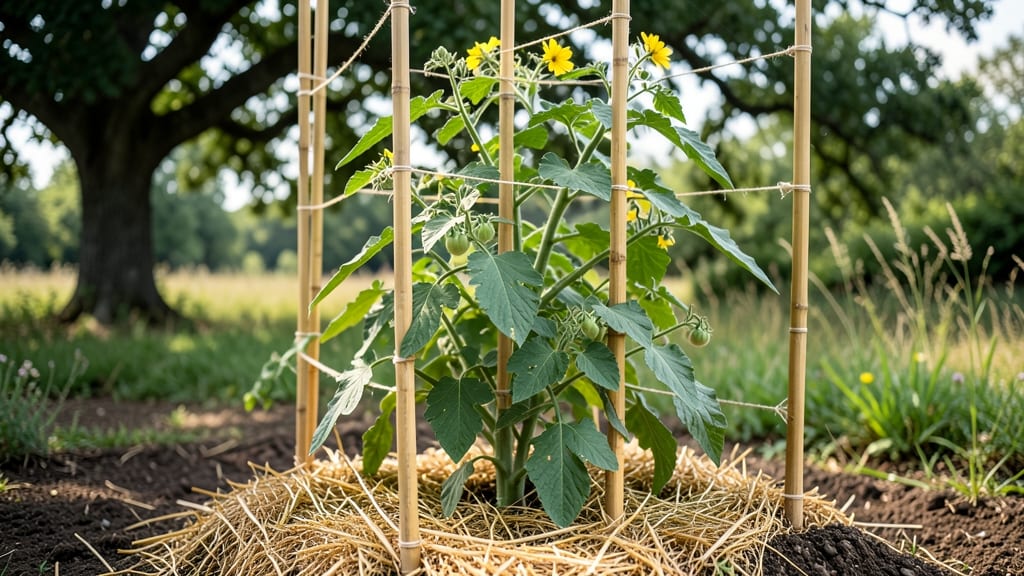
An indeterminate beefsteak tomato plant height can soar taller than your garage door—sometimes 10 to 15 feet—if left unchecked. 🌿 I learned this the hard way when my first plant crashed my trellis like a jungle vine gone rogue.
The key isn’t just height control; it’s guiding that growth upward to maximize fruit and keep your garden tidy.
Most beefsteaks need strong trellises, cages, or stakes—think 6 to 8 feet tall—to support their weight. Without support, sprawling vines break under the weight of those massive fruits, leading to rot or lost harvests.
Pruning suckers (those little shoots at the stem junctions) every 1-2 weeks keeps energy flowing to the main stem and fruit production.
You’ll see heavier yields when you train plants vertically—imagine 20-30 pounds of tomatoes from one plant instead of struggling with sprawl. The secret is balancing pruning and support: too much pruning stunts growth, but too little means tangled messes.
Start with a 5-foot cage for smaller varieties and upgrade as they grow.
Container gardeners, don’t despair—5-gallon pots work for dwarf varieties, but beefsteaks need 15+ gallons and sturdy vertical supports. The payoff? More tomatoes in less space, with fewer pests finding your plants. Here’s how to keep them climbing (and producing) all season long.
📚 In This Guide
- What you need
- Instructions
- Tips and common mistakes
- Wrapping up and next steps
What you need
- ● Beefsteak tomato seeds or seedlings: Choose a heirloom or hybrid variety (e.g., 'Brandywine,' 'Cherokee Purple,' or 'Big Beef'). Start 6-8 weeks before last frost if growing from seed.
- ● Growing containers or garden bed: Containers: 5-gallon pots or larger (at least 12" deep) with drainage holes. 2-3 plants per container max.
- ● Garden bed: Full sun (6-8+ hours/day) and well-draining soil (pH 6.0-6.8). Amend with compost for nutrient-rich soil.
- ● Support structures: Cages: 6-8 ft tall (e.g., tomato cages made of galvanized wire or sturdy plastic).
- ● Trellis: Tall wooden or metal trellis (8+ ft) or a DIY bamboo stake setup (4-6 stakes, 6-8 ft tall, spaced 18" apart).
- ● String or twine: 3/16" or thicker (for tying stems to supports).
- ● Fertilizer: Balanced fertilizer: 10-10-10 or 5-5-5 (apply at planting).
- ● Tomato-specific fertilizer: High in phosphorus/potassium (e.g., 3-4-6) for flowering/fruiting. Use every 3-4 weeks.
- ● Mulch: Straw, grass clippings, or black plastic mulch (to retain moisture and suppress weeds).
- ● Pruning tools: Pruning shears: Bypass pruners (sharp and clean) for trimming suckers.
- ● Gloves: Garden gloves (to protect from thorns and dirt).
- ● Plant markers: Label stakes or plant tags to track varieties.
- ● Drip irrigation system: Soaker hoses or micro-sprinklers for consistent watering.
- ● Shade cloth: Lightweight fabric (30-50% shade) for hot climates to prevent sunscald.
- ● Epsom salt: 1 tbsp per plant (mixed with water) for magnesium boost during flowering.
- ● Compost tea or fish emulsion: Organic liquid fertilizer for a nutrient kick.
How to manage beefsteak tomato height with indeterminate variety support
Indeterminate beefsteak tomatoes grow like vines—here's how to keep them thriving at their natural height.
🌱 Step 1: Choose the Right Support System Early
Indeterminate beefsteak varieties can reach 6-10 feet without support, so install a sturdy structure before planting. I recommend 6-foot tomato cages or tall wooden stakes (at least 5 feet) because these varieties need more vertical space than smaller tomatoes. Drive stakes 6-8 inches deep into the soil or assemble cages immediately after transplanting.
Here's the thing—if you wait until the plant is already 3 feet tall, you'll struggle to attach it without damaging stems. The best time is right after transplanting, when the plant is still 12-18 inches and flexible. For extra stability, I tie the main stem to the support with soft garden twine in a loose figure-eight pattern.
✂️ Step 2: Prune for Airflow and Height Control
Indeterminate beefsteaks grow new leaves and branches constantly, so pruning isn't just about height—it's about directing energy to fruit production. Remove suckers (the small shoots that grow between the main stem and branches) when they're no bigger than a pencil. These compete with fruit for nutrients and make the plant top-heavy.
I also trim back lower leaves (within 12 inches of the soil) to improve airflow and prevent disease. This might seem counterintuitive—after all, more leaves mean more photosynthesis—but the goal is stronger stems that can support the weight of those 1-pound tomatoes. Prune on a dry morning to reduce stress on the plant.
🪴 Step 3: Train the Main Stem Along the Support
As the plant grows, gently weave the main stem through the support structure (cage or trellis) to encourage upward growth. For cages, I loop the stem around the wires in a spiral pattern, securing it with twine every 12-18 inches. This prevents the plant from bending under the weight of fruit and keeps it growing vertically.
Watch for side branches that form naturally—these should be allowed to grow, but the main stem must remain the primary support. If a branch gets too heavy, tie it to the support with twine to prevent breakage. The key is gentle guidance, not forcing the plant into position.
☀️ Step 4: Monitor Height and Adjust Support Mid-Season
By mid-summer, indeterminate beefsteaks can outgrow their initial support. If your plant reaches the top of a 6-foot cage but still has new growth, it's time to add extension poles or additional stakes. I've seen beefsteaks hit 12 feet in a single season—don't let them sprawl.
If you notice the plant leaning heavily to one side, it's likely growing toward the sun. Rotate the support a quarter turn to encourage even growth. You'll also want to check the twine weekly—it can cut into stems as they thicken. Replace any twine that's digging in with softer fabric ties to avoid damage.
💧 Step 5: Water and Feed for Structural Strength
Tall beefsteak tomatoes need consistent moisture to prevent stem weakness. Water deeply at the base (not overhead) 2-3 times per week, ensuring the soil stays evenly moist but not soggy. Overhead watering can weaken stems by promoting fungal growth, while underwatering causes blossom-end rot and stunted growth.
Feed with a balanced fertilizer (10-10-10 or 5-5-5) every 2-3 weeks once flowers appear. The goal is strong, thick stems that can support the weight of those massive fruits. I also add mulch around the base to retain moisture and prevent soil-borne diseases from splashing onto the plant.
Tips & tricks for managing beefsteak tomato height
Mastering the vertical growth of beefsteak tomatoes transforms sprawling vines into productive, manageable plants. Here’s how to optimize their natural height without compromising fruit production.
Support Stability is Non-Negotiable: The 6-8 inches deep stakes or sturdy 6-foot cages mentioned in Step 1 aren’t just recommendations—they’re essential for preventing top-heavy collapse. I’ve seen beefsteak plants snap under fruit weight when supported with flimsy stakes or shallowly driven ones. For extra insurance, especially in windy areas, add a second stake at a 45-degree angle to create a triangle support system. This distributes weight more evenly than a single stake.
Pruning Precision Matters: When removing suckers in Step 2, focus on the ones growing directly from the main stem—these are the real culprits for top-heavy growth. Leave suckers that form at the junction of side branches; these can develop into productive fruiting stems. I learned this the hard way after over-pruning and losing potential harvests. Also, use clean, sharp pruners to avoid tearing stems, which creates entry points for disease. The goal is to maintain a pyramid shape with the main stem as the central spine.
Training Technique Makes All the Difference: The spiral pattern described in Step 3 isn’t just for aesthetics—it’s a structural strategy. By weaving the main stem through the cage wires, you create natural bends that strengthen the stem over time (think of it like a vine’s natural growth habit). For trellis systems, I recommend using soft plant ties every 12-18 inches to prevent the stem from rubbing against rough surfaces. This gentle guidance prevents the plant from developing weak, elongated sections that can’t support fruit weight.
Mid-Season Adjustments Prevent Disaster: That quarter-turn rotation mentioned in Step 4 is crucial for even sunlight exposure, but it’s also about preventing the plant from becoming one-sided. I’ve seen beefsteaks grow so lopsided they resembled leaning towers of Pisa—until I rotated the support. Additionally, when adding extension poles, ensure they’re secured to the original support with sturdy clips or wire. The last thing you want is a wobbly extension that turns your tomato plant into a toppling Jenga tower when heavy fruit forms.
Pro Tips for Beefsteak Tomato Plant Height
- Mastering the vertical growth of beefsteak tomatoes transforms sprawling vines into productive, manageable plants.
- Support Stability is Non-Negotiable: The 6-8 inches deep stakes or sturdy 6-foot cages mentioned in Step 1 aren’t just recommendations—they’re essential for preventing top-heavy collapse.
- Pruning Precision Matters: When removing suckers in Step 2, focus on the ones growing directly from the main stem—these are the real culprits for top-heavy growth.
Frequently asked questions
Got questions about managing your beefsteak tomato plant height?
You’re not alone! Here are answers to the most common queries—from pruning to space-saving hacks—so you can grow those juicy, towering tomatoes with confidence.
How tall do beefsteak tomato plants really grow?
Indeterminate beefsteak varieties can reach 6–10 feet tall (or more!) if left unchecked. Without support, they’ll flop like overgrown vines, but with a sturdy cage or trellis, they’ll climb gracefully. Pro tip: Prune suckers regularly to encourage upward growth and better air circulation.
When should I start supporting my beefsteak tomato plant?
Install support early—as soon as the plant hits 12–18 inches tall. Waiting until it’s lanky and top-heavy can lead to snapped stems. Use a 5–6 foot cage or tall stakes with twine to give it a head start. Think of it like training a toddler: Guide them before they get too big to handle!
Can I grow beefsteak tomatoes in containers? What’s the ideal height?
Just choose a 5-gallon+ container and a determinate or dwarf indeterminate variety (like ‘Sungold’ or ‘Micro Tom’) to cap height at 3–4 feet. For full-sized beefsteaks, opt for a tall, narrow pot (24"+ deep) and a trellis system. Bonus: Containers warm up faster in spring, giving you a jump on the season!
Why is my beefsteak tomato plant leaning or falling over?
Leaning = lack of support or weak stems. Check for:
- Overcrowding: Thin seedlings to 18–24" apart.
- Poor pruning: Too many suckers or lateral branches weigh it down.
- Wind/rain: Secure the trellis with stakes or ties.
- Nutrient deficiency: Yellow leaves? Feed with balanced fertilizer (10-10-10).
Quick fix: Gently tie the main stem to the support with soft twine or old T-shirts.
Are there shorter beefsteak tomato varieties for small spaces?
Yes! While most beefsteaks are indeterminate giants, try these compact alternatives:
Variety
Height
Notes
‘Better Boy’
6–8 ft (but bushier than classic beefsteaks)
Classic flavor, disease-resistant.
‘Mountain Merit’
5–6 ft
Early producer, crack-resistant.
‘Celebrity’
4–5 ft
Determinate (bush-type) with beefsteak-sized fruits!
For patios: Look for ‘Tiny Tim’ or ‘Patio’ series—though they’re smaller, they’re not true beefsteaks.
Wrapping up and next steps
Growing beefsteak tomatoes to their full potential is all about giving your indeterminate plants the right support and care! With the right stakes, pruning, and training, you’ll be rewarded with massive, juicy fruits that’ll make your garden the talk of the neighborhood. 🌱✨
Now that you’re armed with the secrets, it’s time to roll up your sleeves and watch your tomato tower flourish. Start by choosing the best support system for your space, then keep an eye on those vines—prune and train with confidence! Happy gardening!