
Container Gardens
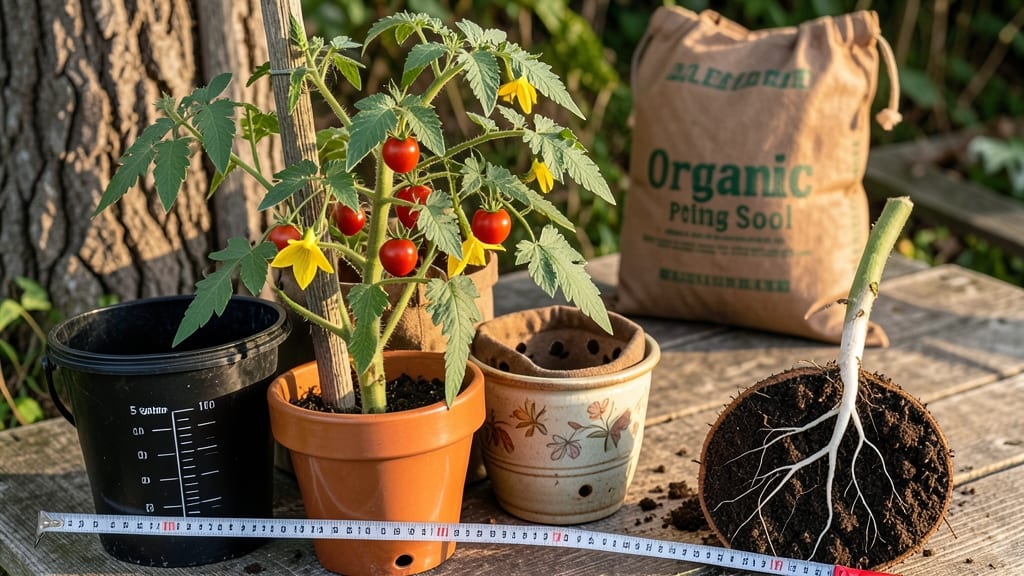
A tomato plant needs what size container that's at least 5 gallons (12-18 inches deep and 12-18 inches wide) for dwarf varieties, while larger indeterminate types require 7+ gallons (18+ inches deep and 24+ inches wide) to thrive. Proper drainage and nutrient-rich soil are essential for strong root systems.
What size container for a tomato plant directly impacts how well your tomato plant can grow. 🌱 Dwarf varieties need less space because their roots stay compact, but indeterminate types grow continuously, so they need deeper containers to support their sprawling root systems. I’ve found that using wider containers helps prevent overcrowding, which reduces competition for nutrients and water—both critical for healthy plants.
For best results, choose containers with drainage holes to prevent root rot, and opt for materials that regulate temperature, like fabric grow bags. These allow roots to breathe while keeping moisture levels consistent.
If you're growing multiple plants, consider larger containers or raised beds to give each plant enough room to flourish.
💡 In This Article
- How Container Size Affects Tomato Plant Root Development
- Best Container Options for Different Tomato Varieties
How container size affects tomato plant root development
Tomato roots need space to spread and access nutrients efficiently. Determinate varieties develop a compact root system that fits in 5-gallon containers (12-18 inches deep), while indeterminate types grow roots that can extend 3-4 feet deep if given the chance.
Shallow containers restrict root growth, forcing plants to compete for water and nutrients, which leads to stunted vines and smaller fruit yields. 🌱 The ideal depth allows roots to establish a strong network below the soil surface, where moisture and minerals are most abundant.
Root development also depends on container width. A 12-inch diameter pot provides enough space for a single dwarf tomato plant, but indeterminate varieties need 18-24 inches of width to support their sprawling growth habit. Wider containers prevent root circling—a common issue where roots grow in tight loops, restricting nutrient uptake.
This is why fabric grow bags (which expand as roots grow) are popular for indeterminate tomatoes, giving roots room to explore naturally.
Water retention is another critical factor. Deeper containers hold more moisture, reducing how often you need to water—especially important during hot summer months. A 7-gallon container can retain water for 3-5 days longer than a 5-gallon pot, which is crucial for maintaining consistent soil moisture levels.
Poor water retention forces plants to develop shallow roots, making them more susceptible to drought stress and disease.
Nutrient absorption follows the same principle: deeper containers allow roots to access nutrients stored in the lower soil layers. Tomato plants are heavy feeders, requiring regular fertilization to produce fruit. In shallow containers, roots can quickly deplete nutrients near the surface, leading to deficiencies like yellowing leaves or blossom-end rot.
This is why larger containers support healthier plants and better harvests, even in nutrient-rich potting mixes.
Temperature regulation plays a hidden role too. Dark-colored plastic containers absorb heat, which can raise soil temperatures beyond 85°F—a threshold where root growth slows. Lighter-colored or insulated containers (like ceramic) maintain more stable temperatures, supporting consistent root activity.
For indoor growers, this means fewer temperature fluctuations that could stress the plant.
Consider this real-world example: A Cherry Tomato 'Sweet 100' (determinate) thrives in a 5-gallon pot, while a Brandywine Tomato (indeterminate) needs a 10-gallon container to reach its full potential.
The difference in root space directly translates to fruit production—determinate types yield once, while indeterminate types produce continuously throughout the season.
For maximum growth, pair the right container size with a well-draining potting mix** and regular pruning to encourage deeper root development. This combination ensures your tomato plants have the space they need to flourish, whether you're growing on a balcony or in a greenhouse. 🌿