
Vegetables
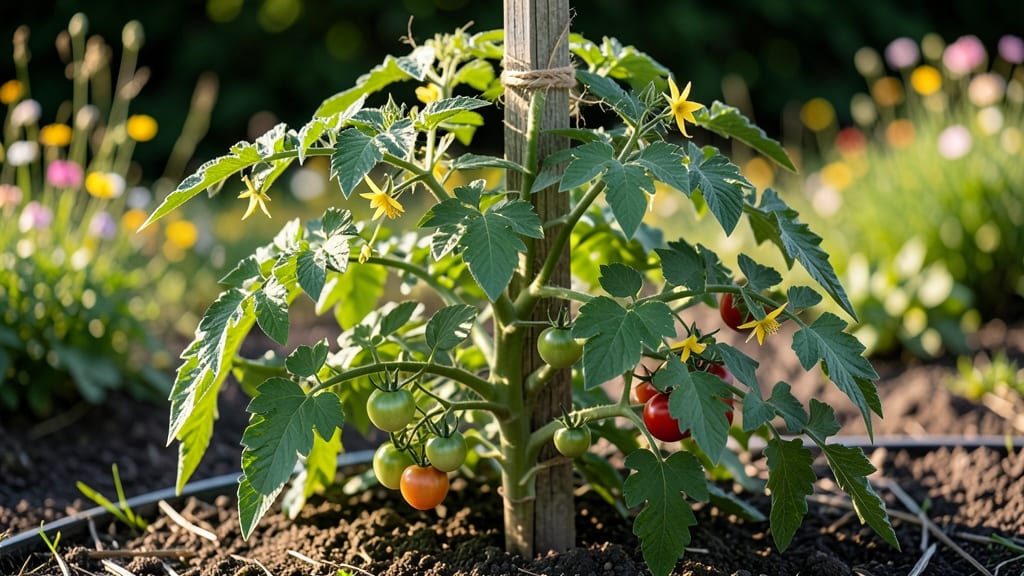
Indeterminate tomatoes mean the plants grow continuously throughout the season, producing fruit until frost, with vines that can reach 6–12 feet tall or more, requiring staking or trellising for support. Unlike determinate varieties, they don’t set all fruit at once but yield steadily until killed by cold weather.
When you plant indeterminate tomatoes, you're choosing a vine that never stops growing—literally.
These varieties keep producing new leaves, stems, and fruit all season long, unlike their determinate cousins that set all their fruit at once and then call it quits. 🌱 The key difference lies in their growth hormones: indeterminate types prioritize vertical expansion and continuous flowering, which is why they need strong support structures.
I've found that their sprawling habit makes them perfect for gardeners who love fresh tomatoes straight from the vine well into fall, but they do require more maintenance than bush varieties.
What's interesting is how their growth patterns affect your harvest strategy. Since they produce fruit gradually rather than all at once, you'll get a steady supply of tomatoes for salads, sauces, or snacking throughout the season.
This makes them ideal for home gardeners who want to enjoy homegrown tomatoes for months rather than just a few weeks. The trade-off? Their tall, sprawling vines need regular pruning and sturdy support to prevent disease and maximize fruit production.
💡 In This Article
- How Indeterminate Tomato Vines Grow Differently Than Determinate Types
- Best Practices for Growing Indeterminate Tomatoes in Gardens
How indeterminate tomato vines grow differently than determinate types
The fundamental difference between indeterminate and determinate tomato plants lies in their genetic growth patterns. Indeterminate varieties lack the genetic signal that tells them to stop growing vertically, allowing their main stems to keep extending upward until frost kills the plant.
This continuous growth means vines can reach heights of 6-12 feet or more, with each new section producing additional leaves and flower clusters along the way. 🌿 The hormonal mechanism involves gibberellins and auxins working together to promote cell elongation in the stem while suppressing lateral branching at the base—unlike determinate types that develop a bushy, self-limiting shape.
What sets indeterminate plants apart is their flowering pattern: they produce new flower clusters in the leaf axils (where leaves meet stems) throughout the entire growing season. Each cluster can develop 5-10 flowers, and when pollinated, these become fruit.
The plant's energy remains focused on vertical growth and continuous flowering rather than setting all fruit at once. This explains why you'll see tomatoes ripening at different stages simultaneously on the same vine—some still green while others are already red.
Determinate varieties, by contrast, produce all their flowers on terminal buds near the top of the plant, resulting in a single massive harvest.
The sprawling nature of indeterminate vines creates unique challenges for gardeners. Without proper support, vines can sprawl 10-15 feet in diameter, making them susceptible to soil-borne diseases like blight that thrive in damp foliage.
The plant's growth habit also means it requires more nutrients and water to sustain its continuous production.
I've observed that well-supported indeterminate plants can produce 20-30 pounds of tomatoes per season, compared to 5-10 pounds from determinate varieties—though this depends heavily on growing conditions and care. 🍅 The trade-off is that their extended growing season makes them perfect for regions with long summers.
One fascinating aspect is how indeterminate plants respond to pruning. Unlike determinate types that should never be pruned, indeterminate varieties benefit from regular pruning to remove suckers (side shoots between the main stem and branches).
This redirection of energy to the main stem and fruit clusters can increase yields by 20-30%. The pruning also improves air circulation, reducing humidity around the foliage and lowering disease risk.
What most gardeners don't realize is that the plant's ability to keep producing flowers depends on maintaining this balance between vegetative growth and fruiting—too much pruning can halt flowering entirely.
Climate plays a crucial role in how indeterminate tomatoes perform. In warm regions with long growing seasons (like California or Florida), these varieties can continue producing until first frost, sometimes even into December. In cooler climates (Zones 4-6), gardeners often use row covers or greenhouses to extend the season.
The plant's ability to keep growing makes it sensitive to temperature fluctuations: below 50°F at night can stunt growth, while consistent temperatures above 75°F during the day optimize flowering. This temperature sensitivity explains why indeterminate tomatoes often struggle in northern gardens unless given protection.
Visually, the difference is striking. Determinate plants form compact bushes with all their fruit maturing at once, while indeterminate vines create a dramatic vertical display with tomatoes ripening at different rates along the stem.
This continuous production means you'll have tomatoes for fresh eating, sauces, and canning throughout the season—no need to preserve a single massive harvest. The sprawling habit also makes them excellent for trellising, saving garden space while creating a beautiful vertical garden feature. 🌿