
Planting
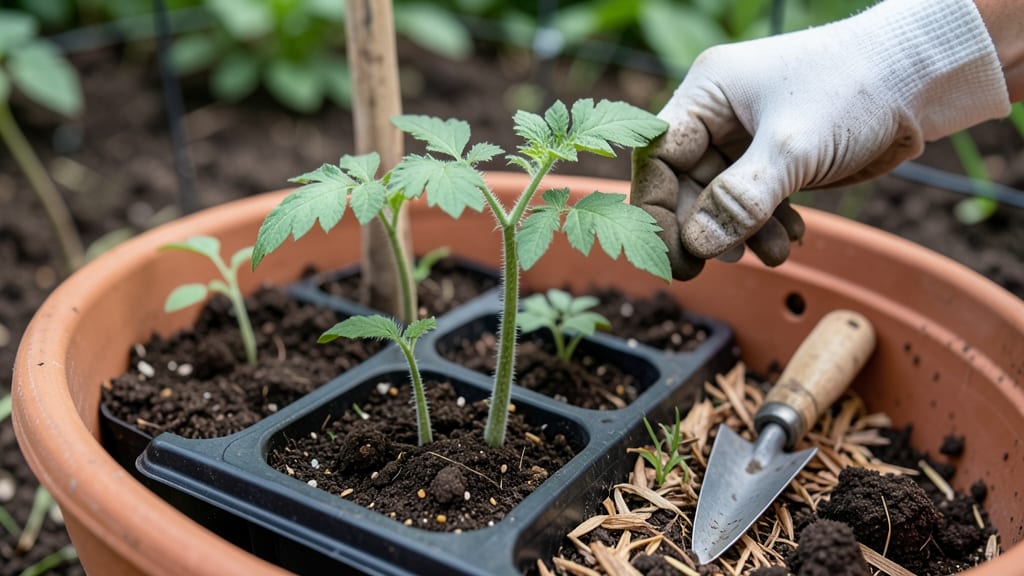
Planting tomatoes at the right depth is the secret to strong roots and a bountiful harvest—and most gardeners get it wrong without even knowing it.
Too shallow, and your 🍅 seedlings struggle to anchor; too deep, and you risk stunted growth or even death.
The exact planting depth for tomatoes depends on whether you’re starting with seeds, bare-root plants, or transplants—and getting it right makes all the difference between a thriving vine and a sad, leggy plant.
In this guide, I’ll break down the precise inches for each type, explain how soil conditions affect depth, and show you how to avoid the most common mistakes that ruin tomato growth before it even begins.
By the end, you’ll know exactly where to place your tomatoes for roots that reach deep, stems that stay sturdy, and a harvest that keeps coming all season long.

The exact tomato planting depth by seedling type (with visual guide)
Getting the tomato planting depth right is one of the most overlooked steps in growing a productive vine. Too shallow, and your seedlings struggle to establish roots. Too deep, and you risk suffocating the stem or encouraging disease.
The exact depth depends on whether you're planting seeds, bare-root seedlings, or transplants, plus whether your variety is determinate (bush) or indeterminate (vining).
For seed planting, the rule is simple: ¼ inch deep in loose, warm soil. This shallow depth allows seedlings to break through easily while protecting them from drying out.
If you're planting in cooler climates or heavy soil, you might go slightly deeper (½ inch max) to maintain moisture, but avoid burying seeds deeper than ½ inch—they won’t have the energy to push through compacted soil.
| Seedling Type | Planting Depth | Notes |
|---|---|---|
| Seeds | ¼ inch (0.6 cm) | Use finger to press soil gently; avoid compacting. |
| Bare-Root Seedlings | ½ inch (1.3 cm) | Cover roots only; keep stem above soil line. |
| Transplants (Determinate) | 1-1.5 inches (2.5-3.8 cm) | Bury up to first leaf set; deeper for compact soil. |
| Transplants (Indeterminate) | 1.5-2 inches (3.8-5 cm) | Encourages stronger root systems for vining growth. |
| Container-Grown | Same as transplant depth | Use well-draining mix; avoid burying stem. |
When planting transplants, the depth changes based on your tomato variety. Determinate tomatoes (like Roma or Celebrity) only need 1-1.5 inches of depth—burying them deeper risks suffocating the stem and limiting airflow.
For indeterminate varieties (such as Sungold or Brandywine), you can go slightly deeper (1.5-2 inches) to encourage a stronger root system for their sprawling growth habit.
Here’s how to measure correctly: Hold the seedling by its leaves (never the stem) and dig a hole just wide enough to fit the root ball. For bare-root seedlings, spread the roots gently and cover them with soil, leaving the stem exposed above the soil line.
If you accidentally bury the stem, the buried portion will rot—this is a common mistake that kills many tomato plants before they even start fruiting.
The soil line on the stem is your guide. Look for the faint line where the stem meets the roots—this is where the soil should end.
If you’re planting in heavy clay soil, you can bury slightly deeper (up to 2 inches) to help roots establish, but always leave the lowest set of leaves above ground.
For sandy soil, stick to the shallower end of the range (1 inch) to prevent roots from drying out too quickly.
Why does depth matter so much? The root zone needs access to moisture and nutrients, but if buried too deep, the stem can’t photosynthesize efficiently. Proper depth ensures the stem stays above soil level while the roots spread outward to anchor the plant and absorb water.
This balance is key to preventing blossom end rot and other stress-related issues that plague tomatoes.
For container-grown tomatoes, follow the same depth rules as transplants, but choose a pot with at least 5-gallon capacity for mature plants. The container’s drainage holes should align with the planting depth—if the pot has no holes, bury the seedling 1 inch shallower to avoid waterlogging.
Always use a well-draining potting mix to prevent root rot, which is exacerbated by incorrect planting depth.
After planting, water deeply to settle the soil and remove air pockets around the roots. Avoid compacting the soil further, as this can strangle young roots. Within a week, you should see new growth as the plant adjusts to its new home.
If you notice yellowing leaves or stunted growth, it’s often a sign the plant was buried too deep—dig it up and replant at the correct depth immediately.
Pro tip: If your seedlings are leggy (tall and spindly), you can bury them slightly deeper (up to 2 inches) to encourage root growth along the buried stem. This technique works best for indeterminate varieties and can help them recover from light deprivation.
Just avoid burying more than ⅓ of the stem—any deeper, and you risk girdling the plant.
Common mistakes that ruin tomato growth (and how to fix them)
Getting the tomato planting depth wrong is one of the most common mistakes that sabotage your harvest before it even begins. Too shallow, and your seedlings struggle to establish roots.
Too deep, and you risk suffocating the stem or encouraging disease. I’ve seen gardeners bury their entire tomato plants up to the first leaves—only to watch them wilt within weeks.
The key is understanding how root development works. Tomatoes need just enough soil coverage to stabilize them while leaving room for new roots to form at the stem’s base.
When done right, you’ll see stronger plants that produce bountiful harvests all season long. Let’s fix these mistakes before they cost you another failed crop.
⚠️ Critical Mistake: Burying Too Deep
Planting tomato seedlings too deep—especially above the first true leaves—strangles the stem and prevents new roots from forming. This leads to stunted growth and weak plants that can’t support fruit. The fix? Only bury up to the first set of leaves (about 1-1.5 inches of stem).
Another frequent error is planting tomato seeds too shallow. While seeds need light to germinate, they also need consistent moisture. If you plant them less than ¼ inch deep, they’ll dry out before sprouting.
I’ve lost entire seed trays this way—always use a soil marker or ruler to ensure proper depth.
Overlooking soil type also plays a role. In heavy clay soil, tomatoes need slightly deeper planting (up to 2 inches) to prevent waterlogging at the stem base. Meanwhile, in sandy soil, you might need to bury just ½ inch deep to retain moisture.
Always loosen the soil around the roots after planting to encourage root spread.
One mistake I see often is planting too close to the surface when transplanting. Seedlings left exposed above the soil can develop a weak root system and become top-heavy.
The solution? Create a small trench, place the seedling inside, and backfill with soil up to the first leaves. This gives roots immediate access to moisture and nutrients.
Finally, don’t forget to stake or cage your tomatoes immediately after planting. Deep planting without support can cause stems to bend or break under the weight of fruit.
I use 5-foot cages for indeterminate varieties and 3-foot stakes for determinate types. This simple step prevents wasted effort and ensures your plants grow straight and strong.
With these fixes, your tomatoes will develop healthy root systems and produce fruit all season. The right planting depth isn’t just about inches—it’s about giving your plants the best possible start. Happy gardening! 🌱