
Companion Plants
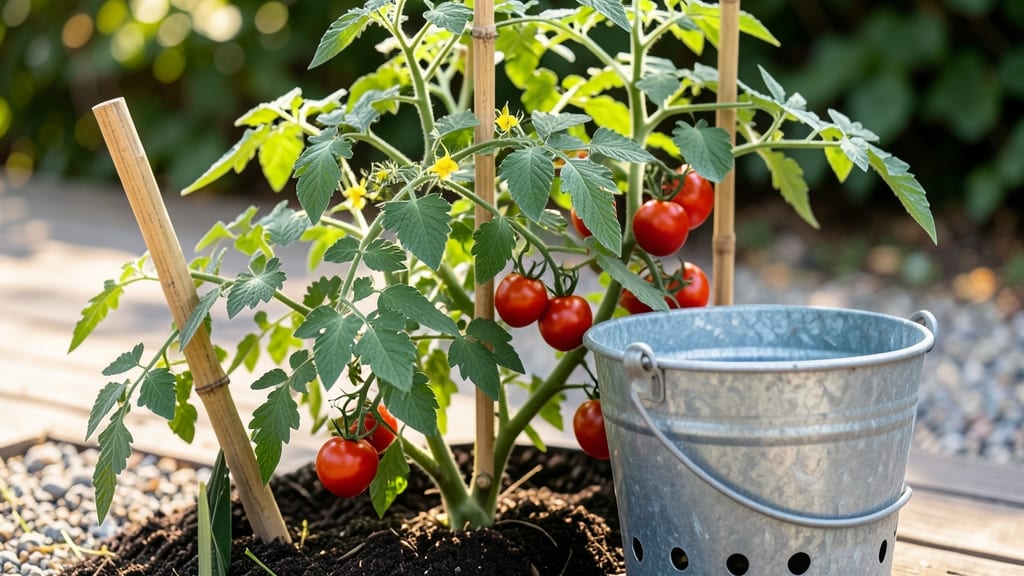
A 10-gallon bucket can hold 1-2 tomato plants—but getting how many tomato plants per 10-gallon bucket right means the difference between a bountiful harvest and stunted vines.
Picture this: you’ve spent weeks nurturing your 🍅 seedlings, only to watch them struggle in a container that’s too crowded. The key isn’t just the number of plants—it’s how their roots, branches, and fruit compete for space. One wrong move, and you’re left with leggy stems and tiny tomatoes.
Determinate tomatoes (the bush types) play by different rules than indeterminate vines, and cherry varieties need even more room to spread. Below, I break down the exact spacing, pruning tricks, and watering hacks to keep your bucket-grown tomatoes thriving all season.
Ready to grow more without the guesswork? Let’s dive into the science of small-space tomato success—so you can enjoy a full harvest without sacrificing plant health.
Tomato plant spacing rules for 10-Gallon buckets (by variety)
When growing tomatoes in 10-gallon buckets, spacing isn't just about fitting plants—it's about giving roots room to breathe and vines space to thrive. Determinate (bush) varieties and indeterminate (vining) types have wildly different needs, and cherry tomatoes demand special attention.
A single miscalculation can lead to stunted growth, poor fruit set, or even plant death. Let's break down the science-backed rules to maximize your harvest without overcrowding.
First, understand that a 10-gallon bucket provides about 1 cubic foot of soil, which is roughly the root zone needed for one mature tomato plant.
However, this changes dramatically based on the variety. Dwarf tomatoes like 'Tiny Tim' can share space, while indeterminate giants like 'Brandywine' need their own dedicated bucket. The key is balancing root depth (12-18 inches) with foliage spread (12-24 inches for indeterminate types).
Here’s the critical rule: Never exceed one indeterminate tomato plant per 10-gallon bucket. These vining varieties can grow 6+ feet tall and spread aggressively.
Even cherry tomatoes, which are often compact, need careful spacing—some varieties like 'Sweet Million' can produce so many fruits that they deplete soil nutrients faster than their smaller cousins.
Meanwhile, determinate tomatoes (like 'Roma' or 'Celebrity') can sometimes share a bucket with a dwarf companion, but only if pruned heavily.
| Variety Type | Max Plants per 10-Gallon Bucket | Root Depth Needed | Vine Spread | Pruning Required? |
|---|---|---|---|---|
| Dwarf Tomatoes (e.g., 'Tiny Tim', 'Patio') | 1-2 plants | 12-15 inches | 12-18 inches | Minimal (trim suckers) |
| Determinate Tomatoes (e.g., 'Roma', 'Celebrity') | 1 plant | 15-18 inches | 18-24 inches | None (bushy growth) |
| Cherry Tomatoes (e.g., 'Sweet 100', 'Sun Gold') | 1-2 plants (if dwarf) | 12-15 inches | 12-24 inches (varies by variety) | Moderate (prune for airflow) |
| Indeterminate Tomatoes (e.g., 'Brandywine', 'Sungold') | 1 plant | 18+ inches (deep roots) | 24+ inches (trellis needed) | Heavy (prune suckers weekly) |
For indeterminate tomatoes, the 1-plant rule is non-negotiable. These varieties grow continuously and can produce hundreds of pounds of fruit if given enough space. In a 10-gallon bucket, a single indeterminate plant will need weekly pruning to remove suckers (side shoots) and staking or caging to support its weight.
Skimp on space, and you’ll end up with blossom end rot or fungal diseases from poor airflow.
If you're growing cherry tomatoes, opt for dwarf or bush varieties like 'Tumbling Tom' or 'Micro Tom' to fit two plants in a bucket. However, avoid planting indeterminate cherry tomatoes (like 'Sweet Million') in shared space—they’ll outgrow their container in weeks.
Instead, dedicate a bucket to one plant and prune aggressively to encourage larger fruit production. A good rule of thumb: if the plant’s foliage touches the bucket’s rim, it’s overcrowded.
Determinate tomatoes are the most forgiving for container sharing, but even they need careful planning.
Varieties like 'Roma' or 'Better Boy' (when grown determinate) can sometimes coexist with dwarf basil or lettuce in the same bucket, but only if the tomato is heavily pruned to stay under 3 feet tall.
The key is monitoring leaf yellowing or stunted growth—these are red flags that roots are competing for nutrients.
Pro tip: Use self-watering buckets with drip irrigation to maintain consistent moisture, which is critical for container-grown tomatoes. Overwatering or underwatering in small spaces can lead to root rot or blossom
How to calculate tomato plant density without overcrowding
Calculating the right number of tomato plants for your 10-gallon bucket depends on more than just the container size. The root zone, vine growth habit, and even your pruning style play critical roles.
A single indeterminate tomato plant can sprawl 6 feet tall, while a dwarf variety like 'Tiny Tim' stays compact. Without proper spacing, you risk stunted growth, poor fruit production, and even disease from poor air circulation.
Start by understanding your bucket's usable volume. A 10-gallon container isn't just about gallons—it's about the diameter (typically 12-14 inches) and how much root space you can allocate per plant.
For example, a 12-inch diameter bucket offers about 113 square inches of surface area, while a 14-inch bucket gives 154 square inches. This extra space lets you fit slightly more plants or accommodate larger varieties.
-
1 Plant (10-gallon bucket)
- Best for: Indeterminate varieties (e.g., 'Brandywine', 'Sungold')
- Root space: Full bucket volume for deep roots
- Pruning needed: Regular (every 1-2 weeks)
- Yield: 10-20 lbs per plant (with proper care)
-
2 Plants (10-gallon bucket)
- Best for: Determinate varieties (e.g., 'Roma', 'Celebrity') or dwarf indeterminate (e.g., 'Tiny Tim')
- Root space: Divide bucket into two equal halves (use dividers if needed)
- Pruning needed: Minimal (determinates) or light (dwarfs)
- Yield: 5-10 lbs total (per plant)
-
3 Plants (10-gallon bucket)
- Best for: Cherry tomatoes (e.g., 'Sweet 100', 'Sun Gold') or bush varieties
- Root space: 3-4 inches between plants (use small pots for seedlings first)
- Pruning needed: None (cherries) or light (bush types)
- Yield: 3-5 lbs total (smaller fruit size)
⚠️ Pro Tip: For indeterminate varieties, prune aggressively to control vine size—this lets you fit 1.5 plants worth of foliage in a single bucket without overcrowding roots.
Next, consider the foliage-to-fruit ratio. Indeterminate tomatoes produce continuously, so their canopy spread matters just as much as root depth. If you're growing a vining variety, allocate at least half the bucket's height for the stem and leaves.
For example, a 12-inch-tall bucket should have 6 inches for roots and 6 inches for foliage. Use cage supports or trellises to guide growth upward and free up space.
Adjust your plant count based on your harvest goals. If you're after high yields, prioritize one robust indeterminate plant per bucket. For continuous snacking, opt for 2-3 cherry tomato plants—their compact size lets you squeeze more into the same space.
Always err on the side of fewer plants if your bucket is the only container you're using, as soil nutrients deplete faster in small spaces.
Finally, monitor your plants' growth patterns after transplanting. If leaves turn yellow between veins or new growth stunts, you've likely overcrowded the roots. In this case, thin to one plant immediately and supplement with balanced fertilizer (5-10-10) to revive growth.
Remember, a 10-gallon bucket is a temporary home—transplant your strongest seedlings to larger containers (20+ gallons) once they outgrow their current space.
With the right density, your container tomatoes will thrive, producing just as much (or more!) than their in-ground counterparts—without the backbreaking work. Start with these guidelines, then tweak based on your local climate and variety preferences.