
Pests and Diseases
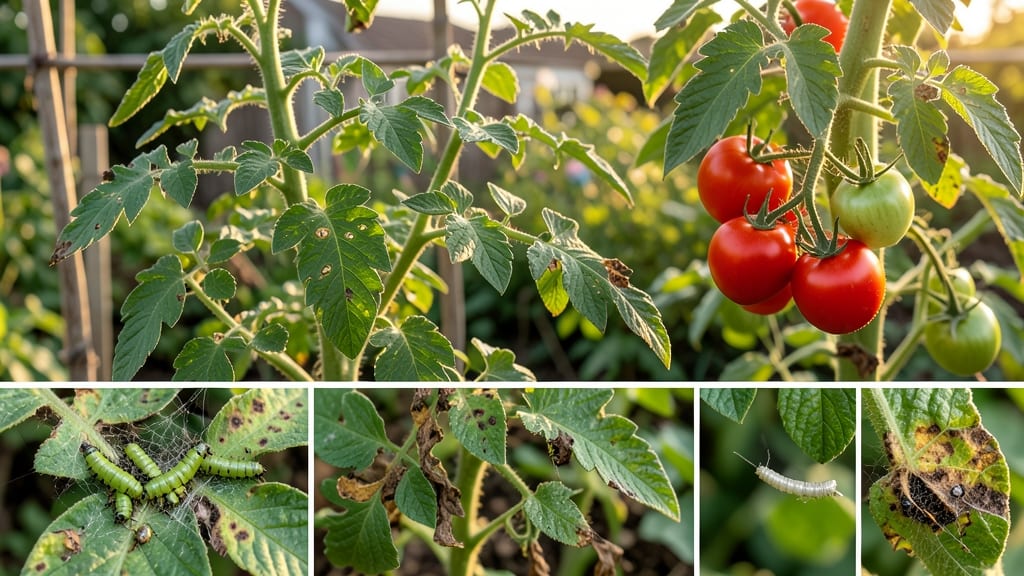
Tomato plant pests and diseases with pictures can turn a thriving garden into a battle zone faster than you think. 🌱 I’ve lost entire plants to hidden invaders and sneaky infections—until I learned these visual cues that let you spot trouble before it spreads.
The key is acting fast, and these pictures will show you exactly what to watch for, from chewed leaves to suspicious spots.
Most problems start small: a few aphids on new growth, a single brown spot on a leaf, or wilting that doesn’t improve after watering. I check my plants every morning now, and it’s saved my harvest more times than I can count.
The good news? Many issues respond to simple fixes—like a spray of soapy water or removing infected leaves—if you catch them early.
By the end of this guide, you’ll recognize the most common pests and diseases in seconds and know exactly how to stop them. We’re talking shrivel-free tomatoes, hole-free leaves, and plants that keep producing all season. The pictures make it foolproof—no guesswork, just action.
Whether you’re growing in backyard beds, containers, or a community plot, these solutions work everywhere. Let’s get those plants back to their best—and keep them that way all season long.
Root Causes of Tomato Troubles
Tomato plants are resilient, but they’re not invincible. When pests and diseases strike, it’s usually because specific conditions align to create the perfect storm for trouble. Understanding these root causes helps you take action before problems spiral out of control.
Let’s break down why these issues happen—and how to stop them in their tracks.
Tomatoes thrive in open spaces, but when plants are too close together, moisture lingers, and airflow stalls. This creates a cozy environment for fungal diseases like early blight (Alternaria solani) and late blight (Phytophthora infestans).
Poor airflow also weakens plants, making them easier targets for pests like hornworms and aphids.
Why it happens:
- Stagnant air traps humidity, slowing evaporation and promoting fungal spores.
- Shaded leaves (from overcrowding) stay damp longer, ideal for pathogens.
- Competition for nutrients stresses plants, lowering their natural defenses.
Actionable fix: ✔ Space plants 18–24 inches apart in rows 3–4 feet apart. ✔ Prune lower leaves to improve airflow at the base. ✔ Avoid overhead watering—use drip irrigation to keep foliage dry.
Tomatoes hate soggy feet. Overwatering or poorly draining soil leads to root rot (Phytophthora spp.), blossom end rot (calcium deficiency from uneven moisture), and bacterial wilt (Ralstonia solanacearum). Even well-draining soil can become a problem if water pools around the stems.
Why it happens:
- Waterlogged roots suffocate, preventing oxygen uptake and inviting fungal invaders.
- Splashing water spreads spores from soil to leaves (e.g., early blight).
- Salty or compacted soil disrupts nutrient absorption, weakening plants.
Actionable fix: ✔ Test soil drainage—dig a hole, fill it with water, and time how long it takes to drain. Ideal: 4–6 hours. ✔ Amend heavy clay soil with compost or perlite to improve aeration. ✔ Water deeply but infrequently—aim for 1–1.5 inches per week, adjusting for rain.
Tomatoes are heavy feeders, and when their diet is off, they become vulnerable. Nitrogen deficiency (yellow leaves) weakens growth, while calcium deficiency (blossom end rot) occurs when plants can’t absorb enough calcium due to uneven moisture or high soil pH.
Why it happens:
- Too much nitrogen promotes leafy growth but weak stems, attracting pests like whiteflies.
- Low calcium availability (common in acidic or overly wet soil) causes cell wall collapse in fruit.
- Magnesium or potassium shortages reduce disease resistance and fruit quality.
Actionable fix: ✔ Conduct a soil test to identify deficiencies (pH should be 6.0–6.8 for tomatoes). ✔ Use balanced fertilizer (e.g., 5-10-10) at planting, then switch to low-nitrogen, high-potassium (e.g., 0-10-10) when flowering. ✔ Apply crushed eggshells or lime for calcium (if soil is acidic). ✔ Side-dress with compost mid-season for slow-release nutrients.
Pests don’t just appear—they’re drawn to stressed or weakened plants. Aphids, hornworms, and whiteflies target tomatoes that are already struggling from poor growing conditions, while Colorado potato beetles prefer young, tender foliage.
Why it happens:
- Stressed plants (from drought, overwatering, or nutrient issues) produce sweeter sap, attracting pests.
- Monoculture gardening (planting only tomatoes) creates a pest buffet with no natural predators.
- Lack of beneficial insects (like ladybugs or lacewings) leaves pests unchecked.
Actionable fix: ✔ Rotate crops annually to disrupt pest life cycles. ✔ Plant companion crops like basil, marigolds, or nasturtiums to repel pests. ✔ Introduce beneficial insects (e.g., parasitic wasps for hornworms). ✔ Handpick pests early—check leaves daily for eggs or larvae.
Extreme heat, sudden temperature swings, or harsh winds stress tomatoes, making them more susceptible to disease and pest attacks. Late blight, for example, thrives in cool (60–70°F), humid conditions, while sunscald (white/yellow patches on fruit) occurs when temperatures exceed 90°F.
Why it happens:
- Temperature fluctuations disrupt pollination and fruit set.
- High humidity (without airflow) encourages fungal growth.
- Strong winds physically damage leaves, creating entry points for pathogens.
Actionable fix: ✔ Mulch heavily (straw or grass clippings) to stabilize soil temperature. ✔ Use shade cloth (30–50%) in scorching climates to protect young plants. ✔ Avoid evening watering to reduce nighttime humidity. ✔ Choose heat-tolerant varieties (e.g., ‘Heatmaster’ or ‘Solar Fire’) for hot regions.
Fungal spores and bacterial pathogens can lurk on gardening tools, transplants, or compost, hitching a ride to your tomato patch. Verticillium wilt and Fusarium wilt often spread via infected soil or tools moved between plants.
Why it happens:
- Reusing tools without sterilization spreads disease from plant to plant.
- Infected compost or manure introduces pathogens into the soil.
- Buying contaminated seedlings introduces diseases like tobacco mosaic virus.
Actionable fix: ✔ Sterilize tools between uses with 70% rubbing alcohol or bleach solution (1 part bleach to 9 parts water). ✔ Test soil for wilt fungi before planting—avoid replanting tomatoes in the same spot for 3+ years. ✔ Buy disease-resistant varieties (look for labels like ‘VFN’ for Verticillium/Fusarium/Nematode resistance). ✔ Disinfect hands and tools after handling infected plants.
Quick Fixes for Tomato Troubles
When pests and diseases attack your tomato plants, acting fast is key to saving your harvest. Below are practical, step-by-step solutions tailored to each common issue—plus prevention tips to keep your plants thriving. Think of this as your emergency repair kit for tomato gardening! 🚑🌱
🔥 Fix It:
- Handpick the culprits 👨🍳—Check leaves daily, especially in the morning. Drop hornworms into soapy water to kill them instantly.
- Introduce natural predators 🦋—Ladybugs, parasitic wasps, and praying mantises love munching on hornworms. Buy or attract them to your garden.
- Use neem oil spray 🌿—Mix 1 tbsp neem oil + 1 tsp mild soap in 1 quart of water. Spray on affected leaves (avoid flowering plants to protect pollinators).
💡 Prevention Tip:
- Plant basil or dill nearby—These herbs repel hornworms naturally. Plus, they’re great for cooking! 🍝
🍳 Fix It:
- Boost calcium levels 🥛—Sprinkle crushed eggshells or oyster shell grit around the base of plants. Water well to help roots absorb calcium.
- Mulch heavily 🌡️—Use straw or grass clippings to keep soil moisture consistent (but avoid overwatering).
- Adjust watering habits ⏰—Water deeply 1–2 times per week (early morning) instead of daily shallow watering.
✨ Prevention Tip:
- Test your soil—If pH is below 6.0, amend with lime to improve calcium availability.
🔪 Fix It:
- Remove infected leaves 🗑️—Prune and destroy (don’t compost!) leaves with spots to stop spores from spreading.
- Apply copper fungicide 🛡️—Spray every 7–10 days when conditions are humid (early morning or evening).
- Improve airflow 🌬️—Space plants 18–24 inches apart and stake them to reduce humidity trapped in foliage.
🎯 Prevention Tip:
- Rotate crops—Avoid planting tomatoes in the same spot for 3+ years to break the fungus’s life cycle.
👨🍳 Fix It:
- Blast them off 💦—Use a strong spray of water to knock aphids from leaves (repeat daily for severe infestations).
- Spray soapy water 🧼—Mix 1 tsp mild dish soap in 1 quart of water. Spray directly on aphids (test on a small leaf first).
- Invite lacewings or ladybugs 🐞—These beneficial insects are aphid magnets. Release them or plant flowers like marigolds to attract them.
💡 Prevention Tip:
- Avoid over-fertilizing with nitrogen—Aphids love lush, soft new growth. Use balanced fertilizer (e.g., 10-10-10).
🚨 Fix It (Early Stages Only):
- Pull and destroy infected plants 🗑️—Do not compost! Fusarium survives in soil for years.
- Solarize the soil ☀️—Cover the bed with clear plastic for 4–6 weeks in hot sun to kill pathogens.
- Plant resistant varieties 🌱—Try ‘Mountain Merit’ or ‘Celebrity’ tomatoes, which tolerate fusarium better.
🔥 Prevention Tip:
- Disinfect tools—Wipe pruners with rubbing alcohol between plants to avoid spreading the disease.
Pro Tip: Always check the undersides of leaves and new growth first—pests and diseases often hide there! 🕵️♂️ For stubborn issues, combine prevention + treatment for the best results.
Frequently asked questions
How can I tell if my tomato plant has early blight vs. late blight?
Early blight shows as brown concentric rings on older leaves, while late blight creates greasy-looking, dark spots that spread rapidly in cool, wet weather. Check stems too—late blight causes black streaks, while early blight doesn't. The key difference? Early blight targets lower leaves first, while late blight attacks new growth and fruit.
Are there any organic sprays that work against hornworms?
Yes! Try a neem oil spray (1 tbsp neem oil + 1 tsp mild soap in 1 quart of water) or Bacillus thuringiensis (Bt), a natural bacteria that kills caterpillars. For immediate results, handpick hornworms in the morning when they're sluggish. Always spray undersides of leaves where eggs hide.
Why do my tomato leaves turn yellow even when I'm watering regularly?
Yellowing leaves usually signal nutrient deficiency or overwatering. Check the pattern: Lower leaves yellowing often means nitrogen deficiency (use balanced fertilizer), while yellowing between veins suggests magnesium deficiency (try Epsom salt spray). If the soil stays soggy, you're overwatering—tomatoes prefer deep but infrequent watering.
Can I still eat tomatoes from plants with fungal diseases?
It depends! For early blight, remove infected leaves but harvest fruit promptly. With late blight, destroy the plant immediately—it spreads rapidly and can ruin your whole garden. Always wash tomatoes thoroughly before eating. If in doubt, compost the plant (except diseased parts) and sterilize your tools.
How do I prevent pests from returning next season?
Start with crop rotation—don't plant tomatoes in the same spot for 3+ years. Use row covers early in the season, plant companion plants like basil or marigolds, and maintain healthy soil with compost. Sterilize tools between uses and remove all plant debris at season's end to break pest life cycles.