
Pests and Diseases
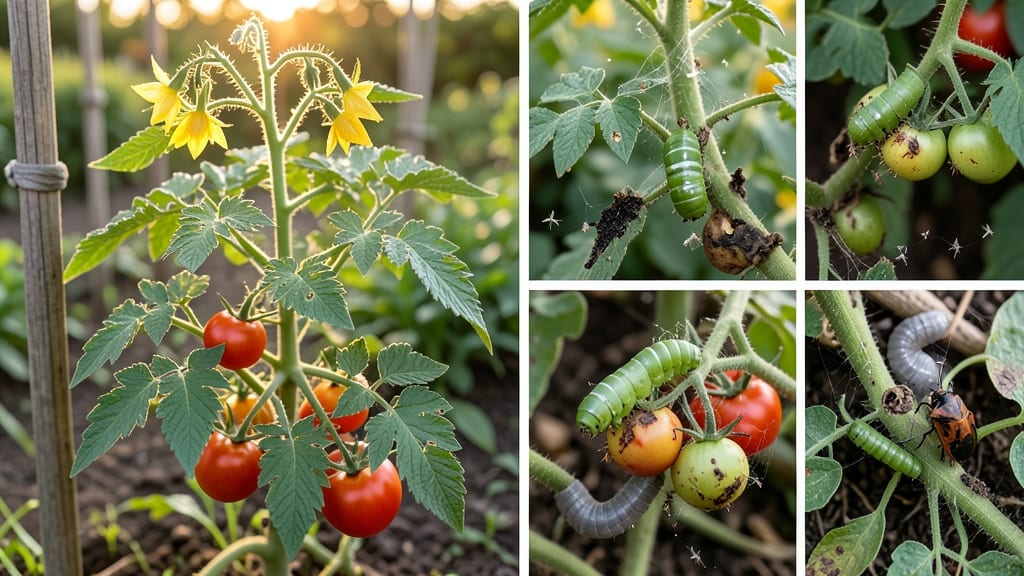
Identifying tomato pests with the right pictures and names early saves your harvest—and your sanity. 🌱 The first time I spotted tiny holes in my heirloom tomatoes, I assumed it was just bad luck. Turns out, it was hornworms feasting like they owned the place.
This guide shows you exactly what to look for, from chewed leaves to sticky residue, so you can act fast before pests turn your plants into a buffet.
Most pests hit when tomatoes are stressed—whether from drought, overwatering, or poor soil. The good news? Many can be stopped with simple fixes like row covers, neem oil, or even a blast of water to knock off aphids.
I’ve tested these methods in my own garden, and they work without harsh chemicals that harm bees or your family.
You’ll learn to spot the most common culprits—hornworms, aphids, whiteflies, and more—with clear descriptions and what damage to watch for. Once you recognize the signs, prevention becomes second nature: healthy plants resist pests better, and a quick morning check keeps problems from spiraling.
No matter your experience level, this guide gives you the confidence to tackle pests organically. Whether you’re dealing with a sudden infestation or just want to stay ahead, these tactics keep your tomatoes thriving—without the guesswork.
Root Causes Of Tomato Pests
Tomato gardens become battlegrounds for pests due to a mix of environmental, biological, and agricultural factors. Understanding these triggers helps you outsmart invaders before they strike. Below are the key reasons tomato plants attract pests—and how their life cycles exploit your crop.
When tomato plants struggle to fend off pests, they become prime targets. Here’s why:
- Nutrient Deficiencies 📊 Plants lacking essential nutrients (like nitrogen, phosphorus, or potassium) produce weaker cell walls, making them easier for pests to penetrate. For example, aphids thrive on stressed plants because their sap is sweeter and more accessible.
- Overcrowding 🌿 Dense plantings reduce airflow and sunlight penetration, creating humid microclimates that attract fungal pests (like spider mites) and soft-bodied insects. Overcrowded tomatoes also trap moisture, inviting slugs and snails.
- Water Stress 💦 Both overwatering (leading to root rot and fungal pests) and underwatering (stressing plants and attracting sap-suckers like whiteflies) create vulnerabilities. Pests exploit plants that can’t regulate their own moisture balance.
Pests don’t just appear—they’re drawn to specific conditions that match their survival needs:
- Warmth & Humidity 🌡️ Many tomato pests (e.g., hornworms, fruitworms) thrive in temperatures between 70–90°F (21–32°C). High humidity also encourages fungal issues (like early blight) and soft-bodied insects that prefer damp foliage.
- Poor Drainage 🚰 Waterlogged soil attracts cutworms, slugs, and nematodes, which thrive in soggy conditions. Poor drainage also weakens roots, making plants more susceptible to secondary pests.
- Lack of Beneficial Predators 🐞 Gardens missing natural enemies (like ladybugs, lacewings, or parasitic wasps) see pest outbreaks spiral. Monoculture plantings (e.g., rows of only tomatoes) starve these predators, leaving your crop defenseless.
Tomatoes aren’t just food for humans—they’re a buffet for pests. Here’s what makes them irresistible:
- Sugary Sap 🍬 Aphids, whiteflies, and spider mites are drawn to the high-sugar content in tomato sap, especially in stressed or over-fertilized plants. Variegated or disease-damaged leaves release even more attractive volatile organic compounds (VOCs).
- Fruits & Flowers 🍅🌸 Ripe tomatoes emit ethylene gas, signaling pests like fruit flies and hornworms that a meal is ready. Flowers attract pollinators—but also thrips and leafminers, which lay eggs in blossoms.
- Organic Matter Buildup 🍂 Leaves, stems, and fallen fruit create hiding spots for cutworms, earwigs, and slugs. Mulch that’s too thick or decomposing plant debris provides shelter and breeding grounds for pests.
Even the best-intentioned gardener can accidentally create pest paradises:
- Over-Fertilizing 🌱 Excess nitrogen promotes luxuriant growth (soft, tender leaves) that pests love to chew. Slow-release fertilizers and balanced NPK ratios help prevent this.
- Ignoring Early Signs 🚨 Delaying action when you spot holes in leaves, sticky residue (honeydew), or wilting gives pests time to multiply exponentially. A single aphid can become thousands in weeks.
- Using Broad-Spectrum Pesticides 💀 Chemicals kill beneficial insects first, leaving pests unchecked. This disrupts the garden’s natural balance, often making infestations worse long-term.
Pests don’t attack randomly—they follow predictable patterns tied to tomato growth stages:
| Pest | Peak Activity | Why It Strikes |
|---|---|---|
| Aphids | Spring to early summer | New growth is tender; they reproduce rapidly in warm weather. |
| Hornworms | Summer | Feast on leaves and fruit when tomatoes are in full bloom. |
| Whiteflies | Late summer to fall | Thrive in hot, dry conditions; cluster on undersides of leaves. |
| Slugs/Snails | Spring & fall | Moist soil and nighttime humidity make them active. |
| Fruitworms | Summer to harvest | Lay eggs in blossoms; larvae burrow into tomatoes as they ripen. |
The best defense? Disrupt their life cycles before they start:
- Rotate crops annually to starve soil-borne pests.
- Plant companion plants (like basil, marigolds, or nasturtiums) to repel insects.
- Encourage biodiversity with pollinator-friendly flowers to attract predator insects.
- Monitor regularly—catch pests early with yellow sticky traps or handpicking (especially for hornworms!).
Quick Fixes for Common Tomato Pests
When tomato pests strike, acting fast is key to saving your harvest. Below are practical, organic solutions tailored to each culprit—plus prevention tips to keep your plants thriving. No harsh chemicals needed!
🔥 Fix: These striped caterpillars can strip a plant bare overnight. Here’s how to stop them:
- 👨🍳 Handpick them (yes, really!) in the early morning when they’re sluggish. Drop them in soapy water—no waste!
- 🥘 Introduce predators: Ladybugs, parasitic wasps, and praying mantises love hornworms. Plant dill, fennel, or basil nearby to attract them.
- 🔪 Use neem oil spray (1 tsp neem oil + 1 tsp mild soap + 1 quart water) to disrupt their life cycle. Reapply every 5–7 days.
💡 Prevention Tip: Plant marigolds around your tomatoes—their strong scent repels hornworms. Also, rotate crops yearly to break their life cycle.
🍳 Blast them off with a strong spray of water (aphids hate this!). For stubborn infestations:
- 🌡️ Soap spray: Mix 1 tbsp castile soap + 1 quart water in a spray bottle. Test on a few leaves first!
- 🎯 Attract aphid-eating birds by leaving shallow water dishes in your garden.
- 🌿 Plant garlic or chives nearby—their scent deters aphids naturally.
💡 Prevention Tip: Yellow sticky traps catch aphids before they multiply. Hang them near your tomato plants for early detection.
These microscopic pests thrive in dry, hot conditions and leave silvery webs on leaves.
- 🔥 Increase humidity: Mist plants daily (especially in summer) or use a shade cloth to reduce stress.
- 🥘 Neem oil or insecticidal soap (spray undersides of leaves where mites hide).
- 🌿 Release predatory mites (Phytoseiulus persimilis)—they’re the ultimate biological control!
💡 Prevention Tip: Water deeply at the base (avoid overhead sprinkling) to discourage mite activity. Diversity helps! Plant marigolds or nasturtiums to attract beneficial insects.
These sneaky worms sever young plants at soil level.
Here’s how to outsmart them: - 🔪 Collar young plants with a toilet paper roll or cardboard sleeve (bury 2 inches deep) to block cutworms. - 🌙 Set up a flashlight trap: Shine a light at dusk—cutworms will crawl toward it.
Pick them off and drop them in soapy water. - 🌿 Plant basil or thyme nearby—their scent confuses cutworms.
💡 Prevention Tip: Avoid late planting—cutworms are most active in warm evenings. Use mulch to deter them from burrowing.
These tiny white bugs cluster on undersides of leaves and weaken plants with their sticky honeydew.
- 🍳 Yellow sticky cards (place under leaves) trap them effectively.
- 🥘 Spray with water + dish soap (1 tsp soap per gallon) to suffocate them.
- 🌿 Encourage lacewings—they devour whitefly eggs and larvae!
💡 Prevention Tip: Inspect new plants before bringing them home—whiteflies hitchhike easily. Avoid over-fertilizing with nitrogen, which attracts them.
These orange-and-black beetles (and their yellow larvae) defoliate tomatoes in weeks.
- 🔪 Handpick adults and larvae (drop them in soapy water—they multiply fast!).
- 🌿 Plant radishes or mustard as a trap crop—they lure beetles away from tomatoes.
- 🥘 Kaolin clay spray (like Surround WP) creates a barrier they avoid.
💡 Prevention Tip: Rotate crops—don’t plant tomatoes or potatoes in the same spot yearly. Row covers (early in the season) block adults from laying eggs.
✨ Pro Tip for All Pests: Healthy plants resist pests better! Ensure your tomatoes get:
- Full sun (6–8 hours/day)
- Well-draining soil (mix in compost)
- Consistent watering (deep, not frequent shallow watering)
By acting early and using nature’s tools, you’ll keep your tomato plants strong, pest-free, and productive**—without chemicals! 🍅💪
Frequently asked questions
How can I tell if my tomato plant has pests just by looking at the leaves?
Check for these visual clues: tiny holes or chew marks (hornworms), sticky residue (honeydew) (aphids/whiteflies), or silvery webs (spider mites). Look on both leaf surfaces—pests often hide on undersides! Yellowing or curled leaves can also signal stress from sap-suckers like thrips.
Are there any pests that attack tomato fruits directly?
Yes! Fruitworms burrow into ripening tomatoes, creating tunnels and rot. Hornworms may also eat fruit, while fruit flies lay eggs in overripe tomatoes. Check for small holes, brown trails, or maggots inside—act fast to salvage salvageable fruit.
What’s the fastest way to confirm I have tomato pests without waiting for damage?
Use a magnifying glass to inspect leaf undersides and stems for: tiny eggs (whitefly/aphid), caterpillar droppings (hornworms), or tiny crawling insects. Shake plants over a white tray—moving pests reveal their presence instantly.
Can I use the same organic spray for all tomato pests?
Neem oil works for most pests (aphids, whiteflies, mites), but hornworms need handpicking first. For cutworms, focus on physical barriers. Always test sprays on a small area first—some pests develop resistance over time.
Why do some tomato pests get worse at night?
Many pests (like slugs, cutworms, and some beetles) are nocturnal to avoid predators and heat. They feed when you’re not looking! Check plants at dusk with a flashlight—you’ll often spot them before they cause major damage.