
Vegetables
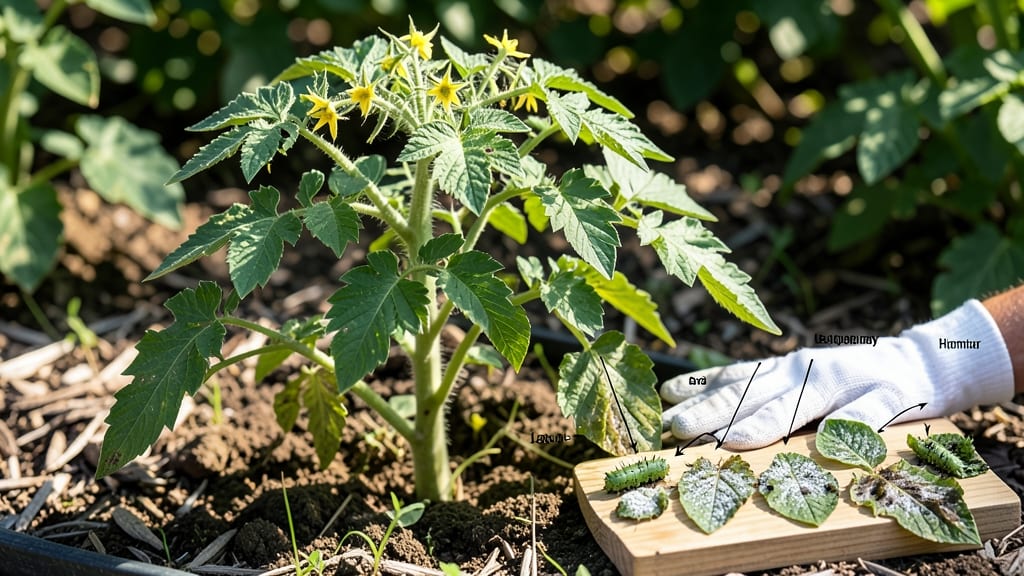
Your tomato plants are sending you SOS signals through their tomato leaf problems photos—spots, curls, or yellowing that mean trouble if ignored. 🌱 I’ve diagnosed every leaf problem in my garden, and the key to saving your harvest is catching these issues early, before they spread like wildfire.
This guide shows you exactly what to look for, from fungal spots to viral curls, with clear photos and step-by-step fixes.
Most leaf problems start with poor air circulation, overwatering, or pests hitching a ride on new plants. I’ve seen early blight turn a thriving plant into a defoliated mess in weeks, while tomato mosaic virus curls leaves so tightly they look like crumpled paper.
The good news? Organic sprays, pruning, and copper fungicides can turn things around—if you act fast.
By the end of this guide, you’ll spot the difference between harmless sunscald and deadly blight, know when to pull a plant vs. treat it, and prevent future outbreaks with simple garden hygiene. No more guessing what’s wrong or watching your tomatoes suffer in silence.
We’ll cover everything from soil health to companion planting, so your plants stay lush and productive all season. Let’s get those leaves healthy again—your harvest depends on it.
Root Causes Of Tomato Leaf Troubles
Tomato leaves don’t just randomly wilt, spot, or curl—they’re sending you SOS signals about underlying issues. Understanding the why behind common tomato leaf problems helps you act fast and save your harvest. Below, we break down the real culprits behind those distressed leaves, from microscopic invaders to environmental missteps.
Fungi thrive in moist, warm conditions and can turn your tomato plants into a buffet. Here’s how they strike:
- **Early Blight (Alternaria solani)
- Science behind the spread: The fungus produces conidia (asexual spores) that germinate in wet conditions, creating dark concentric rings on leaves.
- Trigger points: Overhead watering, poor air circulation, and temperatures between 60–85°F (15–30°C).
- Tell-tale sign: Yellowing lower leaves with target-like brown spots (hence the name).
Not all leaf problems come from fungi—some are caused by hungry pests that chew, suck, or inject toxins. Here’s how they wreck your tomatoes:
- Aphids & Spider Mites
- Science behind the damage: They inject toxic saliva, causing curl, pucker, or silvering of leaves.
- Trigger points: Drought stress (mites love dry conditions) and new growth (aphids adore tender shoots).
- Tell-tale sign: Sticky honeydew (aphids) or bronzing/yellow speckling (mites).
Sometimes, the problem isn’t a pathogen or pest—it’s your garden’s environment playing havoc. Here’s how:
- Extreme Heat or Cold
- Science behind the damage: Heat stress causes leaf scorch (brown, crispy edges), while cold stress leads to blackened, mushy leaves.
- Trigger points: Sudden temperature swings, poor mulching, or lack of shade in hot climates.
- How it happens: Dry, cracked soil causes wilting, curling leaves as the plant conserves moisture.
- Science behind the damage: Plasmolysis occurs—cells lose water and shrink, making leaves leathery and brittle.
- Magnesium (Potassium) Deficiency:
- How it shows: Yellowing between leaf veins (a classic sign of chlorosis).
- Nitrogen Deficiency:
- How it shows: Pale, yellow leaves starting at the older (bottom) leaves.
- Science behind the damage: Poor soil pH (too acidic/alkaline) or lack of organic matter locks out nutrients.
Mistakes with fertilizers, herbicides, or pesticides can fry your tomato leaves faster than a blight outbreak.
- Salt Burn (From Over-Fertilizing)
- How it happens: Too much synthetic fertilizer (especially high in sodium or chloride) builds up in soil.
- Science behind the damage: Salt ions disrupt osmotic balance in plant cells, causing leaf edges to brown and crisp.
- Tell-tale sign: Brown, papery edges on older leaves.
- Herbicide Drift
- How it happens: Glyphosate or 2,4-D (common in weed killers) can bleach or distort leaves if sprayed nearby.
- Science behind the damage: These chemicals disrupt plant hormones, leading to stunted growth and misshapen leaves.
- Pesticide Overuse
- How it happens: Neonicotinoids or copper sprays can burn leaves if applied too concentrated or in direct sun.
- Tell-tale sign: White, bleached patches or blackened leaf tips.
Sometimes, the problem starts before the first leaf unfurls. Here’s how:
- Overcrowding
- Why it happens: Poor airflow between plants creates a fungus-friendly microclimate.
- Science behind the damage: High humidity from crowded foliage traps spores, leading to blight and mildew.
- Planting Too Deep
- Why it happens: Burying the stem too low can strangle the plant or encourage rot at the soil line.
- Science behind the damage: Anaerobic conditions (lack of oxygen) at the stem weakens the plant’s immune response.
- Ignoring Companion Planting
- Why it happens: Planting tomatoes near brassicas (cabbage family) can attract pests, while basil repels hornworms.
- Science behind the damage: Pest magnets (like dill or fennel) draw insects, while repellent plants (like marigolds) confuse pests’ scent trails.
Quick Fixes for Tomato Leaf Issues
Got tomato leaves looking more like a crime scene than a garden? Don’t panic—most problems have simple, effective solutions. Below, we’ll match your plant’s symptoms to the right cure, plus share pro tips to keep your tomatoes thriving. 🌱💥
Symptoms: Brown, concentric rings on lower leaves; yellowing edges.
How to Fix It:
- 🔥 Remove the Problem Leaves Snip off infected leaves immediately (wear gloves!) and toss them in the trash—not the compost. Early blight thrives on organic matter.
- 🍳 Spray with Copper Fungicide Mix 1 tbsp copper sulfate per gallon of water (or use a pre-mixed solution) and spray under leaves where spores hide. Repeat every 7–10 days until new growth appears.
- 👨🍳 Boost Plant Health
- Water at the base (never overhead) to keep leaves dry.
- Mulch heavily (2–3 inches of straw or grass clippings) to block spore splash from soil.
- ⏰ Rotate Crops Next Year Avoid planting tomatoes, potatoes, or peppers in the same spot for 3 years to break the fungus cycle.
💡 Pro Tip: If blight hits early, prune lower leaves aggressively to improve airflow—and consider a baking soda spray (1 tsp baking soda + 1 tbsp oil + 1 tsp soap per gallon of water) for mild cases.
Symptoms: Dark, greasy spots on both leaf surfaces; rapid wilting.
How to Fix It:
- 🔪 Emergency Pruning Cut off all infected leaves and stems down to healthy green tissue. Bag and dispose of them—this fungus spreads like wildfire.
- 🥘 Organic Fungicide Blitz
- Neem oil (2 tsp per quart of water + surfactant) or
- Serenade ASO (bacillus-based spray) applied every 5–7 days.
- For severe cases, copper fungicide (same as early blight) is your last line of defense.
- 🌡️ Adjust Growing Conditions
- Remove nearby plants (especially potatoes) within 30 feet—they’re late blight’s favorite snack.
- Water in the morning so leaves dry by evening.
- Use row covers if blight is rampant in your area.
✨ Prevention for Next Season:
- Plant blight-resistant varieties like ‘Mountain Merit’ or ‘Defiant PhR’.
- Crop rotation is non-negotiable—late blight survives in soil for years.
Symptoms: Crinkled, cupped leaves; stunted growth; possible silvering on undersides.
How to Fix It:
- 🚫 Quarantine Infected Plants Remove curled leaves and destroy them (burn or trash). This virus (often tomato leaf curl virus) has no cure—only containment.
- 🔥 Strengthen Your Tomatoes
- Fertilize lightly with low-nitrogen, high-phosphorus (e.g., 5-10-10) to encourage root growth.
- Hand-pollinate flowers (gently shake plants in the morning) to boost fruit set despite poor leaf health.
- 🌡️ Prevent Spread
- Avoid aphids (their #1 vector)—spray with soapy water (1 tsp mild soap per quart) or pyrethrin spray.
- Use reflective mulch (aluminum foil or silver plastic) to deter aphids.
💡 Pro Tip: If your area has a history of leaf curl, grow resistant varieties like ‘Heatmaster’ or ‘Solar Fire’—they’re bred to shrug off viral attacks.
Symptoms: Yellowing, wilting, or holes—not from disease (think pests, over/under-watering, or nutrient issues).
How to Fix It:
- 💧 Check Your Watering
- Too much? Let soil dry 1–2 inches deep between waterings.
- Too little? Water deeply 1–2 times per week (more in heatwaves).
- 🍽️ Feed the Right Way
- Nitrogen deficiency? Use fish emulsion or alfalfa meal.
- Magnesium deficiency (yellow between veins)? Sprinkle Epsom salt (1 tbsp per foot of plant height) around the base.
- 🐛 Pest Patrol
- Holes? Handpick tomato hornworms (they’re sneaky!) or spray BT (Bacillus thuringiensis).
- Chewed leaves? Set up yellow sticky traps for whiteflies.
🎯 Prevention Checklist:
- [ ] Test soil pH (aim for 6.0–6.8)—tomatoes hate acidity.
- [ ] Prune for airflow—remove suckers and crowded branches.
- [ ] Rotate crops yearly to starve soil-borne issues.
🚨 When to Call It Quits: If more than 50% of leaves are diseased and the plant is stunted, it’s often kinder to pull it and sanitize the spot with bleach water (1 part bleach to 10 parts water) to prevent spread. Your next tomato crop will thank you!
Frequently asked questions about tomato leaf problems
How can I tell if my tomato leaf spots are fungal or pest-related?
Check the pattern: Fungal spots (like early blight) often show as concentric rings or greasy-looking patches, while pest damage (e.g., spider mites) creates stippled yellowing or tiny webs. Look on leaf undersides—mites and aphids love hiding there, leaving behind sticky honeydew.
Why do my tomato leaves curl upward like a wave?
This is often tomato leaf curl virus (spread by aphids) or heat stress. Check for silvering on undersides (virus) or dry, crispy edges (heat). If aphids are present, isolate the plant immediately—this virus has no cure and spreads rapidly.
Can I save my tomato plant if the leaves are mostly brown and crispy?
If over 50% of leaves are damaged, it’s often better to remove the plant to prevent fungal spread. However, if only lower leaves are affected (common with early blight), prune them aggressively, improve airflow, and treat with copper fungicide—new growth can still produce fruit!
What’s the fastest way to stop powdery mildew on tomato leaves?
Mix a baking soda spray (1 tsp baking soda + 1 tbsp oil + 1 tsp soap per gallon of water) and apply every 7–10 days at dawn. For severe cases, use neem oil (2 tsp per quart of water) and ensure good airflow by pruning crowded branches.
Will my tomatoes still produce fruit if the leaves are damaged?
Yes! Tomatoes are determinate varieties (like 'Roma') will set fruit based on existing flowers, while indeterminate types (like 'Sungold') may slow down but can still yield. Focus on protecting new growth—remove infected leaves and treat the underlying cause to maximize harvest.