
Container Gardens
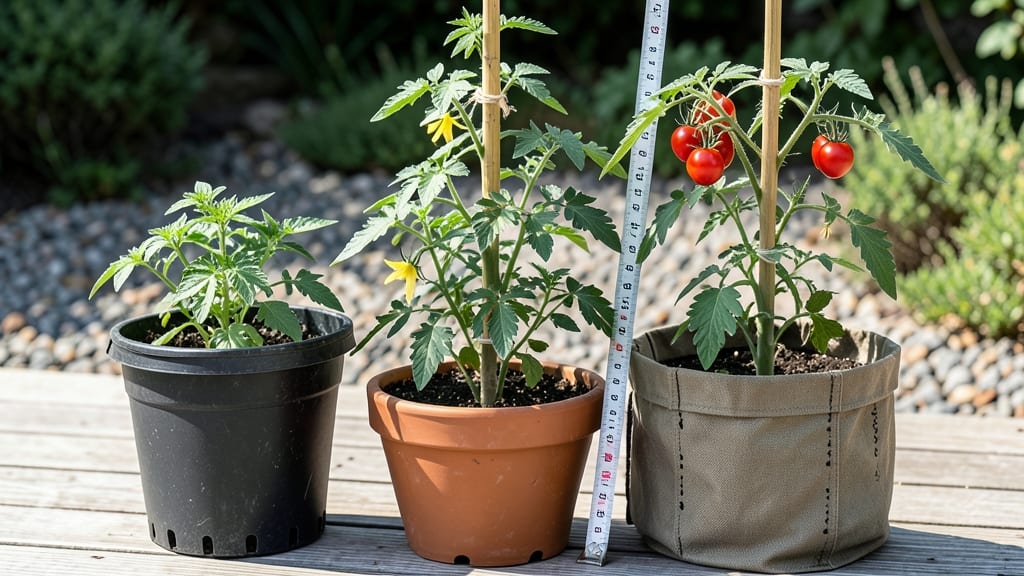
Growing tomatoes in containers requires the right tomato container size—too small, and your plants will struggle to thrive, no matter how much care you give them.
If you’ve ever watched your container-grown tomatoes wilt, produce tiny fruit, or collapse under their own weight, chances are your pot size is the culprit. The 5-gallon rule is a great starting point, but tomato types vary, and some need more space than others to reach their full potential.
From cherry tomatoes that do well in 3-gallon pots to beefsteak varieties demanding 10 gallons or more, container size directly impacts root growth, water retention, and yield. Without enough room, your plants will fight for nutrients, leading to stunted growth and poor fruit production.
In this guide, I’ll break down the ideal container sizes for different tomato varieties, explain how to spot signs of a pot that’s too small, and share tips for maximizing space and support—so you can enjoy a bountiful harvest even in limited areas.


Why the 5-Gallon rule works for container tomatoes (and when to break it)
Tomatoes are heavy feeders, and their roots need space to explore for nutrients and water. The 5-gallon rule isn’t arbitrary—it’s based on how much soil volume tomato roots can effectively use.
A mature tomato plant’s roots can spread 18-24 inches wide and grow 12-18 inches deep, but container walls restrict this growth. Without enough soil, roots become root-bound, leading to stunted growth and poor fruit production.
Think of your container like a mini ecosystem. The soil holds moisture, nutrients, and beneficial microbes that fuel growth.
A 5-gallon pot (about 12" diameter) provides enough volume for most determinate varieties (like Roma or Bush Early Girl), while indeterminate types (like Cherry or Beefsteak) often need 7-10 gallons to support their sprawling vines and heavy fruit loads.
Breaking this rule too soon can mean smaller harvests or plants that topple over under the weight of their own fruit.
| Tomato Type | Minimum Container Size | Root Depth Needed | Best Container Width | Why It Works |
|---|---|---|---|---|
| Cherry Tomatoes (e.g., 'Sweet 100') | 5 gallons | 12-15" | 10-12" | Compact roots; high yield in small space. |
| Dwarf Varieties (e.g., 'Tiny Tim') | 3-5 gallons | 10-12" | 8-10" | Limited height = less soil needed. |
| Determinate (e.g., 'Roma') | 5-7 gallons | 15-18" | 12-14" | Bushy growth; moderate root spread. |
| Indeterminate (e.g., 'Brandywine') | 7-10+ gallons | 18-24" | 14-16" | Vining habit; needs deep, wide roots. |
The width-to-depth ratio matters just as much as total volume. A shallow but wide pot (like a 14" diameter × 6" deep tray) might hold 5 gallons, but it won’t support deep-rooted varieties. Roots need depth to anchor and access moisture from lower soil layers.
For example, a 10-gallon fabric grow bag (16" diameter × 18" deep) is ideal for indeterminate tomatoes because it mimics in-ground conditions with its vertical depth.
Soil moisture retention is another critical factor. Smaller containers dry out faster in hot weather, forcing roots to compete for water. A 5-gallon pot can dry out in 2-3 days in summer heat, while a 10-gallon container may last 4-5 days.
This is why self-watering containers or mulching become essential for larger varieties. I’ve seen Beefsteak tomatoes in 5-gallon pots struggle by mid-summer, while the same variety in a 12-gallon pot produced 3x more fruit.
Breaking the 5-gallon rule isn’t always a bad idea. For dwarf or patio varieties, like 'Tumbling Tom' or 'Micro Tom,' a 3-gallon pot can work—just expect smaller yields. The key is matching the plant’s mature size to the container.
A 6-foot indeterminate vine in a 5-gallon pot will outgrow its home, leading to root circling and poor health. Always check the variety’s tag or seed packet for recommended container sizes.
Container material also plays a role. Terracotta pots dry out quickly and are best for small, drought-tolerant varieties, while plastic or fabric grow bags retain moisture longer.
I’ve had success with black plastic containers in full sun—they absorb heat, keeping roots warm, but I double the pot size for indeterminate types to compensate for faster drying.
For example, a 7-gallon black pot works for Roma tomatoes, but I’d upgrade to 10 gallons for a Sungold cherry tomato.
One common mistake is assuming more soil = better growth. While bigger is often better, over-potting can lead to waterlogged roots, especially in heavy clay soils. The 5-gallon rule
Best container sizes for different tomato types (with visual guidelines)
Choosing the right container size for your tomatoes isn’t just about fitting them in your patio—it’s about giving their roots the space to thrive. Beefsteak varieties need room to spread, while cherry tomatoes can squeeze into smaller pots.
The key is matching the pot size to the plant’s mature height and root depth. Fabric grow bags, ceramic pots, and plastic containers all have pros and cons, but the right dimensions make all the difference.
Most tomato plants need at least 5 gallons of soil to grow well, but some varieties—like dwarf tomatoes—can thrive in smaller 1-gallon containers. The trick is balancing width and depth to prevent root crowding. Too shallow, and your plant will struggle to support heavy fruit.
Too narrow, and roots compete for nutrients. Let’s break down the ideal sizes for each type, plus material tips to keep your tomatoes happy all season.
For beefsteak tomatoes, aim for a container with at least 10-15 gallons of soil. These heavy fruit producers need deep roots to stay upright, so a fabric grow bag or ceramic pot with a wide base works best.
Add a 6-foot cage to support the vine’s weight. Roma tomatoes, while smaller, still need 5-7 gallons—their vertical growth makes them prone to toppling without a trellis or stake. Plastic or fiberglass containers work well here for durability.
If you’re growing cherry tomatoes, you can downsize to 1-3 gallons. These prolific producers thrive in smaller spaces but benefit from a 3-foot cage to keep branches off the ground.
Lightweight ceramic pots or plastic containers are ideal—they’re easy to move and won’t crack under the weight of water. For dwarf tomatoes, even a 1-gallon hanging planter will do.
Their compact size means no support is needed, but ensure the pot has at least one drainage hole to prevent root rot.
Regardless of the tomato type, drainage is non-negotiable. No container should sit in standing water—add gravel or perlite to the bottom if needed. Fabric grow bags breathe better than plastic but dry out faster, while ceramic pots retain moisture longer but can crack in freezing temps.
For urban gardeners, stackable plastic containers save space and are lightweight. Whichever you choose, prioritize width over height—tomato roots spread horizontally, not downward.
Pro tip: If you’re short on space, try vertical gardening with wall-mounted planters. Cherry tomatoes grow beautifully in tiered setups, while Roma varieties can climb a pocket trellis attached to a balcony railing.
Just remember—no matter how creative your setup, soil volume is the #1 factor in tomato success. A 5-gallon rule is your friend, but always tailor it to the plant’s needs.