
Tools
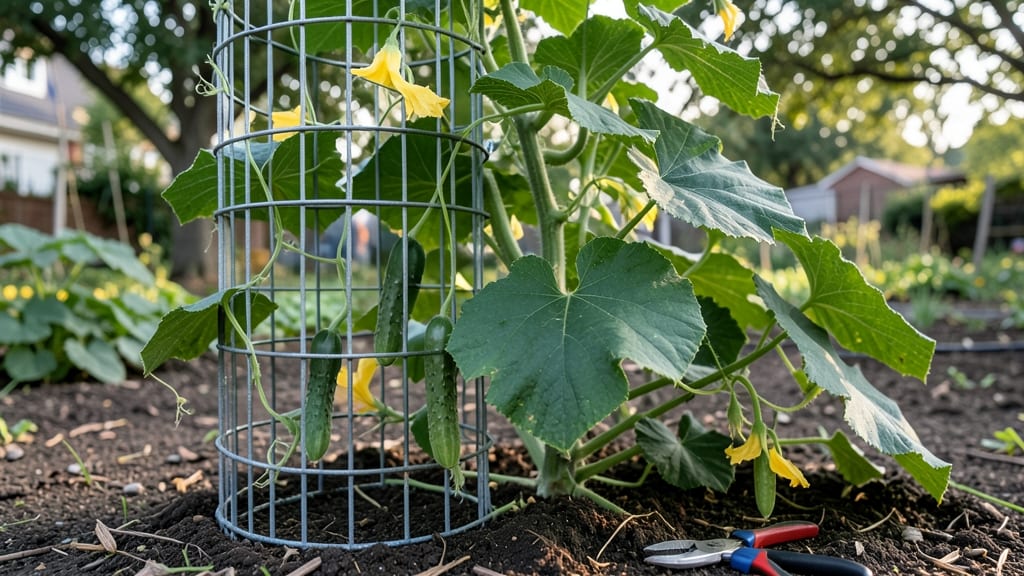
A tomato cage works well for cucumbers by offering sturdy, lightweight support that prevents sprawling vines from taking over your garden space. This setup improves airflow around the plant, reducing humidity and cutting down on fungal diseases like powdery mildew. Choose wider, shorter cages or lattice-style trellises instead of tall tomato-specific cages to match cucumbers' sprawling growth pattern.
Cucumbers thrive with proper support because their vines grow aggressively—sometimes up to 6 feet—and sprawling plants are more prone to soil-borne diseases. 🌱 The right cage or trellis lifts the leaves off the ground, letting sunlight reach all parts of the plant and drying moisture quickly.
I've found that low, wide cages (around 2 feet tall) work best for bushier varieties, while spiral or grid trellises are ideal for climbing types. The key is avoiding anything too flimsy—cucumbers can get heavy with fruit!
If you're working with limited space or prefer a more compact setup, consider DIY options like wooden stakes with twine or repurposed wire mesh. Just avoid overcrowding—each plant should have its own support structure to prevent competition for nutrients.
For bush cucumbers, you might skip cages entirely and focus on mulching to keep soil moisture consistent.
💡 In This Article
- How Cucumber Vines Grow and Why Support Matters
- Best Tomato Cage Alternatives for Cucumber Plants
How cucumber vines grow and why support matters
Cucumber vines exhibit two primary growth patterns: sprawling (bush types) and climbing (vining types). Sprawling varieties like 'Bush Champion' spread outward in a circular pattern, while vining types such as 'Straight Eight' can grow 10-15 feet in a single season.
The key difference lies in their stem structure—climbing cucumbers produce tendrils that naturally latch onto vertical supports, while sprawling types lack this adaptation and rely on external structures to prevent root damage from heavy foliage.
The need for support stems from cucumber vines' rapid growth rate, which can reach 3-4 inches per day under ideal conditions. Without proper elevation, leaves and fruit rest directly on soil, creating a humid microclimate that fosters fungal diseases like powdery mildew.
Studies show supported plants experience 20-30% fewer disease occurrences due to improved airflow. The cage's open structure allows sunlight to penetrate the canopy evenly, preventing the yellowing of lower leaves—a common sign of insufficient light exposure.
When comparing cages to trellises, the material and design make all the difference. Tomato cages (typically 5 feet tall) work but often exceed cucumber needs unless you're growing vertical varieties. A 3-foot wide, 2-foot tall A-frame cage provides optimal support while leaving space for companion plants.
The grid design of many tomato cages also creates better airflow than solid trellises, which can trap moisture. For climbing cucumbers, spiral trellises offer superior support as vines wrap naturally around the structure, reducing breakage from fruit weight.
Support structures also influence fruit quality. Elevated cucumbers develop straighter, cleaner skins with fewer soil-borne blemishes, while those left on the ground often develop rough, scabby patches from contact with damp soil.
The vertical growth pattern also makes harvesting easier—reaching for fruit becomes less of a strain on your back, especially with heavy varieties like 'Lemon Cucumber' that can weigh up to 1 pound each. This ergonomic benefit alone makes support worthwhile for gardeners of all ages.
One critical factor often overlooked is the weight-bearing capacity of support structures. A single cucumber vine can produce 50-100 pounds of fruit during a growing season. Metal cages with 1/2-inch diameter rods can handle this load, while flimsy plastic alternatives may sag under the weight.
The cage's base should also be 12-18 inches wide to prevent tipping, especially in windy conditions. I've seen many gardeners repurpose heavy-duty wire mesh (like hardware cloth) for this purpose, creating a sturdy yet affordable alternative.
For those with limited space, consider the cucumber's growth habit when choosing support. Bush varieties like 'Spacemaster' can thrive without cages if given 3-4 feet of ground space, but their yields may be 30% lower compared to supported plants.
The trade-off is worth considering for container gardening or small urban plots where vertical space is at a premium. In these cases, a low wire hoop (about 1 foot tall) can provide enough elevation to improve airflow without taking up excessive space.