
Plants
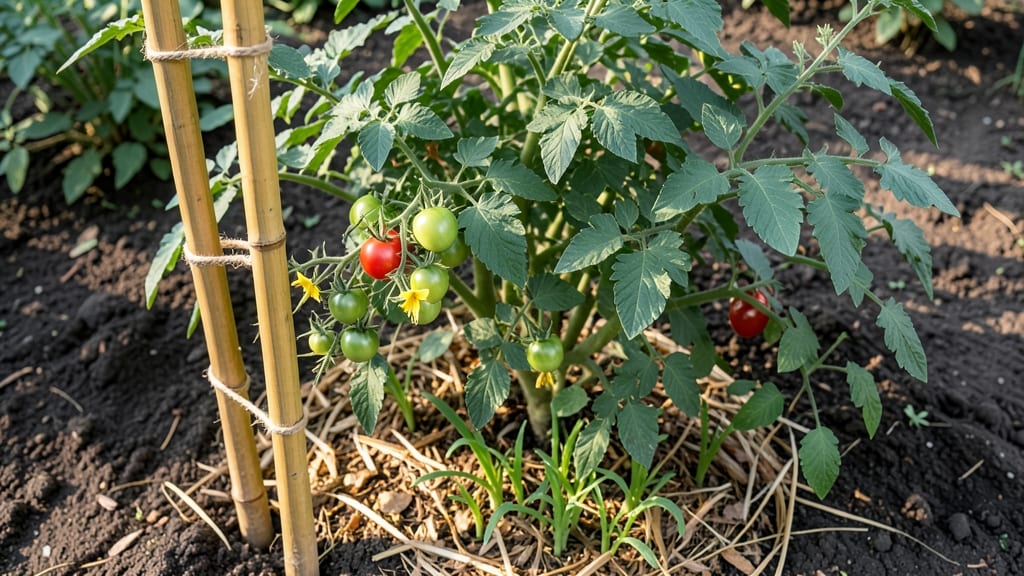
Tomato plants are not perennial—they die after producing fruit each growing season—but they can return in warm climates if given proper winter care or replanted annually in cooler regions. Hardy varieties like 'Solanum lycopersicum' may survive mild winters with mulching or greenhouse protection.
Most tomato plants follow a one-season lifecycle because their energy focuses on fruit production rather than root survival. 🌱 The first frost signals the end for most varieties, as they can't tolerate temperatures below 32°F.
However, in warmer climates like USDA zones 8-11, you can coax them back with thick mulch or greenhouse protection—some even regrow from the roots! I've seen gardeners in Florida keep the same plants for years using these methods, though they'll still need pruning and care to bounce back.
What makes this interesting is how determinate vs. indeterminate varieties behave differently. Determinate types (like 'Roma') produce all their fruit at once and die shortly after, while indeterminate varieties (like 'Beefsteak') keep growing until frost stops them.
This difference affects how you might approach overwintering—indeterminate plants have more potential to regenerate if protected properly.
💡 In This Article
- Why Tomato Plants Die Annually: Biology and Growth Cycles
- Climate Zones Where Tomato Plants Can Overwinter Successfully
Why tomato plants die annually: biology and growth cycles
Tomato plants (Solanum lycopersicum) are classified as annuals because their life cycle is tightly linked to fruit production.
Unlike perennials, which allocate energy to root and stem growth for multiple seasons, tomatoes prioritize reproductive success—meaning they channel nearly all their resources into producing tomatoes rather than establishing strong, long-lived roots.
This biological strategy ensures maximum seed production before winter, but it comes at the cost of survival beyond one growing season. 🌱
The determinate vs. indeterminate growth habit plays a key role here. Determinate varieties (like 'Roma' or 'Celebrity') grow to a fixed size, set fruit all at once, and then decline quickly after harvest.
Indeterminate types (like 'Brandywine' or 'Sungold') keep growing and producing fruit until frost stops them, but even these can't survive freezing temperatures. When nighttime temps drop below 32°F, the plant's cellular structure begins to break down—ice crystals form in the cells, rupturing membranes and killing the plant.
What most gardeners don't realize is how cold triggers dormancy or death at a cellular level. Tomatoes are tropical plants native to South America, where they evolved in warm climates. Their genetic makeup lacks the cold-hardiness mechanisms found in perennials like asparagus or raspberries.
Even in mild winters, the plant's photosynthetic activity slows dramatically, and without stored energy reserves (like tubers or bulbs), the roots simply can't sustain regrowth. This is why you'll rarely see tomatoes naturally overwintering in colder climates—they lack the biological tools to survive freezing.
There's one exception worth noting: some heirloom and wild tomato varieties have shown surprising resilience in controlled environments. For example, Solanum habrochaites (a wild relative) can survive light frosts, but even these require specific growing conditions to persist.
The key difference lies in their root structure—while most cultivated tomatoes have shallow roots, these wild types develop deeper, more robust systems that can store nutrients for regrowth. 💫
Another critical factor is energy allocation. Tomatoes invest heavily in fruit production because their seeds rely on animals (and eventually humans) for dispersal. This means their roots and stems are often underdeveloped compared to perennials.
For instance, a well-fed tomato plant might produce 20-30 pounds of fruit in a season—energy that could have gone toward root growth if the plant were perennial. This trade-off explains why even with winter protection, many tomatoes struggle to return year after year.
Here's a practical example: In my own garden, I've tried overwintering 'Cherokee Purple' tomatoes in Zone 8 using thick mulch. While the roots survived the mild winters, the plants often came back weak and slow to produce, requiring extra care to recover.
This illustrates how even cold-tolerant varieties are still pushing their biological limits when forced to behave like perennials. 🌿