
Vegetables
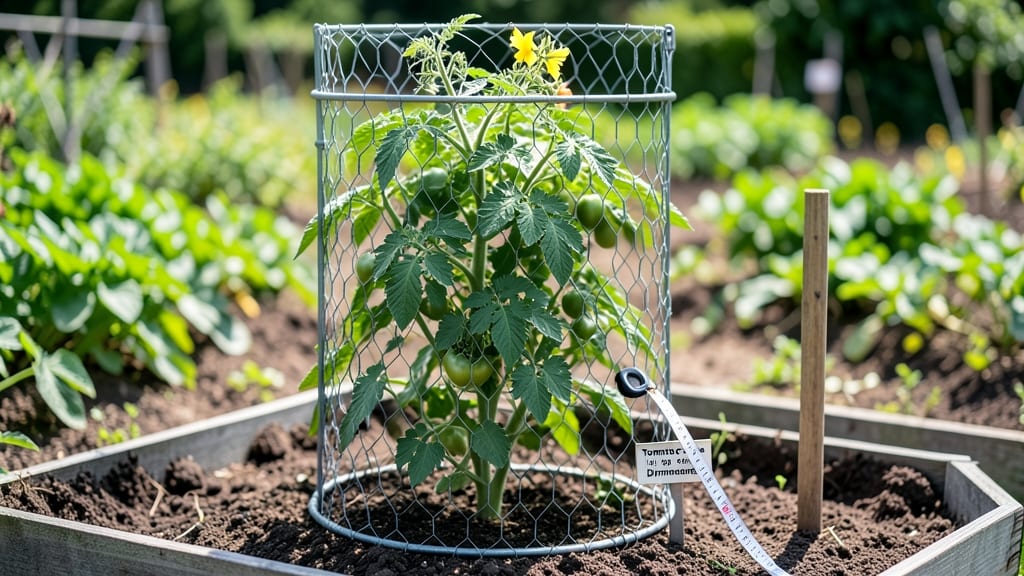
Your tomato cage dimensions should match your plant's growth habit—or watch those heavy vines collapse under their own weight. 🌱 I learned the hard way when my 6-foot indeterminate tomatoes snapped their cages in half last summer, sending fruit crashing to the ground.
The right size keeps plants upright, improves airflow, and prevents disease while maximizing harvest. Determinate varieties (like Roma or Celebrity) need 4-5 foot cages—they grow in compact bushes. Indeterminate types (like Sungold or Cherokee Purple) demand 6-7 foot cages because they keep climbing until frost.
Metal cages are sturdiest for heavy vines, while plastic ones work for lighter determinates. Wooden cages add rustic charm but require annual reinforcement. With proper sizing, you’ll see stronger stems, higher yields, and less bending over to pick fruit.
The cages should be 18-24 inches wide to accommodate multiple stems and prevent overcrowding. Place them at planting time so roots grow into the support naturally. For DIY options, use 1-inch galvanized wire bent into a cylinder with 12-14 gauge wire for horizontal supports.
Space cages 3-4 feet apart in rows to allow walkways and airflow. Now let’s build that perfect support system!
📚 In This Guide
- What you need
- Instructions
- Tips and common mistakes
- Wrapping up and next steps
What you need
- ● Galvanized or PVC pipes: ½-inch to ¾-inch diameter (for durability and rust resistance). Standard cages (4–6 ft tall): 6–8 pipes, each 6–8 ft long (cut to size if needed).
- ● Indeterminate varieties (6–8+ ft tall): 8–10 pipes, each 8–10 ft long.
- ● Wire or zip ties: 18–24 gauge galvanized wire or heavy-duty zip ties (for securing joints).
- ● Staple gun + staples: (if using wire mesh or chicken wire for extra support).
- ● Measuring tape: (for precision—tomato cages hate guesswork!).
- ● Scissors or wire cutters: (for trimming pipes/wire to exact dimensions).
- ● Powder-coated or painted pipes: (for a garden-friendly, rust-proof finish).
- ● Plastic tomato cages (pre-made): (if DIY isn’t your vibe—just check the height matches your variety!).
- ● Garden twine or bungee cords: (to secure floppy vines to the cage).
- ● Post-hole digger: (if anchoring cages permanently into the ground).
How to select the right tomato cage dimensions for your variety
Matching your tomato cage to plant size saves you from flopping vines and broken stems.
🌱 Step 1: Identify Your Tomato Variety Type
Determine whether you're growing determinate (bush) or indeterminate (vining) tomatoes. Determinate varieties like 'Roma' or 'Celebrity' stay compact, typically reaching 3-5 feet tall, while indeterminate types such as 'Sungold' or 'Brandywine' can grow 6-12 feet tall with proper support. Check your seed packet or plant tag for this information—it’s the first clue to cage sizing.
If you're unsure, observe the plant's growth habit: determinate tomatoes produce a single flush of fruit and stop growing, while indeterminate varieties keep producing new leaves and blossoms until frost. This distinction directly impacts your cage height requirements.
☀️ Step 2: Match Cage Height to Plant Maturity
For determinate tomatoes, a 4-foot-tall cage with 18-inch diameter provides ample support. These varieties don’t need tall structures, but the cage should still accommodate their 3-5 foot spread to prevent sprawling. Look for cages with sturdy wire or plastic construction—determinate tomatoes can get heavy with fruit.
For indeterminate tomatoes, opt for a 6-foot-tall cage with 24-inch diameter as a minimum. If your variety is known for extra-long vines (like 'Cherokee Purple'), consider an 8-foot cage or even a tomato trellis for varieties that can exceed 10 feet. The key is ensuring the cage can support the plant’s vertical growth without bending or toppling.
✂️ Step 3: Check Cage Diameter for Spread Control
A cage that’s too narrow forces vines to grow outward instead of upward, increasing the risk of disease and making harvesting difficult. For most varieties, a minimum 18-inch diameter works well, but indeterminate tomatoes benefit from 24-inch or larger cages to accommodate their wider spread as they mature.
If you’re growing multiple plants in a row, ensure cages are spaced at least 3 feet apart to prevent vines from tangling. This spacing also improves airflow, reducing the risk of fungal diseases like blight. A wider cage doesn’t just support height—it also keeps the plant’s structure open and accessible.
🪴 Step 4: Reinforce for Heavy Fruit Loads
Tomato cages need sturdy construction to handle the weight of fruit-laden vines. Look for cages made of galvanized steel wire (at least 14-gauge thickness) or heavy-duty plastic. If your cage feels flimsy when you press down, it won’t withstand the weight of a mature plant.
For extra-large varieties, consider reinforcing the cage base with stakes or a burlap wrap to prevent it from tipping over. I’ve seen 8-foot cages topple under the weight of a single vine loaded with tomatoes—don’t let that happen to you. A well-anchored cage ensures your plant grows vertically without stress.
⏰ Step 5: Adjust for Early or Late Planting
If you’re planting in early spring when frost is still a risk, choose a taller cage (even for determinate varieties) to give the plant extra room to grow before the last frost date. Conversely, if you’re planting late in the season, a slightly shorter cage may suffice since the plant won’t have as much time to mature.
Pay attention to your local growing zone—plants in warmer climates (like Zone 10) may grow taller and faster, requiring larger cages than those in cooler regions. Adjust based on your expected growing season length and the variety’s mature height.
Tips & tricks for perfect tomato cage selection
These practical insights will help you avoid common mistakes and maximize your tomato plant's potential.
Variety-Specific Height Insight: The 3-5 foot height range for determinate tomatoes (Step 1) is actually their maximum potential when unchecked. In practice, I've found that varieties like 'Roma' often max out at 4 feet, while 'Celebrity' can reach 5 feet. For indeterminate types, the 6-12 foot range is more flexible—some 'Sungold' plants I've grown topped out at 8 feet, while 'Brandywine' can easily reach 10 feet or more. Always check your specific variety's expected mature height on the seed packet.
Cage Diameter Matters More Than You Think: While the 18-inch diameter mentioned in Step 2 works for most determinate varieties, I've noticed that even these compact plants benefit from slightly wider cages (20-22 inches) when growing in fertile soil with abundant water. The extra space prevents the vines from crowding the cage and encourages upward growth. For indeterminate varieties, that 24-inch minimum becomes crucial—narrower cages force the vines to sprawl outward, increasing disease risk and making harvesting difficult.
Construction Quality Check: When evaluating cages in Step 4, pay special attention to the wire gauge. I've tested cages labeled as "heavy-duty" that were actually 16-gauge wire—too flimsy for mature tomato plants. Always look for 14-gauge or thicker galvanized steel wire. For the base reinforcement mentioned, I recommend using two wooden stakes hammered into the ground on either side of the cage and tying the cage wires to them. This creates a stable triangle that prevents tipping under heavy fruit loads.
Seasonal Adjustment Strategy: The early spring planting advice in Step 5 about choosing taller cages is particularly important in cooler climates. I've seen determinate plants that would normally reach 4 feet grow to 5 feet when given extra height in spring. For late season planting, you can actually use cages 6-12 inches shorter than recommended if your growing season is limited. The key is matching the cage height to your expected harvest window rather than the variety's maximum potential.
Pro Tips for Tomato Cage Dimensions
- These practical insights will help you avoid common mistakes and maximize your tomato plant's potential.
- Variety-Specific Height Insight: The 3-5 foot height range for determinate tomatoes (Step 1) is actually their maximum potential when unchecked.
- The extra space prevents the vines from crowding the cage and encourages upward growth.
Frequently asked questions
Got questions about tomato cage dimensions?
You’re not alone! Here are answers to the most common queries to help you pick the perfect support for your bountiful harvest.
What are the standard tomato cage dimensions for indeterminate vs. determinate varieties?
Indeterminate tomatoes (like Sungold or Brandywine) need tall cages—6 to 8 feet high with a 2-foot diameter to support sprawling vines. Determinate types (e.g., Roma or Celebrity) thrive in shorter, sturdier cages: 4 to 5 feet tall with a 1.5-foot diameter. Always check your plant’s expected height at maturity!
When is the best time to install a tomato cage?
Install cages at planting time—before transplanting seedlings into the ground. If you’re using starter plants, gently press the cage into the soil around the root ball. For container growers, place the cage right after potting to avoid disturbing roots later. Pro tip: Bury the bottom 6 inches for stability!
Can I use a tomato cage for other vegetables or plants?
While designed for tomatoes, cages work well for pepper plants, cucumbers, eggplants, or even pole beans. Just match the height to the plant’s growth habit—e.g., a 5-foot cage for peppers vs. a 4-foot for bush beans. Avoid heavy vines like Malabar spinach unless the cage is extra sturdy.
How do I fix a tomato cage that’s leaning or collapsing?
If your cage topples, bury it deeper or add stakes tied to the cage for support. For sagging, reinforce weak spots with zip ties or garden twine to connect cage sections. Prevention tip: Choose cages with galvanized wire (rust-resistant) or powder-coated metal for longevity.
Are there space-saving alternatives to traditional tomato cages?
Yes! Try these:
- Trellis systems: Use 3-foot-wide trellises for vertical growth (ideal for small gardens).
- Stakes + twine: Drive 6-foot stakes 6 inches deep and tie vines as they grow (DIY-friendly!).
- Wall-mounted cages: Perfect for balconies—opt for 4-foot-tall cages with suction cups.
Wrapping up and next steps
Choosing the right tomato cage dimensions for your variety can make all the difference in supporting those lush, heavy vines—and reaping a bountiful harvest! 🌱 Whether you’re growing cherry tomatoes, beefsteaks, or heirlooms, a sturdy cage tailored to your plant’s needs ensures strong growth and easy maintenance.
With the right setup, you’ll be well on your way to a thriving garden.
Ready to get started? Measure your space, pick the perfect cage, and watch your tomatoes flourish! 🍅 For extra tips, check out our guide on installing tomato cages like a pro.