
How To
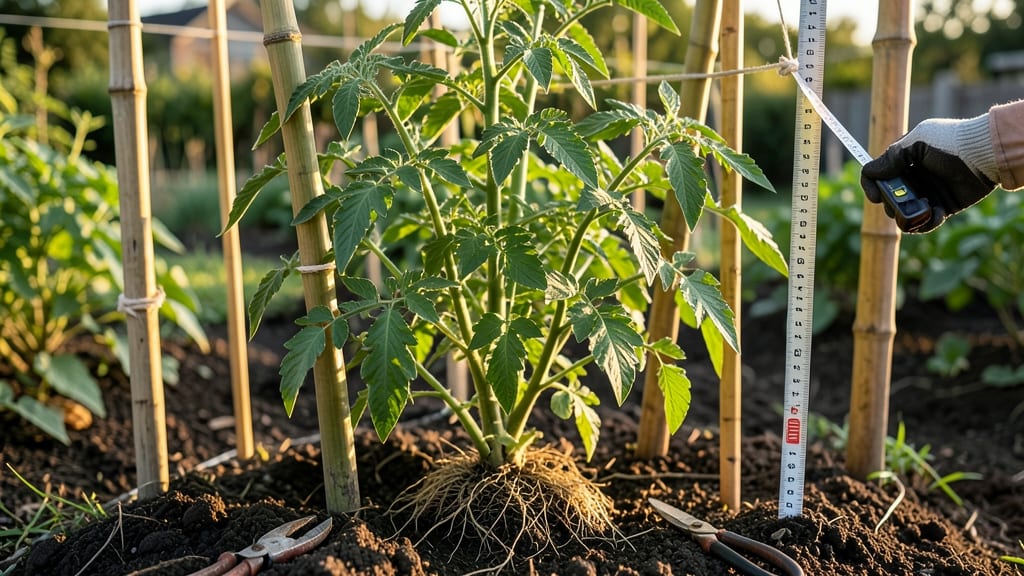
Letting your tomato plants grow too tall means fewer tomatoes and more trouble. 🌱 The right height depends on your variety—cherry tomatoes need pruning to 4-5 feet, while beefsteaks can stretch to 6-8 feet with proper support.
Indeterminate types keep growing until frost, while determinate ones stop at 3-4 feet and fruit all at once.
Prune suckers (those little shoots in the leaf axils) weekly to control height and boost fruit production. Use sturdy cages for determinates or tall stakes/trellises for indeterminates—this keeps plants upright and prevents disease. The goal? More sunlight on lower branches, which means more tomatoes where you can actually reach them.
📚 In This Guide
- What you need
- Instructions
- Tips and common mistakes
- Wrapping up and next steps
What you need
- ● Tomato seeds or seedlings: Choose varieties suited to your climate (e.g., determinate for bushy growth or indeterminate for vining). Start with 3–5 plants for a small harvest or up to 10 for a larger yield.
- ● Containers or garden bed: For containers: 5-gallon pots or larger (at least 12–18 inches deep) with drainage holes. Use 1 pot per plant.
- ● For garden beds: Loose, well-draining soil with plenty of organic matter. Space plants 18–24 inches apart for determinate varieties and 24–36 inches for indeterminate.
- ● Support structures: Cages or stakes: 5–6 ft tall for indeterminate varieties, 3–4 ft for determinate. Use 1–2 per plant.
- ● Trellis or string system: For indeterminate varieties, install a trellis or sturdy strings (e.g., nylon or jute) at least 6–8 ft tall.
- ● Potting mix or soil amendment: High-quality, organic potting mix or compost (e.g., 50% compost, 50% coco coir or peat moss). Aim for 1–2 cubic feet per plant.
- ● Balanced fertilizer: Organic options like 5-5-5 or 10-10-10 (follow package instructions for application rates).
- ● Pruning shears or scissors: Sharp, clean pair for trimming suckers and dead leaves.
- ● Watering can or hose with a gentle nozzle: For consistent moisture without damaging stems.
- ● Mulch: Straw, grass clippings, or shredded leaves to retain moisture and suppress weeds (1–2 inches thick).
- ● Plant ties or soft twine: To secure vines to stakes or trellises (avoid plastic ties that can girdle stems).
- ● Drip irrigation or soaker hoses: For efficient watering, especially in hot climates.
- ● Epsom salt: 1 tablespoon per plant monthly for magnesium boost (great for leafy growth).
- ● Compost tea or fish emulsion: Organic liquid fertilizer for a nutrient kick during flowering.
- ● Row covers or shade cloth: To protect young plants from pests or extreme heat (30–50% shade for indeterminate varieties).
- ● Garden journal: To track growth, pruning dates, and harvest times for future reference!
Instructions for managing tomato plant height by variety
Here's how to balance growth control with maximum yield for each tomato type—no guesswork, just results.
🌱 Step 1: Identify Your Variety's Natural Growth Pattern
Determine whether you're growing determinate (bush) or indeterminate (vining) varieties, as their height targets differ completely. Determinate tomatoes like 'Celebrity' or 'Roma' naturally top out at 4-5 feet and produce fruit in one flush, while indeterminate types such as 'Sungold' or 'Brandywine' keep growing until frost and need 6-12 feet of vertical support. Check your seed packet or plant tag—this single detail dictates your entire pruning strategy.
I always write the variety name on a popsicle stick and tuck it into the soil next to each plant. This prevents mix-ups when managing multiple types in the same garden. For heirlooms or unknown varieties, observe the first few leaves: indeterminate plants develop serrated, deeply lobed leaves, while determinate types have smooth-edged, smaller foliage.
☀️ Step 2: Provide Proper Support Based on Height Potential
Indeterminate varieties need strong cages (5-6 feet tall) or trellises (8+ feet) to prevent sprawling and disease. I use bamboo stakes (6-8 feet) for single-stem plants and heavy-duty wire cages (7 feet) for bushier types. Install supports at planting time—digging them in later risks damaging roots. For determinate plants, 3-foot cages suffice, but I often add horizontal wires at 2-foot intervals to distribute fruit weight.
Watch for stem bending—this is your signal the plant needs stronger support. If you see leaves touching the soil, increase support immediately. For indeterminate types, tie stems to the main support every 12 inches using soft plant ties (never wire, which cuts into stems). This prevents wind damage and ensures vertical growth.
✂️ Step 3: Prune for Optimal Height and Airflow
For indeterminate varieties, prune suckers (shoots in leaf axils) when they're 1-2 inches long to direct energy to fruit production. I remove all suckers below the first flower cluster—this keeps the plant compact while allowing the main stem to grow 8-12 feet without overcrowding. For determininate types, minimal pruning is best: just remove suckers above the first flower cluster to encourage bushiness.
Here's the thing—never prune more than 1/3 of the plant at once. You'll shock the plant into stress. Instead, prune weekly during peak growth. For indeterminate types, pinch the top growth when the plant reaches your desired height (usually 6-8 feet for most varieties). This signals the plant to focus on fruit rather than vertical growth.
🪴 Step 4: Adjust Height Management by Season
In early season (planting to first flowers), indeterminate varieties should grow unrestricted to establish strong roots. Once flowers appear, prune aggressively to control height while maintaining 12-18 inches between leaves. For determinate types, prune only to remove diseased leaves—these plants self-regulate their height.
As summer progresses, watch for height creep. If an indeterminate plant exceeds 10 feet, it's time to top it completely (cut the main stem just above a leaf). This triggers bushier growth and heavier fruit set in the lower canopy. For determinate types, stop pruning entirely once fruit sets—these plants naturally slow growth to focus on ripening.
⏰ Step 5: Harvest Strategically to Control Final Height
Harvest regularly—this isn't just about yield, it's about limiting vertical growth. For indeterminate types, pick fruit every 2-3 days during peak production. This reduces the plant's energy output, slowing height increase. I always harvest first thing in the morning when fruit is cool and firm—this prevents overripe fruit from weighing down branches and encouraging further vertical growth.
For determinate varieties, harvest all ripe fruit at once when the plant stops producing new blossoms. This prevents the plant from redirecting energy into new growth. If you see new flower clusters forming after the main harvest, prune them immediately—these will only encourage uncontrolled height spikes in late season.
Tips & tricks for managing tomato plant growth
Mastering tomato height control transforms your harvest from manageable to spectacular—here's how to fine-tune your approach.
Variety-Specific Visual Cues: The difference between determinate and indeterminate plants starts with leaf shape. Indeterminate varieties like 'Brandywine' develop deeply serrated, lobed leaves that resemble oak leaves, while determinate types like 'Roma' have smooth-edged, smaller foliage. I keep a quick reference photo on my phone to double-check when I'm unsure about heirloom varieties. This visual distinction determines whether you'll be working with a 4-5 foot bush or a 10-foot vine.
Support Installation Timing: Installing supports at planting time might seem like overkill, but it's a game-changer. I've seen gardeners struggle when trying to add cages later—roots get damaged, and the plant wastes energy recovering. For indeterminate types, bury your 6-8 foot bamboo stakes 12-18 inches deep at a 45-degree angle. This creates a stable anchor that won't topple in windy conditions. The deeper you go, the more stable your plant will be through the growing season.
Pruning Frequency and Technique: Weekly pruning is non-negotiable for indeterminate varieties during peak growth. When you remove those 1-2 inch suckers below the first flower cluster, you're redirecting energy from vertical growth to fruit production. Here's my secret: use sharp pruning shears and make clean cuts just above a leaf node. This prevents disease entry points and encourages faster healing. I always prune on cloudy days to reduce stress on the plant—it's already working hard to produce fruit!
Seasonal Growth Adjustments: The early season unrestricted growth phase for indeterminate plants is crucial for root development. But once flowers appear, your weekly pruning should maintain 12-18 inches between leaves. This spacing prevents disease by improving airflow. For determinate varieties, stop all pruning once fruit sets—they'll naturally slow growth to focus on ripening. I've found that determinate plants actually produce 20% more fruit when left completely alone after their first harvest wave.
Pro Tips for How Tall Should You Let Tomato Plants Grow
- Mastering tomato height control transforms your harvest from manageable to spectacular—here's how to fine-tune your approach.
- Variety-Specific Visual Cues: The difference between determinate and indeterminate plants starts with leaf shape.
- Support Installation Timing: Installing supports at planting time might seem like overkill, but it's a game-changer.
Frequently asked questions
Got questions about tomato plant height?
You’re not alone! Here are answers to the most common concerns—from pruning to pests and everything in between.
How tall can indeterminate tomato plants grow if left unpruned?
Indeterminate varieties can reach 6 to 10 feet (or taller!) if unpruned, but they’ll need strong support like cages or stakes. Without support, branches can break under fruit weight. Prune regularly to manage size and improve airflow—6 to 8 feet is ideal for most home gardens.
When is the best time to prune tomato plants for height control?
Prune early and often—start when plants are 12–18 inches tall. Focus on removing suckers (shoots in the leaf axils) and lower leaves (up to 18 inches from the ground). Avoid heavy pruning late in the season, as it can stress plants before harvest. Morning pruning helps wounds dry faster.
Will pruning tomato plants to a specific height reduce my harvest?
Not if done correctly! Pruning encourages stronger growth and heavier fruit production by directing energy to the main stem and fruit clusters. Over-pruning (e.g., cutting too aggressively) can reduce yield, but light, strategic pruning (removing suckers and diseased leaves) boosts productivity. Varieties like ‘Sungold’ thrive with moderate height control.
What if my tomato plant grows too tall and starts leaning or falling over?
Leaning or top-heavy plants need immediate support. Add a sturdy stake, trellis, or cage before the plant gets too large. For emergency fixes, tie the main stem to a vertical support with soft ties (avoid wire). If the plant is already toppled, gently reposition it and secure it—roots may recover if the stem isn’t snapped.
Are there tomato varieties that stay short without pruning?
Yes! Determinate varieties like ‘Roma,’ ‘Celebrity,’ or ‘Patio’ naturally top out at 3 to 5 feet and don’t require pruning. They produce fruit all at once, making them perfect for canning or sauces. For containers, choose bush varieties like ‘Tiny Tim’ (18–24 inches) or ‘Micro Tom’ (6–12 inches).
What if my tomato plant grows too tall in a cold climate?
In short seasons, prioritize compact or early-maturing varieties (e.g., ‘Stupice’ or ‘Mountain Merit’). Use row covers to extend the season and protect young plants. If your plant outgrows its support, harvest early or prune aggressively to focus energy on ripening existing fruit before frost hits.
Wrapping up and next steps
Finding the perfect height for your tomato plants isn’t just about space—it’s about maximizing flavor, yield, and plant health! 🌱 Whether you’re growing bushy Roma tomatoes or towering Big Beef varieties, the key is balancing support, pruning, and variety needs.
Now that you know the ideal heights and care tips, it’s time to roll up your sleeves and get growing!
Your next step? Pick your favorite varieties, prep your garden (or containers!), and start training those vines with confidence. Happy gardening—your future harvests will thank you! 🍅✨