
Plants
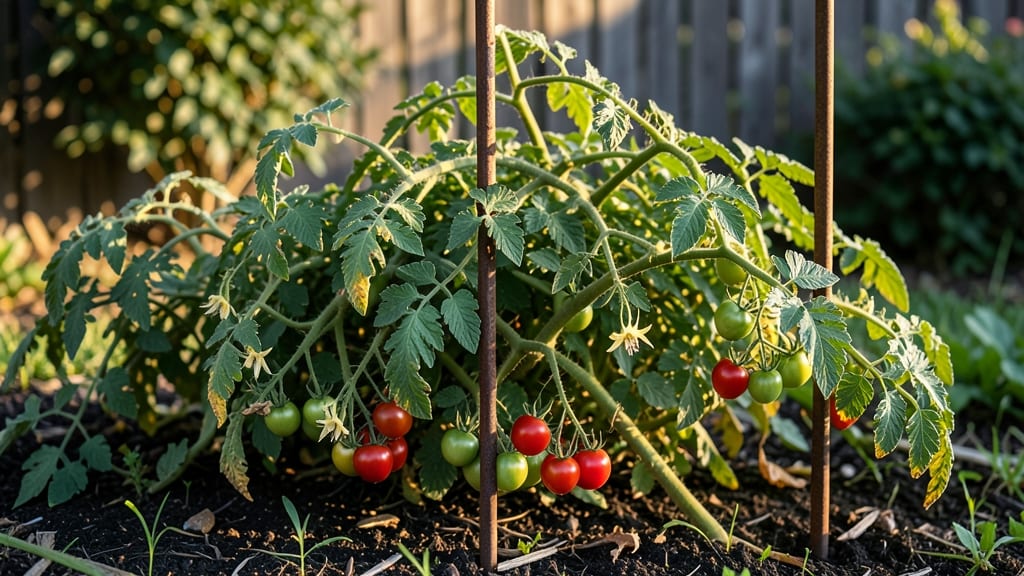
Your overgrown tomato plants aren't beyond saving—they're just waiting for the right pruning to redirect their energy into fruit instead of foliage. ✂️ I've turned tangled, leggy plants into productive bushes by focusing on three key cuts: removing suckers, thinning crowded stems, and opening up the canopy for sunlight.
The difference between a plant that sprawls and one that produces is often just a few strategic snips with clean tools.
Most gardeners over-prune or under-prune—both mistakes lead to stress. You'll need sharp pruners, rubbing alcohol for sterilization, and a sunny afternoon to work. Start by removing any leaves touching the soil to prevent disease, then focus on keeping 3-4 main stems per plant.
The goal is to create an open structure where air circulates and sunlight reaches the lower branches.
Within two weeks, you'll see new growth pushing out from the pruned areas, and existing flowers will set fruit more aggressively. The plants will shift from looking like wild vines to structured bushes that support their own weight.
This isn't just about saving the season—it's about maximizing every pound of tomatoes your plants are capable of producing.
For future seasons, monitor growth weekly and prune suckers before they grow more than 2 inches. Mulch heavily to retain moisture and reduce stress on the plant's roots.
The same techniques work for both indeterminate varieties (like Sungolds) and determinate types (like Roma), though the pruning intensity varies slightly between them.
Root Causes of Rampant Growth
Overgrown tomato plants aren’t just a sign of a thriving garden—they often stem from specific environmental and cultural factors that push vines into overdrive. Understanding these triggers helps you regain control and redirect energy toward fruit production instead of unruly foliage.
Here’s why your tomatoes might be sprawling out of control:
Tomatoes thrive in full sun, but too much of a good thing can backfire.
When exposed to intense sunlight (8+ hours/day) combined with high temperatures (above 90°F/32°C), plants enter a survival mode: - Stunted fruit set: Heat stress halts flowering, causing energy to divert to leafy growth instead of tomatoes. - Overactive ethylene production: Excess heat triggers ethylene gas, which accelerates leaf expansion and vine elongation. - Water evaporation spikes: Plants respond by growing larger leaves to maximize moisture absorption, leading to bushier, weaker structures.
Actionable fix: Provide afternoon shade (using shade cloth or row covers) during peak heat, and mulch heavily to cool soil roots.
Tomatoes are drought-tolerant but overwatering or erratic watering sends mixed signals to the plant:
- Weak root development: Soggy soil suffocates roots, forcing the plant to grow more leaves (and vines) to compensate for poor nutrient uptake.
- Nitrogen flush: Excess water leaches nutrients, prompting the plant to prioritize fast, leafy growth over fruiting.
- Splitting stems: Rapid water absorption causes stems to elongate uncontrollably, especially in indeterminate varieties.
Actionable fix: Water deeply 1–2 times per week (1–2 inches per session) at soil level, and avoid wetting foliage to prevent disease.
A classic gardener’s mistake: over-fertilizing with nitrogen-heavy amendments (like fresh manure or blood meal) fuels leaf growth at the expense of fruit.
Here’s how it plays out: - Leaf-to-fruit ratio skews: Nitrogen promotes lush green leaves but delays flowering and fruit maturation. - Delayed ripening: Excess nitrogen can even cause blossom end rot by disrupting calcium uptake. - Weak stems: Rapid leaf growth strains stems, leading to floppy, unmanageable vines.
Actionable fix: Switch to a balanced fertilizer (10-10-10 or 5-10-10) or use compost tea to provide micronutrients without nitrogen overload.
Unseen threats like aphids, whiteflies, or fungal infections (e.g., early blight) force tomato plants into defensive overgrowth:
- Hormone disruption: Pests like aphids inject toxins that trigger abnormal growth hormones, causing stunted, twisted vines.
- Stress-induced elongation: Diseased plants divert energy to repair damaged leaves, resulting in elongated, weak stems.
- Root damage: Nematodes or compacted soil weaken roots, prompting above-ground compensatory growth.
Actionable fix: Inspect leaves daily for pests (use neem oil or insecticidal soap) and rotate crops annually to break disease cycles.
Tomatoes need guidance—without it, they’ll sprawl aimlessly.
Key issues: - Indeterminate varieties gone wild: These plants grow indefinitely without pruning, leading to tangled, unproductive vines. - Succession planting chaos: Planting new seedlings too close to existing mature plants creates competition, forcing older plants to grow taller for sunlight. - No trellising: Vines left unsupported sprawl outward, diverting energy to reach for stability instead of fruiting.
Actionable fix: Prune aggressively (remove suckers weekly) and stake/trellis plants within 1–2 weeks of transplanting to encourage vertical growth.
Not all tomatoes are created equal:
- Indeterminate vs. determinate: Indeterminate varieties (e.g., ‘Sungold’, ‘Brandywine’) grow continuously until frost, while determinate types (e.g., ‘Roma’, ‘Celebrity’) naturally stay compact.
- Hybrid vigor: Some F1 hybrids (like ‘Big Beef’) are bred for disease resistance but may overproduce foliage if not pruned.
- Dwarf or bush types: Even these can overgrow if crowded or over-fertilized.
Actionable fix: Choose determinate varieties for smaller gardens or prune indeterminate types relentlessly to control height.
Restricted roots can’t absorb nutrients efficiently, leading to:
- Shallow root systems: Compacted or rocky soil forces roots to spread horizontally, causing above-ground growth to compensate.
- Oxygen deprivation: Roots suffocate, triggering ethylene production and vine elongation.
- Nutrient starvation: Poor drainage locks out essential minerals, prompting the plant to grow more leaves to "search" for resources.
Actionable fix: Loosen soil with a garden fork at planting, add compost, and avoid walking on beds to prevent compaction.
Reviving & Pruning Overgrown Tomatoes
Overgrown tomato plants can feel overwhelming, but with the right techniques, you can turn them into productive, healthy vines that yield bigger harvests. Below are practical, step-by-step solutions tailored to common causes—plus tips to keep your plants thriving long-term.
Cause: Too much space between plants or poor sunlight leads to weak, sprawling growth.
How to Fix It: 🔥 Prune Aggressively (But Strategically)
- Use clean, sharp pruners (or scissors) to trim back 1/3 of the plant’s height—focus on removing suckers (the small shoots between the main stem and branches).
- Cut just above a leaf node (where leaves grow) to encourage new growth.
- Remove lower leaves touching the soil to prevent disease.
🍳 Thin Out the Canopy
- If branches are tangled, gently separate them to improve airflow.
- Tie vines to a sturdy trellis or cage to support upright growth.
👨🍳 Reposition for Sunlight
- Move plants to a sunnier spot (6–8+ hours of direct light daily).
- If space is tight, remove the smallest or weakest plants to give others room.
💡 Prevention Tip:
- Start with proper spacing (18–24" apart for determinate tomatoes, 24–36" for indeterminate).
- Use dwarf varieties if you’re short on space.
Cause: Overgrowth shades flowers, preventing pollination, or calcium deficiency.
How to Fix It: 🌡️ Boost Pollination
- Gently shake plants in the morning to encourage pollinators (bees, butterflies).
- If indoors, use a small paintbrush to transfer pollen between flowers.
🥘 Improve Airflow & Light
- Prune dense foliage blocking sunlight from flowers.
- Remove suckers that compete with fruit production.
🎯 Add Calcium & Mulch
- Side-dress with crushed eggshells or calcium-rich compost.
- Mulch with straw to retain moisture and prevent soil-borne diseases.
✨ Prevention Tip:
- Water consistently (1–2" per week) to avoid calcium uptake issues.
- Choose disease-resistant varieties like ‘Solar Fire’ or ‘Mountain Merit.’
Cause: Overgrown plants trap moisture, inviting pests (aphids, whiteflies) and fungi (blight).
How to Fix It: 🔪 Prune Infested Areas
- Snip off yellowing or spotted leaves and dispose of them far from the garden.
- Focus on lower leaves where humidity lingers.
🌿 Natural Pest Control
- Spray neem oil (1 tsp per quart of water) on undersides of leaves.
- Introduce beneficial insects like ladybugs or lacewings.
💪 Strengthen Plant Health
- Fertilize lightly with balanced organic fertilizer (10-10-10) to boost immunity.
- Rotate crops next season to prevent soil-borne diseases.
💡 Prevention Tip:
- Prune regularly (every 2–3 weeks) to avoid sudden overgrowth.
- Water at the base (not overhead) to keep foliage dry.
Cause: Root-bound plants or sudden heat stress cause wilting.
How to Fix It: 🌊 Rehydrate & Support Roots
- Soak the soil deeply (1–2 gallons per plant) and mulch heavily to retain moisture.
- Stake or cage plants to prevent stems from snapping under weight.
🌡️ Adjust Watering Habits
- Water in the morning to reduce evaporation.
- Avoid soggy soil—tomatoes prefer consistent moisture, not flooding.
🔄 Fertilize for Recovery
- Use a low-nitrogen, high-phosphorus fertilizer (like 5-10-10) to encourage root and fruit growth.
💡 Prevention Tip:
- Mulch early with straw or grass clippings to protect roots.
- Choose heat-tolerant varieties like ‘Heatmaster’ or ‘Solar Fire.’
If your plant is severely overgrown but still healthy, try this: 1. Trim back to 1/3 of its size, keeping only the main stem and strongest branches.
- Fertilize lightly with fish emulsion for a nutrient boost.
- Monitor closely—new growth should appear in 1–2 weeks!
With these fixes, your once-wild tomato plants will rebound stronger, producing bigger, healthier fruit—and fewer headaches for you. 🍅✨
Frequently asked questions about managing overgrown tomato plants
How do I know if my tomato plant is truly overgrown?
Look for these signs: vines longer than 4–6 feet without proper support, stems with more leaves than flowers/fruit, or branches sprawling instead of growing upward. Healthy plants should have an open structure with sunlight reaching the center—if your plant looks like a tangled mess, it’s time to prune.
Can I prune my tomato plant too much?
Yes! Never remove more than 1/3 of the plant’s foliage at once, especially during hot weather. Focus on suckers (shoots between main stems) and lower leaves touching soil. Avoid cutting into the main stem—this stresses the plant and reduces fruit production.
What’s the best time of day to prune overgrown tomatoes?
Prune in the early morning when plants are hydrated and temperatures are cool. Avoid pruning in midday heat (above 85°F/29°C), as this can shock the plant. Wait until afternoon if you must—just work quickly and provide shade for recovery.
Will pruning my overgrown tomato plant reduce my harvest?
Not if done correctly! Pruning actually increases fruit size and quality by redirecting energy to existing flowers and tomatoes. Remove only suckers and crowded branches—never prune off flowers or fruit. You’ll get fewer (but larger, healthier) tomatoes than a plant struggling under its own weight.
How often should I check for new suckers after pruning?
Inspect your plants every 5–7 days during peak growing season (spring/summer). Suckers grow quickly—removing them early prevents them from competing with your main stems. For indeterminate varieties (like Sungolds), this may mean weekly checks until frost.