
Watering
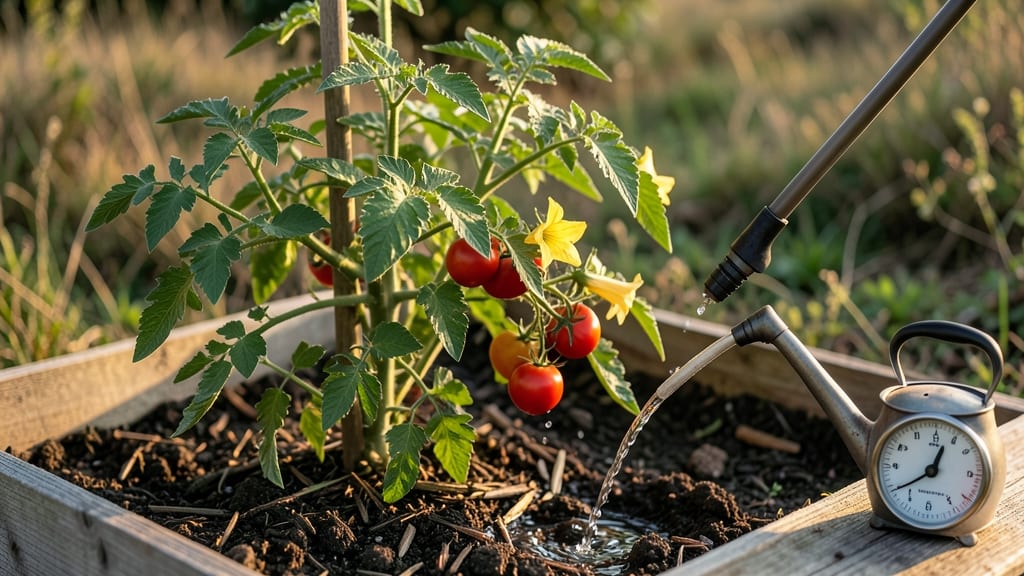
To water tomato plants effectively, focus on deep, consistent moisture that reaches 6-12 inches into the soil—this is the key to preventing blossom-end rot and maximizing your harvest.
Most gardeners water their 🍅 plants too lightly, just wetting the surface. That’s why you might see wilting leaves or cracked soil even though you’re watering daily. The truth? Tomato roots need a drink that lasts, not a quick sip that evaporates by noon.
In this guide, I’ll walk you through the deep-soil method, including how often to water based on your climate, the best tools to use, and how to spot signs of over- or under-watering before it’s too late.
Whether you’re growing in containers or raised beds, these techniques will help you grow healthier plants with bigger yields—no guesswork required.


The deep-watering technique: how often and how deep to water tomato plants
When I first started growing tomatoes, I made a critical mistake: I watered them lightly every day, thinking more frequent watering would help. What I didn’t realize was that tomatoes need deep watering to develop strong roots and produce heavy fruit.
This technique ensures your plants get the moisture they need where it counts—deep in the soil, not just at the surface. The key is understanding both frequency and depth, which directly impacts your harvest.
Tomatoes thrive when their roots access 1-2 inches of water per week, but this doesn’t mean shallow sprinkles. Instead, aim to saturate the soil to a depth of 6-12 inches.
This encourages roots to grow deeper, making your plants more drought-resistant and better able to support heavy fruit loads. Container-grown tomatoes need slightly more frequent watering since their roots have less soil to explore, while in-ground plants can often go a day or two longer between deep waterings.
Here’s the step-by-step process I’ve perfected over years of gardening—trust me, it’s a game-changer for your tomato yield:
- 1 Check soil moisture first: Stick your finger 2-3 inches deep into the soil. If it feels dry, it’s time to water. If it’s still moist, wait another day. This simple test saves you from overwatering or underwatering.
- 2 Water deeply and slowly: Use a soaker hose or drip irrigation to deliver water directly to the base of the plant. Aim for a slow, steady stream that penetrates 6-12 inches deep. Avoid overhead watering, which wastes water and can spread disease.
- 3 Water in the morning: Schedule your watering sessions for early morning (before 10 AM). This allows foliage to dry quickly, reducing the risk of fungal diseases like blight or powdery mildew. Nighttime watering is a common mistake that can turn your garden into a disease magnet.
- 4 Adjust for containers vs. in-ground: Tomatoes in containers or raised beds dry out faster because their roots have less soil to access moisture. Water these plants every 1-2 days during hot weather, while in-ground tomatoes can often go 2-3 days between deep waterings. Always check soil moisture first!
- 5 Monitor for signs of stress: Wilting leaves during the day (not at night) often mean your tomatoes need water. Cracking soil or yellowing leaves can signal underwatering, while mushy stems or leaf spots may indicate overwatering. Adjust your schedule based on what you observe.
- 6 Mulch to retain moisture: Apply a 2-3 inch layer of mulch (straw, wood chips, or grass clippings) around the base of your plants. Mulch helps retain soil moisture, regulates temperature, and reduces evaporation. This is especially helpful in hot climates or sandy soils where water drains quickly.
One of the biggest challenges I faced early on was distinguishing between underwatering and overwatering. Both can look similar—wilting leaves or yellowing—but the key difference is timing. If your tomato plants wilt during the day but perk up in the evening, they likely need water.
However, if the wilting happens in the morning and the soil feels soggy, you’re probably overwatering. Blossom-end rot, a common tomato problem, is often caused by inconsistent moisture, so deep watering helps prevent this frustrating issue.
In container gardens, I’ve learned that the rules are slightly different. Since pots have limited soil volume, the roots dry out much faster. I now water my container tomatoes every morning during summer, even if it seems like overkill.
The secret is to water until you see moisture draining from the bottom of the pot—this ensures the entire root zone is hydrated. For in-ground tomatoes, I rely more on rainfall and adjust my watering based on how much rain we’ve had that week.
Don’t forget that weather plays a huge role in your watering schedule. During hot, dry spells, you may need to water daily, while cooler, cloudy days can stretch your watering interval to every 3-4 days.
I keep a garden journal to track weather patterns and adjust my routine accordingly. This helps me avoid both drought stress and root rot, two enemies of healthy tomato plants.
If you’re growing heirloom or beefsteak varieties, they’ll especially benefit from deep watering because their large fruit demands more moisture. These varieties often need even deeper watering (up to 12 inches) to support their heavy yields.
I’ve found that drip irrigation systems are worth the investment for these types—they deliver water exactly where it’s needed, saving time and ensuring consistent moisture.
Final tip: Observe your plants daily. Healthy tomato plants should have deep green leaves,
5 Common watering mistakes that kill tomato yields (and how to fix them)
Even experienced gardeners accidentally sabotage their tomato plants with watering mistakes. Surface watering creates shallow roots, while inconsistent schedules trigger blossom-end rot. These errors don't just reduce yields—they can kill plants entirely. Let's fix them before your next harvest.
Tomatoes need deep, consistent moisture to develop strong roots and produce fruit. When we water just the top inch of soil, plants struggle to access water during dry spells. This leads to stunted growth and poor fruit set. The good news? Simple adjustments can transform your tomato plants' health overnight.
⚠️ WATERING WARNING: THE 3-MINUTE DIG TEST
Before watering, stick your finger 2-3 inches deep into the soil. If it feels dry, water deeply until moisture reaches 6-12 inches down. This simple check prevents shallow root systems and blossom-end rot.
💡 Pro Tip: Use a soil moisture meter for accuracy, especially in containers.
Mistake #1: Surface watering creates weak roots that can't support heavy tomato fruit. Instead of light sprinkles, aim for deep watering sessions that reach 6-12 inches down. Use a soaker hose or drip irrigation to deliver water slowly at the base of plants.
Mistake #2: Inconsistent watering causes blossom-end rot, where fruit develops black, sunken spots. Maintain even moisture levels by watering at the same time daily—morning is best. Mulch with straw or shredded leaves to retain soil moisture between waterings.
Mistake #3: Overhead watering spreads disease spores onto leaves. Wet foliage encourages fungal issues like early blight. Always water at the base of plants and avoid evening watering to prevent prolonged leaf wetness.
Mistake #4: Skipping watering during fruit set stresses plants and reduces yields. When tomatoes flower and fruit, they need 1-2 inches of water weekly. Monitor soil moisture closely during hot, dry periods—this is when most watering mistakes happen.
Mistake #5: Ignoring container-specific needs leads to over- or underwatering. Potted tomatoes dry out faster than in-ground plants. Check soil moisture daily and water when the top 1 inch feels dry. Use containers with drainage holes and larger pots for mature plants.