
Vegetables
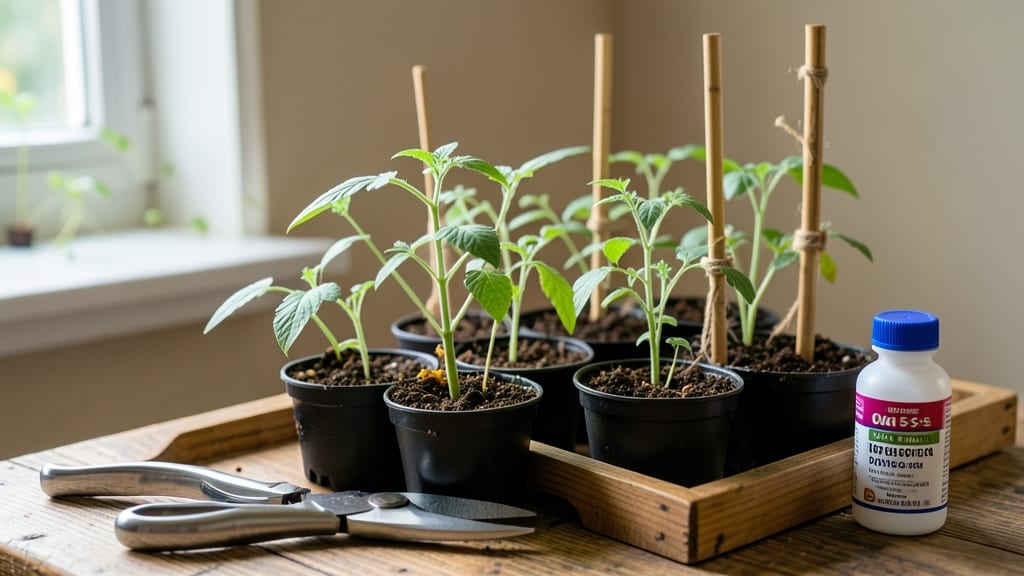
Leggy tomato seedlings stretch toward the light like starving children, but the fix is simpler than you think. ✨ I’ve rescued dozens of these spindly plants by adjusting just two things: light exposure and support.
The key is stopping their desperate reach before they become unmanageable—thick stems and bushy foliage are just a few days away.
Too little light causes seedlings to stretch thin, while overcrowding or uneven watering makes them lean even more. My first fix? Move them to a bright windowsill or under a grow light for 14–16 hours daily.
If they’re already tall, bury them deeper when transplanting—new roots form along the buried stem, giving them stability. A small stake or bamboo chopstick inserted gently at planting time prevents future flopping.
Within a week, you’ll see stubby, stocky growth instead of weak stems. Prune the leggy parts if needed, but focus on encouraging new side shoots—these will thicken the plant and boost fruit production.
The secret? Consistency. Keep soil moist (not soggy) and rotate seedlings weekly so they grow straight, not lopsided.
This method works for any tomato variety, whether you’re growing in pots or the ground. The best part? Once you’ve fixed legginess, your plants will outperform store-bought seedlings all season. No more weak stems—just strong, productive vines ready for heavy fruit loads.
Root Causes Of Weak Seedlings
Leggy tomato seedlings—those tall, spindly, and wobbly young plants—don’t just happen by accident. They’re a direct response to environmental stress, mismanaged growing conditions, or poor early care. Understanding the why behind their stretched-out stems is the first step to preventing (or fixing) them before they become a problem.
Below, we break down the science-backed reasons your seedlings are reaching for the sky instead of growing strong and sturdy.
🌱 Lack Of Light
Tomato seedlings are light-hungry. When they don’t get enough sunlight (or artificial grow light), they stretch toward the nearest source in a desperate bid for energy—a phenomenon called etiolation. Here’s what’s happening in their cells:
- Chlorophyll production drops: Without adequate light, seedlings can’t photosynthesize efficiently, leading to pale, weak stems.
- Hormonal imbalance: Low light triggers an overproduction of gibberellins, a plant hormone that promotes rapid stem elongation at the expense of leaf and root growth.
- Weak cell walls: Stems become thin and brittle because the plant diverts energy away from thickening cell walls toward vertical growth.
Pro tip: 💡 Seedlings need 14–16 hours of light daily. If using fluorescent or LED grow lights, position them 2–4 inches above seedlings and adjust as they grow.
🌡️ Inconsistent Temperature
Tomatoes are warm-season plants, and their growth patterns are highly temperature-sensitive. Fluctuations—especially cool nights or drafty conditions—can throw their development off balance:
- Slow metabolism: Temperatures below 60°F (15°C) at night or above 90°F (32°C) during the day stunt root and leaf growth, forcing seedlings to focus on stem elongation for survival.
- Nutrient uptake issues: Cool soil slows microbial activity, reducing nutrient availability. Seedlings compensate by growing taller to access more light, even if it means weaker structural support.
- Ethylene gas buildup: Overcrowded or poorly ventilated trays can trap ethylene, a gas that triggers legginess by promoting stem stretching.
Pro tip: 🌡️ Keep seedlings in a consistent 70–80°F (21–27°C) range during the day and no lower than 65°F (18°C) at night. Use a heat mat if needed, and avoid placing them near drafts (windows, doors, or AC vents).
💧 Overwatering Or Poor Drainage
Water is essential, but too much of it creates the perfect recipe for leggy seedlings. Here’s how excess moisture backfires:
- Oxygen deprivation: Soggy soil lacks oxygen, suffocating roots and forcing seedlings to grow upward to escape the waterlogged conditions.
- Nutrient leaching: Overwatering washes away vital nutrients like nitrogen and phosphorus, which are critical for strong stem and leaf development.
- Fungal stress: Excess moisture encourages Pythium or Fusarium fungi, which attack roots. Weak roots = weak support for the stem.
Pro tip: 💧 Let the top ½ inch of soil dry out between waterings, and use trays with drainage holes. If using seedling heat mats, ensure they’re not sitting in water.
🍽️ Overcrowded Seedlings
When seedlings compete for resources in tight quarters, they don’t just grow slowly—they grow upward. Here’s the science:
- Light competition: Shaded seedlings stretch toward any available light, even if it means growing weak and spindly.
- Root restriction: Crowded roots can’t spread or absorb nutrients efficiently, leading to stunted growth and elongated stems.
- Hormonal signaling: Some plants release chemicals (like strigolactones) when roots are cramped, which can trigger neighboring seedlings to grow taller to “outcompete” others.
Pro tip: ✂️ Thin seedlings to 1–2 inches apart once they have their first true leaves. If starting indoors, use individual pots or cells to prevent root binding.
🌱 Improper Fertilization
Too much (or too little) fertilizer can send seedlings into overdrive—or shut them down completely. Here’s how nutrition goes wrong:
- Excess nitrogen: While nitrogen fuels leafy growth, too much (especially in young seedlings) promotes rapid stem elongation without strengthening cell walls, leading to floppy, weak stems.
- Phosphorus deficiency: Phosphorus is critical for root and cell division. Without it, seedlings prioritize stem growth to “reach” for nutrients, even if it means sacrificing structural integrity.
- Micronutrient imbalances: Lack of calcium or magnesium weakens cell walls, making stems prone to snapping.
Pro tip: 📊 Use a balanced, water-soluble fertilizer (like 5-5-5 or 10-10-10) at half-strength once seedlings have 2–3 true leaves. Avoid high-nitrogen formulas until transplanting.
🌿 Transplant Shock Or Stress
Even after fixing other issues, seedlings can become leggy if they experience sudden environmental changes during or after transplanting. Common triggers include:
- Root disturbance: Damaged roots during repotting can’t absorb water/nutrients efficiently, causing seedlings to stretch for survival.
- Temperature swings: Moving seedlings from a warm indoor environment to a cooler outdoor space (even temporarily) slows metabolism and triggers legginess.
- Light adaptation: Seedlings hardened off in low light may stretch when exposed to full sun too quickly.
Pro tip: 🌱 Harden off seedlings gradually over 7–10 days, increasing sun exposure by 1–2 hours daily. Transplant on a cloudy day or in the late afternoon to reduce stress.
Quick Fixes for Tall, Weak Seedlings
Leggy tomato seedlings—those stretched, spindly stems reaching for the light—can feel like a gardening disaster, but they’re often easy to correct with the right approach. Below, we’ll tackle the most common causes and provide practical, step-by-step solutions to strengthen your seedlings and set them up for a bountiful harvest.
Plus, we’ll share prevention tips to keep future plants sturdy from the start.
Cause: Seedlings stretched toward a light source (like a window or grow light) because they didn’t get enough light early on.
How to Fix It:
- 🔥 Move Them Closer to Light
- If using a grow light, position it 2–4 inches above seedlings (closer for weaker stems). Adjust height as they grow.
- For sunny windowsills, rotate trays daily so all sides get even light.
- 🍳 Provide 12–16 Hours of Light Daily
- Supplement natural light with a full-spectrum LED grow light (10,000–20,000 lux) if daylight is limited.
- Avoid heat lamps—they can scorch seedlings.
- 👨🍳 Thin Crowded Seedlings
- Overcrowding blocks light. Space seedlings 2–3 inches apart to prevent competition.
💡 Prevention Tip: Start seeds under grow lights (not just natural light) to avoid legginess from day one. A simple DIY light stand (like a lamp on a timer) works for small setups.
Cause: Seedlings grown too warm (e.g., near a heater or in a greenhouse without ventilation) grow fast but weak.
How to Fix It:
- 🌡️ Keep Temps Ideal
- Daytime: 70–75°F (21–24°C)
- Nighttime: 60–65°F (15–18°C)
- Use a small fan on low speed to encourage stockier growth (mimics wind, strengthening stems).
- ✨ Improve Airflow
- Place a
- 🎯 Avoid Hot Spots
- Move trays away from
💡 Prevention Tip: Use a seedling heat mat (set to 70–75°F) only if starting seeds in cool conditions—never let soil exceed 80°F (27°C).
Cause: Over-fertilizing with high-nitrogen fertilizers (like 10-10-10) makes seedlings leafy but leggy, with weak stems.
How to Fix It:
- 📊 Flush the Soil
- Water seedlings
- 💪 Switch to Balanced Fertilizer
- Use a
- Dilute to half-strength when feeding seedlings.
- 🍎 Add Compost or Worm Castings
- Mix in
💡 Prevention Tip: Skip fertilizer for the first 2–3 weeks after germination—seedlings only need water and light to start.
Cause: Seedlings that flop or bend easily lack structural support, often due to overcrowding or weak stems.
How to Fix It:
- 🔪 Prune Leggy Seedlings (If Necessary)
- For severely leggy seedlings: Cut back to just above a leaf node (where leaves meet the stem). New growth will be sturdier.
- 🥘 Stake or Support Immediately
- Insert
- Gently tie stems to supports with soft plant ties or strips of fabric (avoid wire, which can cut stems).
- 🌱 Transplant Deeply
- When moving to larger pots or the garden,
💡 Prevention Tip: Use biodegradable pots (like peat or coconut coir) to avoid disturbing roots when transplanting—less shock = less legginess.
Cause: Overwatering (keeping soil soggy) or underwatering (drying out between waterings) weakens stems.
How to Fix It:
- 💧 Water Consistently (But Not Too Much)
- Keep soil
- Use a spray bottle for gentle watering to avoid disturbing seedlings.
- 🌡️ Water in the Morning
- Avoid evening watering to prevent
- ✨ Use Well-Draining Soil
- Mix
💡 Prevention Tip: Bottom-water seedlings (place trays in a shallow dish of water for 10–15 minutes) to encourage roots to grow downward, not upward.
Final Note: Most leggy seedlings rebound quickly with these fixes—just act fast! Once they’re sturdy, they’ll grow into strong, productive tomato plants ready for your garden or containers. 🍅🌿
Frequently asked questions
Can I still save severely leggy tomato seedlings?
Yes! Even if your seedlings look like they’ve reached for the sky, they can recover with the right care. Start by pruning the top 1–2 inches to encourage bushier growth. Then, provide 14–16 hours of light daily (grow lights work best) and transplant them deeper—burying ⅔ of the stem will trigger new root growth. Within a week, you’ll see sturdier stems!
Will pruning leggy seedlings stunt their growth?
Not at all—pruning actually helps! When you cut back leggy stems, you stimulate the plant to produce side shoots and thicker growth. Focus on removing only the topmost growth (just above a leaf node) to avoid shocking the plant. This method works for both indoor and outdoor seedlings.
How can I prevent legginess in future tomato seedlings?
Prevention starts with light and spacing. Use a grow light (2–4 inches above seedlings) for 14–16 hours daily and rotate trays weekly for even growth. Thin seedlings to 2–3 inches apart to avoid overcrowding, and keep soil consistently moist (not soggy). A small fan on low also strengthens stems!
Can I use household items to support leggy seedlings?
You don’t need fancy stakes—toothpicks, chopsticks, or even rolled-up newspaper work perfectly. Insert them gently beside the seedling and tie the stem loosely with a soft strip of fabric or an old T-shirt. Avoid wire ties, as they can damage delicate stems over time.
How long does it take to fix leggy tomato seedlings?
With proper care, you’ll see noticeable improvement in just 3–7 days. The fastest results come from combining light adjustments, pruning, and deep transplanting. Monitor soil moisture and keep temperatures steady (70–80°F during the day) to speed up recovery.