
Vegetables
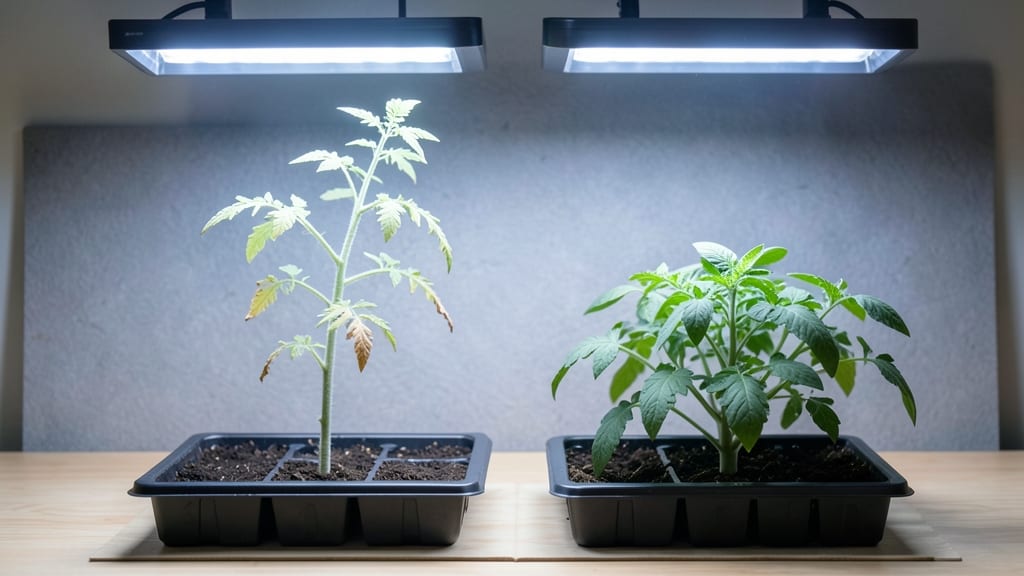
Leggy tomato seedlings happen when they stretch too far for sunlight, creating weak stems that flop like overgrown noodles. 🌱 I’ve nursed dozens from wobbly disaster to sturdy plants—here’s how to fix them without cages or staking.
The key? Light, spacing, and a little mechanical help that keeps them upright while they bulk up.
Most leggy seedlings suffer from too much shade or overcrowding, forcing them to reach for light. Thin them to 2 inches apart and move them to a bright windowsill or under grow lights (12–16 hours daily).
If they’re already leaning, bury them deeper when transplanting—the buried stem roots where it touches soil, giving them stability.
For immediate support, use toothpicks or chopsticks tucked gently beside each seedling to prop them up. Within a week, you’ll see thicker stems and bushier growth. The goal isn’t just to save them—it’s to turn them into stocky, productive plants that handle wind and fruit without snapping.
Prevent future legginess by starting seeds under strong grow lights (not just a sunny window) and thinning early. Leggy seedlings aren’t a death sentence—they’re just telling you they need a little help standing tall. Let’s get them back on track!
The Real Culprits Behind Weak Seedlings
Leggy tomato seedlings—those stretched, spindly sprouts reaching desperately for light—aren’t just a cosmetic issue. They signal underlying problems that weaken your plants before they even hit the soil. Understanding the root causes (pun intended) helps you fix the issue fast and grow stockier, healthier seedlings.
Let’s break down the science behind why your seedlings are turning into human-like (but far less cute) versions of themselves.
Light is the #1 factor in seedling growth, and without enough of it, your tomatoes send out weak stems in a desperate bid to find it. This phenomenon is called etiolation, where seedlings stretch (elongate) to maximize their surface area for capturing light.
Unfortunately, this makes them top-heavy, prone to snapping, and unable to support themselves.
- Why it happens:
- Seedlings need 12–16 hours of light daily (natural sunlight or grow lights). Below 10 hours, they start stretching.
- Low-light conditions (e.g., cloudy days, shaded windowsills, or overcrowded trays) trigger this response.
- Blue light (400–500 nm wavelength) is critical for stem thickening, while red light (600–700 nm) drives leaf expansion. Too little of either throws off balance.
- Actionable fix:
- Move seedlings to a south-facing window or under grow lights (LED or fluorescent) 2–3 inches above the plants.
- Rotate trays daily to ensure even light exposure (prevents leaning).
- Use a timer for grow lights to mimic natural daylight cycles.
Tomato seedlings thrive in stable warmth, but inconsistent temperatures—especially cool nights or drafty conditions—can stunt their growth and encourage legginess. Cold stress slows metabolism, while uneven heat disrupts nutrient uptake.
- Why it happens:
- Ideal seedling temps: 70–75°F (21–24°C) during the day, 60–65°F (15–18°C) at night. Below 50°F (10°C), growth nearly halts.
- Drafts (e.g., near AC vents, open windows) create localized cold spots, causing uneven stretching.
- Overheating (above 85°F/29°C) can also stress seedlings, though it’s less common as a cause of legginess.
- Actionable fix:
- Keep seedlings in a consistent environment—avoid placing them near doors, vents, or radiators.
- Use a seedling heat mat (set to 70°F/21°C) for bottom warmth if your space runs cold.
- Monitor temps with a thermometer and adjust lighting/location as needed.
Seedlings packed too closely compete for light, water, and nutrients, leading to weak stems as they struggle to reach upward. Poor airflow also increases humidity around the leaves, creating a breeding ground for damping-off disease, which further weakens stems.
- Why it happens:
- Seedlings need 1–2 inches of space between them. Below that, they stretch toward the light source.
- High humidity (above 70%) from poor airflow promotes fungal growth, rotting the stem base.
- Overwatering in crowded trays leads to waterlogged roots, which can’t absorb nutrients efficiently.
- Actionable fix:
- Thin seedlings to 1 inch apart once they have 2–3 true leaves.
- Use well-draining soil (e.g., 60% potting mix + 40% perlite/vermiculite) to prevent compaction.
- Improve airflow with a small fan on low speed (24/7) to mimic wind, which strengthens stems.
While seedlings don’t need much fertilizer, too much nitrogen (or too little of other nutrients) can lead to weak, leggy growth. Overwatering, on the other hand, deprives roots of oxygen, stunting development and encouraging stretching.
- Why it happens:
- Excess nitrogen promotes leafy (but weak) growth at the expense of sturdy stems. Look for dark green leaves with pale undersides.
- Lack of phosphorus (a key nutrient for root and stem development) can cause slow, stretched growth.
- Overwatering leads to anaerobic soil, where roots suffocate and can’t support the plant’s upward reach.
- Actionable fix:
- Avoid fertilizing until seedlings have 2–3 true leaves. Use a balanced 5-5-5 or 10-10-10 fertilizer at half-strength if needed.
- Water only when the top inch of soil is dry. Use a spray bottle for gentle hydration to avoid disturbing roots.
- Flush soil with water after 3–4 weeks to prevent salt buildup from fertilizers.
Leggy seedlings are a red flag, but they’re also a fixable one. By addressing light, temperature, spacing, and nutrients, you’ll encourage your tomatoes to grow bushy, self-supporting, and ready for transplanting—no cage required! 🌿💪
Fix Weak Seedlings Fast
Now that you know the root causes behind leggy tomato seedlings 🌱—whether it’s weak light, overcrowding, or inconsistent care—it’s time to turn those spindly stems into strong, bushy plants ready for the garden. Here’s a step-by-step action plan to rescue your seedlings and keep them thriving.
---
Problem: Seedlings lean and stretch toward the light like sun-worshipping sunflowers. This happens when they don’t get enough direct sunlight (6–8 hours daily) or are placed too far from grow lights.
Fix It: - Move them closer to a sunny window (south-facing is best) or adjust grow lights to hover 2–4 inches above seedlings (use clips or a small hook to keep them steady). - Rotate trays daily 🌀 by 180° to prevent seedlings from bending toward one light source. - Extend daylight with a grow light on a timer (14–16 hours of light per day mimics summer conditions).
Prevention Tip: 💡 Start seedlings indoors with a grow light (LED or fluorescent) if natural light is weak. Avoid placing them on cold windowsills—keep soil temps between 65–75°F for best growth.
---
Problem: Seedlings compete for nutrients and air, leading to weak stems and legginess.
Fix It: - Thin seedlings by snipping (not pulling) the weakest ones at soil level with clean scissors ✂️. Leave the strongest 1–2 seedlings per cell or pot. - Repot immediately if roots are circling or crowded. Use individual pots (3–4 inches deep) with well-draining soil (mix potting soil with perlite or vermiculite). - Avoid overwatering—let the top inch of soil dry out between waterings to prevent root rot.
Prevention Tip: ✨ Sow seeds sparingly (1–2 per cell) or use bigger seedling trays (2–3 inch cells) from the start to reduce thinning stress.
---
Problem: Leggy seedlings can signal nutrient deficiencies (especially nitrogen or phosphorus) or over-fertilization, which burns tender roots.
Fix It: - Hold off on fertilizer for 1–2 weeks after transplanting (unless seedlings look pale or stunted). - Use a balanced, water-soluble fertilizer (like 5-5-5 or 10-10-10) diluted to half-strength 💧. Apply every 2 weeks once seedlings have true leaves. - Boost phosphorus (for root growth) with a bone meal or fish emulsion if stems are especially weak.
Prevention Tip: 🌡️ Test your soil or use a soil meter to check pH (ideal: 6.0–6.8). Tomatoes thrive in slightly acidic soil—amend with lime if pH is too low.
---
Problem: Overly leggy stems can’t support themselves, leading to flopping or breaking when touched.
Fix It: - Pinch off the top set of leaves (just above a leaf node) to encourage bushier growth 🌿. This redirects energy to lower stems. - Stake or cage seedlings early with toothpicks, chopsticks, or mini tomato cages (even indoors!). Tie stems gently with soft twine or cloth strips. - Buried stakes work best: Push a 3-foot stake into the pot and tie the seedling to it at the base to strengthen stems.
Prevention Tip: 🎯 Start hardening off seedlings 1 week before transplanting—place them outside in partial shade for a few hours daily to toughen stems.
--- Problem: Overwatering or underwatering stresses seedlings, making them leggy or weak.
Fix It: - Water at the base (not overhead) to prevent fungal diseases like damping-off. - Use room-temperature water—cold water shocks roots. - Check moisture by sticking your finger 1 inch into soil. Water only if dry.
Prevention Tip: 💡 Use self-watering trays or moisture meters to avoid guesswork. Tomato seedlings hate soggy feet!
--- Problem: Delaying transplanting or shocking seedlings with sudden changes causes stress.
Fix It: - Wait until night temps stay above 50°F (tomatoes hate frost!). - Plant deeper—bury 2/3 of the stem (roots will form along the buried section!). - Mulch with straw or grass clippings to retain moisture and deter weeds.
Prevention Tip: ✨ Acclimate seedlings gradually over 7–10 days—start with 1 hour outside, then increase time daily.
--- Final Pro Tip: 🔥 Leggy seedlings aren’t a death sentence—they’re just telling you they need more light, space, or love! With these fixes, your tomatoes will bush out strong and reward you with juicy, vine-ripened fruit in no time.
Frequently asked questions
Can I still save leggy tomato seedlings if they're already flopping over?
Start by providing 14–16 hours of light daily using a grow light or sunny window. Prop them up with toothpicks or chopsticks, and bury 1/3 of the stem when transplanting—new roots will form along the buried section. Within 7–10 days, you'll see thicker stems and bushier growth.
Why do my seedlings get leggy even when I use grow lights?
Legginess often happens when grow lights are too far away (6+ inches) or don't provide enough blue light (critical for stem thickening). Keep lights 2–4 inches above seedlings and rotate trays daily. Also check if your light spectrum favors red over blue—consider a full-spectrum LED bulb if needed.
Is it better to thin seedlings early or wait until they're leggy?
Thin seedlings as soon as they have 2–3 true leaves—this prevents overcrowding before legginess sets in. Space them 1–2 inches apart to reduce competition. If you wait until they're leggy, you'll need to repot immediately and provide extra support to recover.
Can I use household items to support leggy seedlings instead of buying stakes?
Yes! Try toothpicks, chopsticks, or even bent paperclips tucked gently beside each seedling. For larger pots, use plastic spoons or popsicle sticks as mini stakes. Secure with soft twine or cloth strips—just avoid anything that could cut into tender stems.
Will leggy seedlings still produce fruit if I fix them now?
Yes, but you may see slightly delayed fruiting while the plant regains strength. Focus on light, spacing, and support first. Once stems thicken and leaves fill out, your plants will recover and produce just as well as non-leggy seedlings. The key is consistency—don't let them get leggy again!