
Planting
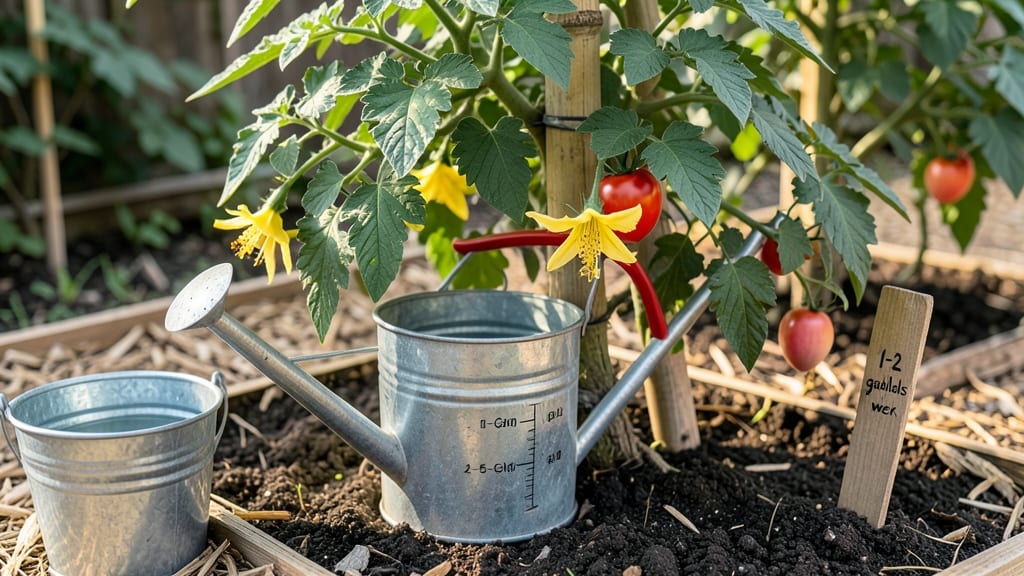
To water a tomato plant properly, you’ll need between 1 and 2 gallons per week for small varieties and up to 3 gallons for sprawling types like beefsteaks—more in heatwaves or sandy soil.
Struggling to keep your tomato plants thriving without drowning them in water? The right gallonage isn’t just about quantity—it’s about understanding how much water your tomato variety actually needs to grow juicy, productive fruits without wasting resources.
Most gardeners overestimate water needs, especially for 🍅 cherry tomatoes versus giant slicers, leading to wasted gallons or stunted growth. The key is matching water volume to root depth, soil type, and even the time of day you water.
Below, I’ll break down the exact gallon targets by plant size, how to adjust for containers or in-ground beds, and the 3 signs you’re watering wrong—so you can save time, water, and still harvest like a pro.

Gallon requirements for tomato plants by variety size (indeterminate vs determinate)
Watering tomatoes isn't a one-size-fits-all task. The 1-gallon rule for seedlings quickly changes as your plants grow. Indeterminate varieties like 'Sungold' can need 5+ gallons weekly during peak summer, while determinate 'Roma' tomatoes might max out at 3 gallons per week.
Understanding these differences saves water and prevents blossom-end rot.
Root depth is your first clue. Cherry tomatoes develop roots 12-18 inches deep, while beefsteak varieties can send roots 36+ inches down. Deeper roots mean more water storage capacity, but they also require deeper watering to reach those lower zones.
Shallow watering only wets the top 2-3 inches, leaving deeper roots thirsty.
Here's where variety matters most. Let's break down the gallon requirements by tomato type so you can water with confidence:
Notice how indeterminate varieties like 'Brandywine' or 'Black Krim' demand more water?
That's because they keep growing all season, developing new leaves and fruit continuously. Determinate types like 'Celebrity' or 'Better Boy' focus their energy on one flush of fruit, then stop growing—so their water needs drop significantly after harvest begins.
Container-grown tomatoes need even more attention. A 5-gallon pot dries out 3x faster than in-ground soil. For every gallon of pot size, add 1 extra gallon weekly. So a 15-gallon container might need 5 gallons weekly in summer, not the 3 gallons you'd use for in-ground plants.
Don't forget about soil type. Sandy soil drains quickly, requiring daily watering in summer, while clay holds moisture longer—sometimes too long, causing root rot if overwatered. Amend heavy soils with 20% compost to improve drainage while retaining moisture for those deep roots.
Young tomato plants (first 4-6 weeks) only need 1/2 to 1 gallon per week. Once they flower, increase to full requirements. The key is deep watering—aim for 1 inch of water per week during the growing season, delivered in 2-3 deep sessions rather than daily light sprinkles.
Watch for these signs: Wilting leaves mean underwatering, while yellowing lower leaves often signal overwatering. Adjust your gallonage based on these visual cues and your local climate. In Zone 9+, you might need 20% more water than in cooler zones due to higher evaporation rates.
Pro tip: Use a moisture meter to check soil depth. For most tomatoes, aim to keep the top 6-12 inches consistently moist. This ensures roots have access to water without drowning the plant. Mulching with 2-3 inches of straw helps retain moisture and reduces gallonage needs by 25-30%.
How to calculate gallons for your tomato plants without overwatering
Calculating the right amount of water for your tomato plants can feel like guessing—pour too much, and you risk root rot; too little, and your plants wilt. The key is understanding how much water your specific tomato variety needs based on its growth stage and environment.
For example, a 5-gallon container of cherry tomatoes won't need the same amount as a 10-gallon beefsteak in full sun. Let's break it down step by step to avoid wasting gallons while keeping your plants thriving.
Start by checking your soil type—sandy soil drains quickly, while clay holds moisture longer. A general rule is that 1 inch of water per week is ideal for tomatoes, but this varies by season.
In summer heat, you might need 2-3 gallons per plant per week, while cooler months could cut that in half. The goal is to water deeply enough to encourage deep root growth rather than shallow, frequent watering that promotes surface roots.
Step-by-Step Watering Guide for Tomato Plants
- 1 Determine Container or Root Zone Size: Measure the diameter and depth of your pot or garden bed. A 5-gallon container holds about 1 gallon of water per inch of soil depth, while a 10-gallon pot can hold up to 3 gallons. For in-ground plants, dig down 6-12 inches to check moisture levels.
- 2 Check Soil Moisture: Use a moisture meter or stick your finger 2 inches into the soil. If it feels dry, water until it’s moist 6 inches deep. Sandy soil may need watering every 1-2 days, while clay soil can go 3-4 days between waterings.
-
3
Calculate Gallons by Plant Age:
- Seedlings (1-4 weeks): 0.5-1 gallon every 2-3 days
- Young Plants (1-3 months): 1-2 gallons every 2-3 days
- Mature Plants (3+ months): 2-4 gallons every 1-2 days in heat
- 4 Adjust for Climate: In hot, dry climates, increase water by 50% and water in the early morning to reduce evaporation. In humid or rainy seasons, reduce water by 30-50% to prevent fungal diseases like blight.
- 5 Use Mulch to Retain Moisture: Apply 2-3 inches of mulch (straw or shredded leaves) around the base of your plants. This reduces water loss by 30-40% and keeps roots cool, which is especially helpful in summer heat.
Don’t rely on a watering schedule alone—always check the soil before watering. A moisture meter or even a simple finger test can save you from overwatering. For container-grown tomatoes, weigh your pots before and after watering to track how much water they’re absorbing.
If your pot feels light, it’s time to water, but if it’s still heavy, hold off to avoid soggy roots.
Remember, consistency is key. Tomato plants prefer steady moisture over sporadic deep waterings. If you’re unsure, start with 1 gallon per plant every other day and adjust based on your soil and climate. Over time, you’ll develop a feel for what your specific tomato varieties need—without wasting a drop.
Pro tip: Group your tomato plants together and use a drip irrigation system or soaker hose to deliver water directly to the roots. This method is 30% more efficient than overhead watering and reduces evaporation and disease risk. Happy watering—and may your tomatoes be bountiful! 🌱