
Size
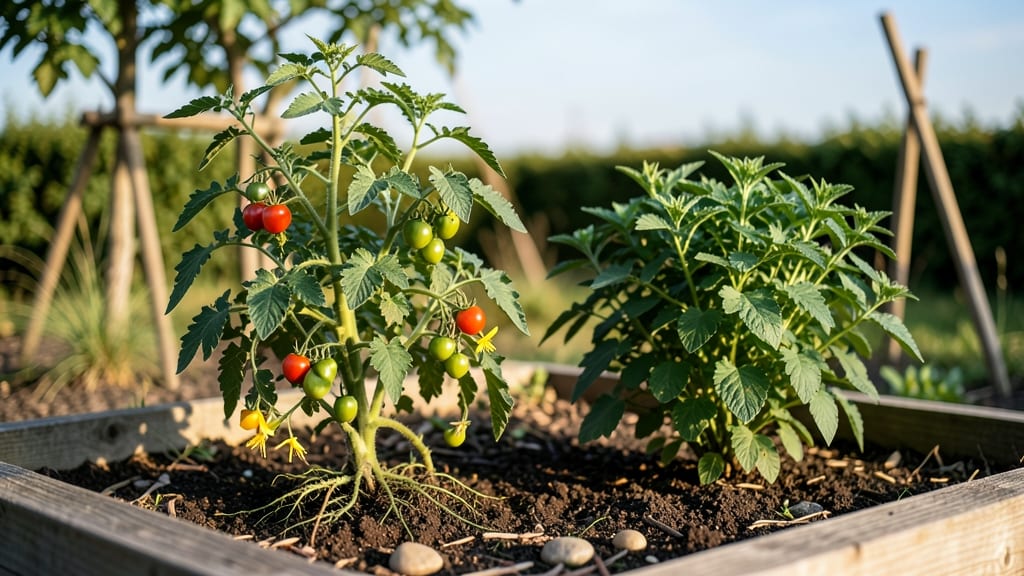
Tomato plants grow anywhere from 1 foot for dwarf varieties to 12 feet or taller for indeterminate giants—so your space and choice of variety make all the difference.
Picture this: a sunny windowsill holding a 3-foot-tall cherry tomato plant loaded with fruit, or a backyard trellis sagging under a 10-foot vine of beefsteaks. The right variety can turn even a balcony into a harvest zone—or leave you scrambling for support if you pick the wrong one.
Whether you’re working with a 5-gallon pot, a raised bed, or open ground, spacing and support needs change dramatically based on size. Determinate types stay compact, while indeterminate varieties climb like jungle vines, demanding stakes or cages to keep them upright.
In this guide, I’ll break down the heights and spreads of popular varieties, share spacing rules to avoid crowding, and show you how to pick the perfect tomato for your space—no guesswork included.


Tomato plant growth sizes by variety: heights, spreads & space requirements
Tomato plants come in stunning diversity when it comes to size, ranging from compact bush varieties that fit in 5-gallon pots to towering vines that climb 12 feet or more. Understanding these differences is key to planning your garden layout, choosing the right support structures, and maximizing your harvest.
The two main categories—determinate and indeterminate—dictate everything from spacing to pruning needs, so let’s break down what you need to know before planting.
Determinate tomatoes grow to a predictable height (usually 3–5 feet) and produce fruit all at once, making them ideal for container gardening or small spaces. Indeterminate varieties, on the other hand, keep growing until frost, often reaching 6–12+ feet and yielding fruit continuously.
This means they need vertical support and more space to sprawl. Whether you’re a city balcony gardener or have a sprawling backyard, knowing these growth patterns will help you avoid overcrowding and ensure healthy plants.
Space requirements vary wildly—some dwarf varieties thrive in 5-gallon pots, while heirloom giants need 6–8 feet of vertical space and wide trellises. Below, we’ve compared popular varieties to help you visualize their mature sizes and ideal planting distances. Pro tip: Always check seed packets or plant tags for specific variety details, as even within categories, sizes can differ significantly.
For container gardening, indeterminate varieties like Sweet 100 cherry tomatoes thrive in 5-gallon pots with proper trellising, while larger varieties need 10–15 gallon containers to support their root systems.
In-ground planting requires even more space—indeterminate types should be spaced 36–48 inches apart to prevent competition, whereas determinate bushes like Roma tomatoes can handle 18–24 inches of space. Always prioritize airflow to reduce disease risk.
One common mistake I see is underestimating spread. Even if a plant is labeled as "compact," its branches can sprawl 3–4 feet wide without support. For example, Tumbling Tom cherry tomatoes are perfect for hanging bask
How to choose the right tomato variety based on your space
Not all tomato varieties play well together in tight spaces. If you're working with a balcony garden, a 5-gallon pot, or a sprawling backyard, selecting the right variety can mean the difference between a bumper crop and a sad, leggy plant.
The key lies in understanding whether your space suits determinate (bush-type) or indeterminate (vining) tomatoes—and how to maximize vertical growth when needed.
For urban gardeners with limited square footage, compact varieties like Tiny Tim or Patio Princess thrive in containers, reaching just 2-3 feet tall. Meanwhile, traditional gardeners with open plots can opt for Beefsteak or Brandywine varieties, which spread wider but require more elbow room.
The right choice depends on your space, sunlight, and how much you’re willing to prune and support.
📌 Key Considerations for Space Planning
- 🌱 Container Gardening: Use 5-gallon pots for dwarf varieties (1-3 ft tall) and add trellises for indeterminate types.
- 🏡 Balcony/Patio: Opt for compact hybrids like 'Tumbling Tom' (vining but bushy) or 'Micro Tom' (1 ft tall!).
- 🌿 Raised Beds: Space determinate plants 18-24 inches apart; indeterminate types need 2-3 feet and vertical support.
- 🏡 Backyard Garden: Allow 3-4 feet between indeterminate plants or use cages/trellises to save space.
- ✂️ Pruning Tips: Indeterminate varieties grow 6-12+ feet—prune suckers (side shoots) to control height and improve airflow.
If you’re growing in containers, prioritize varieties bred for small spaces. Cherry tomatoes like 'Sweet Million' or 'Sun Gold' are excellent choices—they produce prolifically and can be trained upward.
For raised beds, mix determinate and indeterminate types: place bush varieties along the edges and train vining types on trellises in the center. This maximizes yield without overcrowding.
For large plots, indeterminate varieties shine but require planning. Install trellis systems early to support their weight—some varieties like 'Sungold' or 'Black Krim' can reach 8-10 feet if left unchecked! Prune regularly to encourage fruit production and prevent disease.
In my own garden, I’ve found that vertical growing not only saves space but also improves air circulation, reducing the risk of fungal issues.
Don’t overlook underrated compact varieties like 'Balcony Red' or 'Roma VF' (virus-resistant). These are perfect for urban gardeners and produce hearty yields in minimal space. Pair them with self-watering pots or drip irrigation to keep roots consistently moist—a critical factor for container-grown tomatoes.
Remember, even the smallest space can yield big results with the right variety and care.
Pro tip: Always check seed packets for mature plant size and spacing recommendations. If you’re unsure, start with determinate varieties for beginners—they’re forgiving and produce fruit all at once, making them ideal for small-scale harvests. For adventurous growers, indeterminate types offer continuous harvests but demand more attention.