
Companion Plants
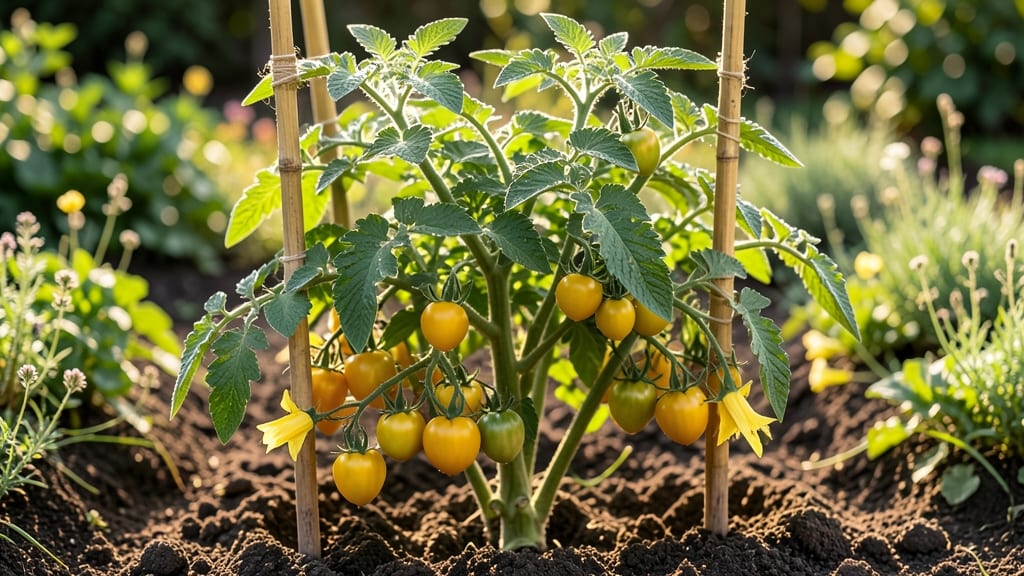
Golden cherry tomato plants turn your garden into a sunlit treasure trove of sweet, bite-sized fruit. 🌞 I learned the hard way that these vines need more than just good intentions—they demand rich soil, consistent warmth, and just the right balance of water to produce those legendary 300-fruit clusters.
The first time I tasted one still warm from the vine, I knew I'd never grow regular tomatoes again.
Start with well-draining soil mixed with compost—these plants thrive when their roots can stretch freely. Plant them after your last frost date, spacing vines 2-3 feet apart to give them room to sprawl.
A sturdy trellis or cage isn't just helpful; it's essential for keeping those heavy clusters off the ground and improving air circulation. Most importantly, keep them in full sun (6-8 hours daily)—without it, the fruit turns bland and pale.
Watering is where beginners stumble: too much and the fruit cracks; too little and the vines wilt. Aim for 1-1.5 inches per week, always watering at the base.
Prune suckers regularly to focus energy on fruit production, and pinch off the first few flowers if your plants look stressed—they'll reward you with bigger, sweeter clusters later in the season.
By mid-summer, you'll be harvesting golden bursts of flavor that taste like summer in every bite. These tomatoes aren't just pretty—they're the star of salads, snacks, and sandwiches. The secret? Pay attention to the vines' signals: yellow leaves mean too much water, while curled leaves scream for more.
With these tips, you'll go from curious beginner to golden cherry tomato whisperer in no time.
📚 In This Guide
- What you need
- Instructions
- Tips and common mistakes
- Wrapping up and next steps
What you need
- ● Seeds or seedlings: 3–5 golden cherry tomato plants (choose heirloom or hybrid varieties like 'Golden Sweet' or 'Tiny Tim').
- ● Containers or garden bed: Containers: 5-gallon pots or larger (1 plant per container). Ensure pots have drainage holes.
- ● Garden bed: Well-draining soil in a sunny spot (6+ hours of sunlight daily).
- ● High-quality potting mix: 10–20 lbs of organic, well-draining soil (add perlite or compost for fluffiness).
- ● Fertilizer: Balanced organic fertilizer (e.g., 5-5-5 or tomato-specific blend) or compost tea.
- ● Support system: Cages (5–6 ft tall), stakes, or trellises to keep vines upright.
- ● Mulch: Straw or shredded leaves to retain moisture and suppress weeds.
- ● Garden trowel or hand shovel (for planting).
- ● Pruning shears (to trim suckers and encourage fruiting).
- ● Watering can or hose with a gentle nozzle (avoid wetting leaves to prevent disease).
- ○ pH testing kit (optional but helpful—ideal soil pH: 6.0–6.8).
- ● Companion plants: Basil, marigolds, or borage to deter pests and boost growth.
- ● Drip irrigation system for consistent moisture.
- ● Row covers (early season) to protect from frost.
- ● Fish emulsion or seaweed extract for a nutrient boost.
Step-by-Step guide to growing golden cherry tomato plants
Here’s how to coax those vibrant, sun-drenched clusters from seed to table—no fancy tricks, just reliable results.
🌱 Step 1: Start Seeds Indoors 6-8 Weeks Before Last Frost
Fill 4-inch seed trays with sterile seed-starting mix (never garden soil—it’s too heavy and can harbor disease). Moisten the mix until it feels like a damp sponge, then press it down lightly to remove air pockets. Tomatoes love warmth to germinate, so place the trays on a seedling heat mat set to 75-85°F—this speeds up germination from 7-14 days instead of the usual 2-3 weeks.
Plant 2 seeds per cell, just ¼ inch deep—any deeper and they’ll struggle to break through. Cover with a fine layer of mix and mist gently with water until the surface looks evenly damp. Place the tray under a grow light (not a window—natural light won’t cut it this early). You’ll see sprouts in 5-10 days if conditions are right. Real talk: if you skip the heat mat, germination could take twice as long, especially in cooler homes.
☀️ Step 2: Provide Strong Light and Prevent Leggy Growth
The moment those first true leaves (the second set after the initial cotyledons) appear, move seedlings under 14-16 hours of light daily. A full-spectrum LED grow light should hover 2-3 inches above the plants—close enough to see a slight shadow when you hold your hand between the light and the leaves. You’ll know your light is working if the seedlings grow stocky and dark green, not stretched and pale.
Rotate the trays quarter-turn daily so they don’t lean toward the light. Leggy seedlings (tall, weak stems) are a red flag—this means your light is too far away or not strong enough. If you see this, lower the light immediately and consider adding a second bulb for even coverage. Once seedlings have 3-4 true leaves, it’s time to transplant them into 5-inch pots with fresh potting mix.
🪴 Step 3: Transplant to Larger Pots and Harden Off
Fill 5-inch pots with well-draining potting mix (add a handful of perlite to improve aeration). Gently remove seedlings from their trays, teasing apart any that germinated together. Plant them deeper than before—bury up to the first set of true leaves. This encourages stronger root growth and prevents the stems from toppling later. Water thoroughly after transplanting, letting excess water drain completely.
Start hardening off 2 weeks before your last frost date. On day 1, place the pots outside in a shaded, sheltered spot for 1-2 hours. Gradually increase their time outdoors by 1 hour daily, moving them to morning sun by day 3. By day 7, they should handle full sun for 4-6 hours. Watch for wilting or leaf scorch—if you see it, they’re not ready yet. Once they’re toughened up, they’ll thrive in full sun (6+ hours daily) and warm soil (60°F+).
✂️ Step 4: Train Vines and Prune for Maximum Fruit
When you transplant outdoors (after last frost), choose a cage or sturdy trellis for support—golden cherry tomatoes produce heavy clusters, and unsupported vines break easily. The day you plant, pinch off the suckers (the small shoots that form in the leaf axils) to redirect energy to fruit production. You’ll see more suckers appear as the plant grows—remove them weekly to keep the plant focused on ripening those sweet, golden orbs.
Once the plant reaches the top of its support, prune the main stem to encourage bushier growth. This isn’t just about aesthetics—it improves airflow, reducing the risk of blight and other diseases. Water at the base (never overhead) and mulch with 2-3 inches of straw to retain moisture and keep soil temps steady. You’ll know you’re on track when the plant bursts with 300+ fruit clusters by mid-summer—each one packed with that signature golden sweetness.
Tips & tricks for growing golden cherry tomato plants
These tried-and-true tricks will help you cultivate those sun-kissed clusters without the guesswork—because every gardener deserves a bounty of golden tomatoes.
Heat Mat Hack: That 75-85°F heat mat setting is non-negotiable for speedy germination. I learned this the hard way after watching seeds languish for weeks in a cool kitchen. Pro tip: If you don’t have a heat mat, place your seed trays on top of your fridge—it radiates just enough warmth to help. Just make sure the surface isn’t too hot to the touch, or you’ll risk drying out the mix.
Light Distance Matters: The 2-3 inch distance between your grow light and seedlings is crucial. Too close and you’ll scorch those delicate leaves; too far and you’ll get leggy, weak plants. I test the distance by holding my hand between the light and plants—if I see a shadow, it’s perfect. And remember, those 14-16 hours of light are mandatory for stocky growth. If your light isn’t strong enough, supplement with a second bulb or move the plants closer to a sunny window temporarily.
Transplanting Technique: When you’re ready to move seedlings to their 5-inch pots, bury them deeper than before—up to the first set of true leaves. This might seem counterintuitive, but it encourages stronger root growth. After transplanting, give the soil a good soak, but let excess water drain completely. Soggy roots are a fast track to disease, and nobody wants that for their golden cherry tomatoes.
Sucker Control Strategy: Those weekly sucker removals in Step 4 aren’t just about aesthetics—they’re about redirecting energy to fruit production. I use clean fingernails or small pruning shears to pinch them off at the base. If you see more than a few suckers, it’s a sign your plant is putting energy into foliage instead of those sweet, golden clusters. Think of it as pruning for profit—literally!
Pro Tips for Golden Cherry Tomato Plants
- These tried-and-true tricks will help you cultivate those sun-kissed clusters without the guesswork—because every gardener deserves a bounty of golden tomatoes.
- Heat Mat Hack: That 75-85°F heat mat setting is non-negotiable for speedy germination.
- Light Distance Matters: The 2-3 inch distance between your grow light and seedlings is crucial.
Frequently asked questions
Got questions about growing golden cherry tomato plants?
You’re not alone! Whether you’re a first-time gardener or a seasoned green thumb, these answers will help you cultivate sun-kissed vines like a pro.
When is the best time to plant golden cherry tomatoes?
Golden cherry tomatoes thrive in warm soil—wait until after the last frost when nighttime temperatures stay above 50°F (10°C). Start seeds indoors 6-8 weeks before transplanting (early spring) or buy seedlings from a nursery. For extended harvests, plant a second batch 3-4 weeks later.
How much sun do golden cherry tomato plants need?
These sun-lovers crave 6-8 hours of direct sunlight daily. Place them in the sunniest spot in your garden—south-facing windowsills or raised beds work best. Too little light? Expect smaller fruits and leggy plants. A partial shade spot (like dappled afternoon sun) may still yield tomatoes, but yields will drop.
Why aren’t my golden cherry tomatoes ripening?
If your tomatoes stay green or turn pale yellow, it’s often due to cool nights, low light, or overcrowding. Try these fixes:
- Extend the season: Use row covers or a small greenhouse to protect from chilly temps.
- Prune for airflow: Remove suckers (side shoots) and space plants 18-24 inches apart.
- Boost light: Move potted plants to sunnier spots or use a grow light.
- Check watering: Uneven moisture causes stress—aim for 1-1.5 inches of water per week.
What are the best companion plants for golden cherry tomatoes?
Golden cherry tomatoes love teamwork! Pair them with:
- Basils (sweet or purple): Repels pests and enhances flavor.
- Marigolds: Deters nematodes and attracts pollinators.
- Onions or garlic: Confuses tomato hornworms.
- Avoid: Fennel, brussels sprouts, or corn (they compete for nutrients).
Pro tip: Plant bush beans nearby—they fix nitrogen in the soil, giving tomatoes a nutrient boost!
Can I grow golden cherry tomatoes in containers?
Choose a 5-gallon pot or larger (bigger = more fruit). Use a well-draining potting mix with added compost, and place the container in full sun. Dwarf varieties like ‘Tiny Tim’ or ‘Micro Tom’ are perfect for containers. Just water daily (containers dry out faster) and fertilize every 2-3 weeks.
Wrapping up and next steps
Growing golden cherry tomato plants is a rewarding journey that brings vibrant color, sweet flavor, and bountiful harvests to your garden! 🌞 Whether you're a seasoned gardener or just starting out, these sun-loving vines pair beautifully with companions like basil, marigolds, or borage—boosting both flavor and yield.
With the right care, you’ll soon be enjoying clusters of golden gems straight from your own backyard.
Ready to dive in? Start by selecting healthy seedlings or seeds, then follow the steps above to create the perfect growing environment. Before you know it, your garden will be a golden cherry tomato paradise—happy growing! 🌱✨