
Companion Plants
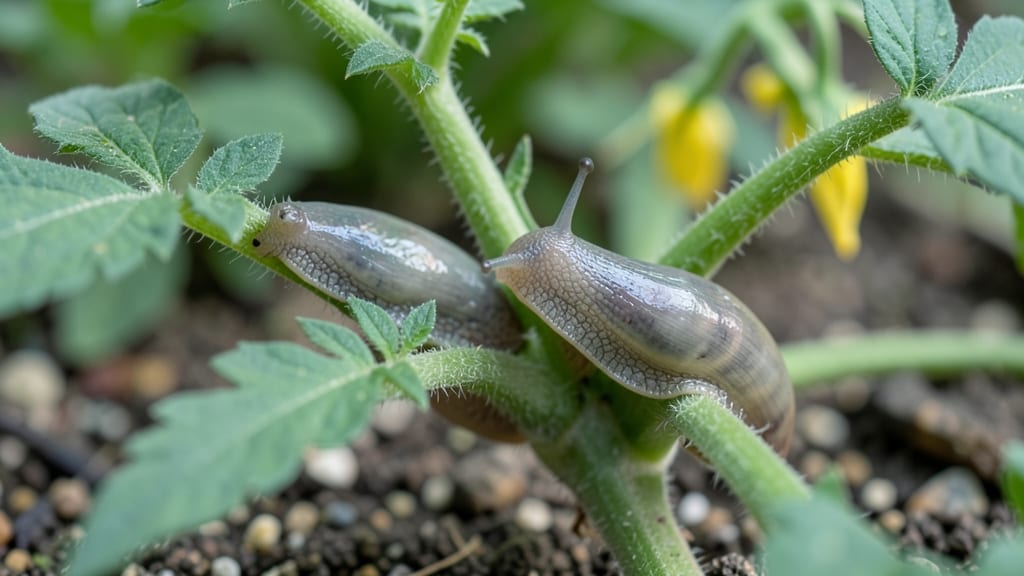
Slugs do eat tomato plants, targeting leaves, stems, and even unripe fruit, leaving behind irregular holes and silvery slime trails. They thrive in moist, shaded garden conditions and can devastate young seedlings overnight.
These nocturnal pests are particularly drawn to tomato plants because of their soft, water-rich foliage. 🌱 The damage they cause isn't just cosmetic—slugs can strip entire leaves overnight, leaving plants vulnerable to disease and stunted growth.
Their feeding patterns often start at the base of stems, where they create jagged notches that can girdle young plants, cutting off nutrient flow.
What makes them especially troublesome is their ability to hide during the day in dense mulch or under boards, making them hard to spot until the damage is already done.
If you're dealing with a severe infestation, the key is acting fast before they move on to your fruit. I've found that combining physical barriers like copper tape with organic deterrents such as crushed eggshells creates the most effective defense.
The sharp edges deter slugs without harming your plants or beneficial insects like bees and ladybugs.
💡 In This Article
- How Slugs Damage Tomato Plants and Identify Their Feeding Patterns
- Organic Slug Control Methods for Tomato Gardens
How slugs damage tomato plants and identify their feeding patterns
Slugs attack tomato plants using their specialized feeding mechanism—a rasping tongue called a radula, lined with microscopic teeth that act like sandpaper. Unlike chewing insects, slugs scrape plant tissue, leaving behind smooth-edged holes with jagged, uneven borders.
This scraping action exposes the plant's vascular system, creating entry points for fungal infections like early blight. 🔥 Young tomato seedlings are particularly vulnerable because their tender stems contain higher moisture content, making them a slug's first choice for a meal.
The damage patterns reveal slug activity through distinct visual clues. Look for irregular holes with serrated edges on leaves, especially near the midrib where veins provide structural support.
Slugs often target the undersides of leaves, creating a "windowpane" effect where the upper epidermis remains intact while the lower tissue is consumed.
On stems, they leave shallow grooves that can girdle young plants, cutting off water and nutrient flow. 💫 What's most telling is the silvery slime trail they leave behind—a mucus secretion that helps them glide and protects their delicate bodies from drying out.
Slugs exhibit a clear preference for young tomato plants because their softer tissues require less energy to consume. Mature plants with thicker leaves and stems offer more resistance, but slugs will still target them during drought conditions when moisture levels drop.
The key difference is that young plants can be completely defoliated in a single night, while mature plants may only show partial damage. 🌱 This preference explains why gardeners often notice slug damage first on new transplants or seedlings.
Identifying slug activity early requires examining plants at dawn or dusk when slugs are most active. Check the soil surface around plant bases for small, shiny slugs (typically 1-3 inches long) or their egg clusters—tiny, jelly-like masses hidden in moist soil.
The presence of these eggs, which hatch in 1-3 weeks depending on temperature, indicates a breeding population that will require immediate intervention. 💛
Another critical sign is the time of year. Slugs become most active during warm, humid periods (ideal conditions are temperatures between 50-75°F with high humidity). In coastal regions or areas with frequent rainfall, slug populations can explode, leading to widespread tomato damage.
Understanding these patterns helps gardeners predict and prepare for outbreaks before they cause significant harm. ✨
What most gardeners overlook is how slugs' feeding behavior changes with plant maturity. On ripe tomatoes, they'll create small indentations in the fruit, often near the stem attachment point. These wounds can serve as entry points for rot-causing bacteria, making slug damage doubly problematic.
The key to minimizing this risk is implementing preventive measures before slugs find your plants. 🌿