
Companion Plants
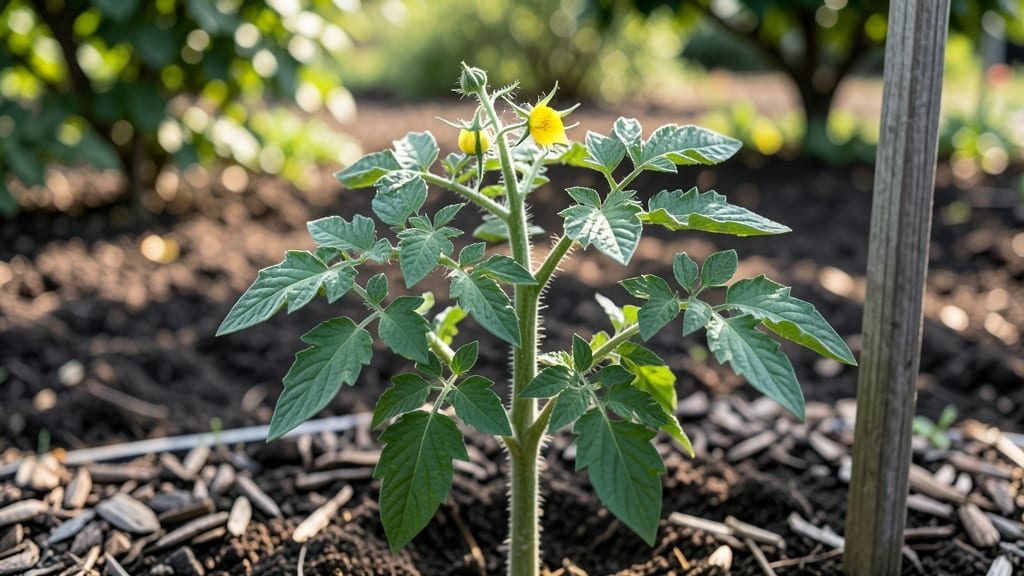
Young tomato plants start as hair-thin stems with oval leaves the size of a dime, often fuzzy along the edges—nothing like the thick vines you’ll see later. 🌱 The first true leaves (not the tiny seed leaves) look like tiny, serrated maple leaves, and healthy ones stand upright with a vibrant green color.
Weed confusion is real: tomato seedlings have a central stem with leaves growing in a spiral pattern, while weeds often sprawl or grow in clusters at the base.
Within 4-6 weeks, you’ll spot tiny green fruit clusters forming where the leaves meet the stem—these are your first tomatoes, though they’ll be the size of a pea at first.
The stems should be firm to the touch, not mushy or hollow, and the leaves shouldn’t yellow or curl inward. Compare them to basil seedlings (which are more square-leaved) or pepper plants (which have smoother, waxier leaves)—tomatoes are the fuzzy, serrated ones.
Unhealthy seedlings reveal themselves quickly: yellowing leaves, stunted growth, or stems that wilt when touched mean trouble. Overwatering causes the soil to stay soggy, while underwatering makes leaves crisp at the edges.
A healthy young tomato plant feels springy when you gently tug it—if it pulls right out of the soil, it’s not rooted well yet.
Once you can spot these signs, you’ll never mistake a tomato seedling for a weed again. These early clues help you prune correctly, transplant confidently, and protect your plants from pests or disease before they take hold.
The best part? Those tiny green clusters mean harvest season is just around the corner.
Understanding Young Tomato Growth
Young tomato plants may not always look as expected, and their appearance can vary widely based on several key factors. Whether they’re leggy, stunted, or overly leafy, these traits often stem from environmental or cultural conditions.
Below, we break down the real reasons behind their unique looks—and how to address them.
When young tomato plants produce an abundance of leaves but few stems or flowers, it’s usually a sign of excessive nitrogen or poor light exposure.
- Too Much Nitrogen 💡 Nitrogen is essential for leafy growth, but too much—especially in early stages—can lead to luxuriant foliage at the expense of fruit production.
This happens when: - Fertilizers are applied too heavily (especially those high in nitrogen, like blood meal or urea). - Organic matter (like compost or manure) decomposes too quickly, releasing a nitrogen surge. - Fix: Balance your fertilizer with a low-nitrogen, high-phosphorus blend (e.g., 5-10-10) to encourage root and flower development.
- Insufficient Light ☀️ Tomatoes are sun-worshippers—without 6–8 hours of direct sunlight daily, they stretch and produce weak stems while prioritizing leaf growth.
- Fix: Move seedlings to a sunniest spot or use grow lights (12–16 hours/day) if indoors. Prune lower leaves to improve airflow and light penetration.
If your young tomato plants are tall, thin, and bare, they’re likely reaching for light or struggling with poor support.
- Light Deficiency 🌑 When seedlings don’t get enough light, they elongate rapidly (etiolation) to seek sunlight.
This results in: - Weak, spindly stems that can’t support fruit. - Small, pale leaves with long internodes (spaces between leaves). - Fix: Use reflective surfaces (like aluminum foil on walls) to maximize light. Transplant outdoors only after hardening off (acclimating to sun gradually).
- Overcrowding or Poor Spacing 🏠 Competitive plants or root-bound seedlings (grown too long in small pots) force them to stretch upward for space. - Fix: Thin seedlings so they’re 12–18 inches apart (for determinate varieties) or 24–36 inches apart (for indeterminate).
Use sturdy cages or stakes early to prevent flopping.
If your young tomato plants barely grow or develop small, yellowing leaves, the issue is likely nutritional, water-related, or disease-related.
- Nutrient Deficiencies 🌱 - Phosphorus or Potassium Shortage ⚡ Without enough P (phosphorus) or K (potassium), roots and flowers struggle to develop.
Symptoms include: - Dark green or purple-tinged leaves. - Weak stems that snap easily. - Fix: Apply a balanced fertilizer (10-10-10) or bone meal (for phosphorus) and wood ash (for potassium, sparingly). - Micronutrient Deficiencies 🔬 Lack of magnesium (Mg), calcium (Ca), or iron (Fe) can cause: - Yellowing between leaf veins (iron/chlorosis). - Blossom-end rot (calcium deficiency). - Fix: Use Epsom salt (for magnesium) or crushed eggshells (for calcium).
Test soil pH—tomatoes prefer 6.0–6.8.
- Water Stress 💧 - Underwatering 🌵 Dry soil forces plants to conserve water, stunting growth and causing leaves to curl or wilt. - Fix: Water deeply 1–2 times per week (1–1.5 inches total).
Use drip irrigation to keep roots consistently moist. - Overwatering 🌧️ Soggy soil leads to root rot (especially in cool, dense soils), preventing nutrient uptake. - Fix: Ensure well-draining soil (mix in perlite or compost). Water only when the top 1–2 inches of soil are dry.
- Disease or Pests 🐛
- Fungal Issues (e.g., damping-off, early blight) can kill seedlings or weaken them before they mature.
- Fix: Use sterilized soil, fungicide sprays (neem oil or copper-based), and rotate crops annually.
- Aphids or Spider Mites 🕷️ These pests sap nutrients from leaves, causing stunted growth and distorted foliage.
- Fix: Spray with soapy water or introduce ladybugs as natural predators.
- Fungal Issues (e.g., damping-off, early blight) can kill seedlings or weaken them before they mature.
If your tomato plant has plenty of leaves but no flowers or fruit clusters, it’s often due to environmental stress or hormonal imbalances.
- Temperature Fluctuations ❄️☀️ Tomatoes stop flowering if:
- Nights are below 55°F (13°C) or above 85°F (29°C) for prolonged periods.
- Fix: Use row covers in spring or shade cloth in summer. Choose heat-tolerant varieties (e.g., ‘Solar Fire’ or ‘Heatmaster’).
- Hormonal Imbalance (Gibberellins vs. Florigen) 🧪
- Too Much Nitrogen (as mentioned earlier) delays flowering by promoting leaf growth.
- Stress from Transplanting 🌱 Moving seedlings can shock the plant, halting flower production. Wait until soil temps are 60°F+ (15°C+) before transplanting.
- Lack of Pollinators 🐝 If flowers appear but don’t set fruit, poor pollination (common in greenhouses or rainy weather) may be the issue.
- Fix: Gently shake plants daily or hand-pollinate with a small brush.
Pro Tip: 🌡️ Monitor soil temperature—tomatoes thrive when soil is 60–90°F (15–32°C). Use a soil thermometer to track conditions!
Quick Fixes for Common Tomato Plant Issues
Young tomato plants can develop problems that make them look less than healthy—whether it’s stunted growth, yellowing leaves, or strange spots. But don’t worry! Most issues have simple, effective solutions. Below, we’ll match common problems to their fixes, plus prevention tips to keep your plants thriving.
Problem: Your young tomato plants are stretching too tall, weak, and pale—often a sign of not enough light or space.
How to Fix It: 🔥 Thin Them Out – If seedlings are packed too closely, gently snip or pull the weakest ones, leaving only the strongest 2–3 inches apart. This gives remaining plants room to grow sturdy.
🍳 Boost Light Exposure – Move seedlings to a sunny windowsill or under grow lights (12–16 hours/day). South-facing windows or a greenhouse work best.
👨🍳 Fertilize Lightly – Use a balanced, water-soluble fertilizer (like 10-10-10) at half-strength to encourage compact growth without burning tender roots.
Prevention Tips: ✨ Start with Proper Spacing – When planting seeds, space them ¼ inch apart in trays, then transplant when they’re 2–3 inches tall. 🌡️ Use Reflective Surfaces – Place a white tray or aluminum foil under seedling trays to bounce extra light onto stems.
Problem: Lower leaves turn yellow, wilt, or develop brown edges—often from overwatering, nutrient deficiency, or pests.
How to Fix It: 🔥 Check the Soil – Stick your finger 1 inch deep. If it’s soggy, your plants may have root rot. Let the soil dry slightly between waterings.
🍳 Flush with Water – If leaves look burnt or crispy, over-fertilizing could be the culprit. Water the soil deeply to leach out excess salts.
👨🍳 Add Epsom Salt (For Magnesium) – Mix 1 tablespoon of Epsom salt per gallon of water and spray on leaves if they’re yellow between veins (a classic magnesium deficiency sign).
Prevention Tips: ✨ Water at the Base – Avoid wetting leaves to prevent fungal diseases like early blight. 🎯 Rotate Fertilizers – Alternate between nitrogen-heavy (for leaves) and potassium-rich (for fruit) fertilizers to balance growth.
Problem: Tiny holes, chewed leaves, or sticky residue (aphids, spider mites, or whiteflies) can stunt growth.
How to Fix It: 🔥 Blast Off Pests – Use a strong stream of water to knock off aphids or spider mites from leaves.
🍳 Neem Oil Spray – Mix 1 teaspoon neem oil + 1 teaspoon mild soap + 1 quart water. Spray every 5–7 days until pests vanish.
👨🍳 Introduce Beneficial Insects – Ladybugs and lacewings eat aphids naturally. Buy them online or attract them with dill or marigold plants nearby.
Prevention Tips: 💡 Inspect New Plants – Quarantine new seedlings for 2–3 days before adding them to your garden. 🔪 Remove Infested Leaves – If a few leaves are badly damaged, snip them off and dispose of them (don’t compost!).
Problem: Your tomato plants have lots of leaves but no fruit—likely due to too much nitrogen, not enough sun, or temperature stress.
How to Fix It: 🔥 Switch to Bloom Booster – Stop using high-nitrogen fertilizer (like lawn fertilizer). Switch to a low-nitrogen, high-phosphorus (5-10-10 or 3-4-6) formula to encourage flowering.
🍳 Prune for Airflow – Remove suckers (the small shoots between stems) and lower leaves to improve airflow and sunlight penetration.
👨🍳 Warm Up the Soil – Tomatoes need warm soil (60°F+) to thrive. Use black plastic mulch or a cloche to keep roots cozy.
Prevention Tips: ✨ Plant at the Right Time – Wait until after the last frost and soil is at least 60°F before transplanting. 🎯 Choose Determinate Varieties – If space is limited, bush tomatoes (like ‘Patio’ or ‘Roma’) produce fruit faster than vining types.
Keep these 5 habits in mind to avoid future problems:
- Light: 6+ hours of direct sunlight daily (or grow lights).
- Water: Deep but infrequent watering (1 inch per week, more in heat).
- Soil: Well-draining, rich in compost (avoid heavy clay).
- Fertilizer: Balanced feedings every 2–3 weeks (don’t overdo nitrogen).
- Pests: Inspect weekly and act fast at the first sign of trouble.
With these fixes, your young tomato plants should perk up quickly and start growing strong. Happy gardening! 🍅🌿
Frequently asked questions
How can I tell the difference between a young tomato seedling and a weed?
Young tomato seedlings have hair-thin stems with oval, serrated leaves that grow in a spiral pattern around the main stem. Weeds often sprawl outward from the base or have broader, smoother leaves. Tomato leaves also feel slightly fuzzy along the edges, while weeds typically have smoother surfaces.
When will my young tomato plant start showing flowers or fruit?
Most tomato varieties begin forming tiny flower clusters within 4-6 weeks after transplanting, though some dwarf varieties may flower sooner. The first fruit will appear as small green pea-sized bumps where leaves meet the stem. Expect full-sized tomatoes in 60-85 days depending on the variety and growing conditions.
What should I do if my young tomato plant looks leggy and stretched?
Leggy seedlings need more light! Move them to a sunniest spot or under grow lights for 12-16 hours daily. Prune the lower leaves to improve airflow, and consider transplanting when they're 2-3 inches tall to give them more space to grow sturdy stems.
Are the tiny leaves that appear first on tomato seedlings the same as the true tomato leaves?
No—the first leaves are called cotyledons and aren't true tomato leaves. The real tomato leaves appear next, looking like small, serrated maple leaves with fuzzy edges. These true leaves are what you should use to identify your plant as a tomato seedling.
How do I know if my young tomato plant is healthy or struggling?
A healthy young tomato plant has vibrant green leaves, firm stems, and grows upright. Yellowing leaves, wilting, or stems that snap easily indicate problems. Check soil moisture (should be damp but not soggy) and ensure they get 6+ hours of sunlight daily.