
Companion Plants
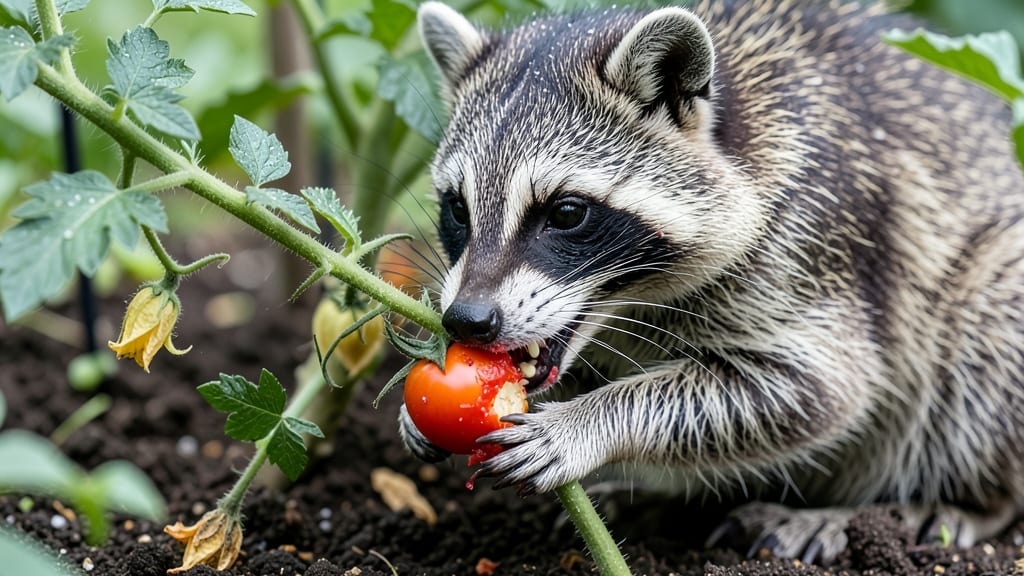
Raccoons eat tomato plants by raiding ripe fruit, leaves, and tender stems, drawn to their high sugar content and moisture. Their clever paws make them particularly destructive garden pests that strike after dark.
These nocturnal bandits don't just snack—they demolish entire plants in a single night, leaving behind scattered fruit and chewed foliage. 🦝 The real issue is their intelligence: they can open latches, climb fences, and even remember where your garden hides.
Unlike deer or rabbits, raccoons don't just nibble; they turn your tomato patch into a buffet zone.
What makes this worse is their timing—peak tomato ripening coincides with raccoon foraging season. A single raccoon can devour half a pound of tomatoes in one sitting, and their droppings spread seeds of disease.
The good news? Simple barriers like chicken wire or row covers work better than repellents because raccoons are too clever to be fooled by smells alone.
If you've ever woken up to find your prize tomatoes reduced to pulp, you're not alone. These masked bandits turn what should be a summer harvest into a nightly game of hide-and-seek. The key is acting before they discover your garden's location—once they find it, they'll return night after night.
💡 In This Article
- Why Raccoons Target Tomato Plants in Gardens
- Effective Raccoon-Proofing Strategies for Tomato Gardens
Why raccoons target tomato plants in gardens
Raccoons are drawn to tomato plants primarily because of their high sugar content and moisture levels.
A ripe tomato can contain up to 5% sugar by weight, making it an irresistible snack for these opportunistic foragers. 🦝 Their natural diet includes fruits, insects, and small animals, but garden tomatoes offer a concentrated, easily accessible food source that's particularly appealing after dark when their night vision peaks.
The destruction doesn't stop at just eating the fruit—raccoons will also strip leaves and chew stems for the same reasons. Their front paws are incredibly dexterous, almost human-like, allowing them to manipulate objects with precision.
This means they can easily pluck tomatoes from vines or tear through netting that might deter other pests. 🌱 What's worse, their foraging often spreads tomato hornworm eggs and other garden pests, creating a compounding problem for gardeners.
Timing plays a crucial role in their targeting behavior. Raccoons are most active between dusk and dawn, when gardeners aren't present to deter them. This nocturnal pattern coincides perfectly with tomato ripening season (typically late summer), creating an unfortunate overlap.
Their intelligence means they quickly learn which gardens offer the best pickings—once they discover your tomato patch, they'll return night after night until the harvest is gone.
Another factor is the accessibility of ground-level gardens. Unlike deer or rabbits that might be deterred by fences, raccoons can climb trees, open latches, and even remove sections of fencing to access your plants.
Their problem-solving skills mean they'll exploit any weakness in your garden's defenses. 💡 The combination of high-value food, easy access, and their nocturnal habits makes tomato plants a prime target for these clever pests.
Scientifically speaking, the sugar content in tomatoes triggers their foraging instincts. Studies show that raccoons have a strong preference for foods with high carbohydrate content, which provides quick energy for their active nocturnal lifestyle.
The moisture in tomatoes also makes them hydrating, which is particularly valuable during dry summer months when natural water sources might be scarce.
What most gardeners don't realize is how raccoons contribute to plant disease spread. Their droppings contain seeds from various plants they've consumed, including potentially diseased tomatoes.
When these seeds are scattered across your garden, they can introduce new pathogens that might not have been present before. 🌿 This makes their presence not just a nuisance but potentially harmful to your tomato crop's long-term health.