
Vegetables
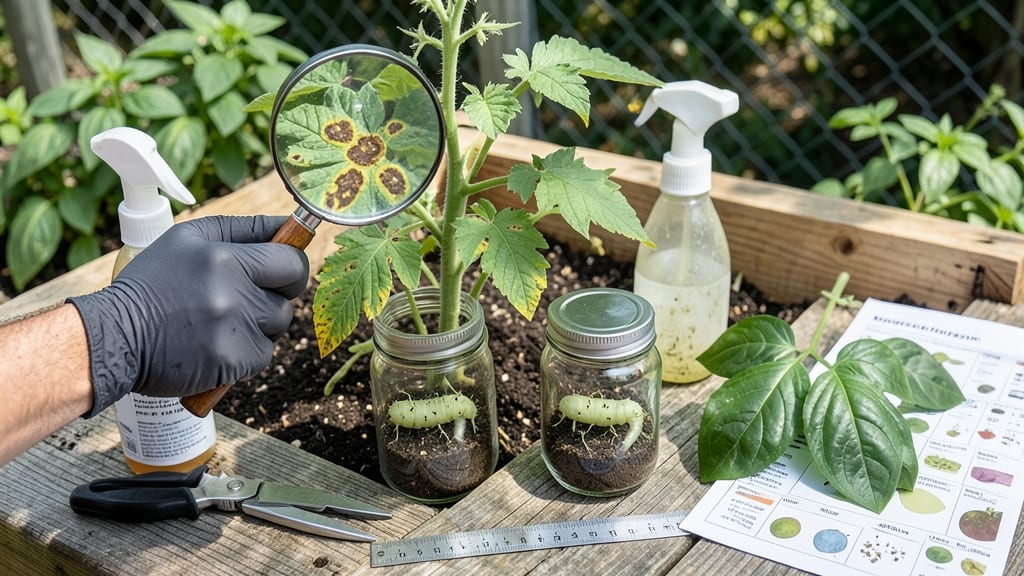
Diagnosing tomato leaf problems starts with spotting the 7 most common fungal issues—because those brown spots or yellow edges aren’t just cosmetic. 🌱 I’ve lost entire plants to early blight before realizing it was spreading faster than I could prune, so I learned to read the leaves like a detective story.
The key is knowing whether those marks are from fungus, pests, or just too much water—each has a distinct pattern that tells you exactly what’s wrong and how to fix it.
Most fungal problems—like early blight or late blight—start with tiny dark spots that grow into larger, concentric rings. Others, like powdery mildew, leave a fuzzy white coating that looks like someone dusted the leaves with flour.
The good news? These issues are preventable with the right spacing, watering habits, and occasional fungicide spray. The bad news? Ignoring them turns a $2 plant into a $20 lesson in a single season.
By the end of this guide, you’ll be able to diagnose issues in minutes—not hours—using just your eyes and a magnifying glass. You’ll learn which problems respond to copper sprays, which need pruning, and which are already too late to save.
No more guessing whether those spots are harmless or an emergency.
Whether you’re dealing with a single plant or a full garden, the same principles apply. The goal isn’t just to save your tomatoes—it’s to grow them stronger next year. Let’s get those leaves talking.
Root Causes Behind Tomato Leaf Troubles
Tomato plants are resilient, but their leaves often become battlegrounds for environmental stressors, pathogens, and mismanaged care. Understanding why these issues arise is the first step to prevention and treatment.
Below, we break down the scientific mechanisms behind the most common tomato leaf problems—so you can address the root cause, not just the symptoms.
Fungi thrive in moist, warm conditions and exploit weak spots in tomato leaves. Here’s how they take hold:
- High Humidity + Poor Airflow Fungal spores (like those causing early blight or late blight) germinate when humidity exceeds 75-90% for prolonged periods.
Stagnant air traps moisture against leaves, creating the perfect breeding ground. Phytophthora infestans (late blight) spreads rapidly in these conditions, causing dark, greasy spots with concentric rings.
- Wounded Leaves or Overcrowding Physical damage (from hail, insects, or rough handling) creates entry points. Overcrowded plants block airflow, slowing evaporation and keeping leaves damp. Alternaria solani (early blight) targets stressed plants, entering through stomata (leaf pores) or wounds.
- Contaminated Tools or Soil Fungal spores persist in soil, compost, or garden tools. If you’ve grown tomatoes in the same spot yearly, soilborne pathogens like Fusarium or Verticillium build up, infecting roots and eventually the leaves via the vascular system.
Bacteria like Pseudomonas syringae (cause of bacterial spot) don’t just land on leaves—they hijack the plant’s water transport system. Here’s how:
- Splashing Water or Wind Rain or overhead irrigation splashes bacteria from infected plant debris onto healthy leaves. Once landed, bacteria multiply in leaf wounds or natural openings (hydathodes—tiny pores on leaf edges).
- High Temperature + Rain Ideal conditions for bacterial spot are 75–85°F with frequent rain. Warmth accelerates bacterial growth, while rain provides the moisture needed for spores to spread. Infected leaves develop tiny, water-soaked spots that turn brown and crusty.
- Weakened Plant Defenses Nutrient deficiencies (especially calcium or potassium) or over-fertilization with nitrogen stress tomatoes, making them vulnerable. Weak plants can’t produce enough callose (a natural barrier) to block bacterial entry.
Not all tomato leaf problems stem from pathogens—sometimes, it’s your garden’s invisible enemies:
- Too Much or Too Little Water - Overwatering: Soggy soil suffocates roots, leading to root rot (Phytophthora or Pythium).
The plant can’t absorb nutrients, causing yellowing (chlorosis) or wilting despite moist soil. - Underwatering: Leaves curl and scorch (edges turn brown) as the plant conserves water. Chronic drought weakens defenses, inviting pests and diseases.
- Extreme Temperatures - Heat Stress (Above 90°F): Leaves bleach (lose chlorophyll) or develop sunburn spots (white/yellow patches).
High temps also reduce humidity, increasing fungal spore survival rates. - Cold Damage (Below 50°F): Causes blackened or mushy leaves due to cell rupture. Xanthomonas bacteria exploit cold-stressed plants more easily.
- Poor Soil Conditions
- Compacted or Waterlogged Soil: Restricts oxygen, leading to anaerobic conditions where harmful bacteria (Erwinia spp.) thrive, causing soft rot.
- Nutrient Imbalances:
- Magnesium deficiency → interveinal chlorosis (yellowing between veins).
- Iron deficiency → pale new leaves (common in alkaline soils).
- Excess salt (from tap water or fertilizers) → leaf burn (brown, crispy edges).
Pests don’t just eat leaves—they transmit diseases and create wounds that invite infections:
- Aphids & Whiteflies These sap-suckers inject toxins (like Pseudomonas) while feeding, causing yellowing, curling, or sticky honeydew (a fungal magnet). Their saliva disrupts leaf cell function, leading to stunted growth.
- Spider Mites In dry, hot conditions, these tiny arachnids pierce cells, causing silver stippling (tiny white dots) and bronzing (leaves turn coppery). Severe infestations lead to leaf drop, weakening the plant’s immune response.
- Caterpillars (Tomato Hornworms) Their voracious chewing creates large, irregular holes—entry points for secondary infections. Hornworms also defecate on leaves, spreading fungal spores directly onto fresh wounds.
Mistakes in fertilization or pesticide use can backfire spectacularly:
- Over-Fertilizing with Nitrogen Too much nitrogen promotes lush, weak growth with small leaves and few flowers/fruit. The plant prioritizes foliage over defense mechanisms, making it susceptible to powdery mildew or bacterial infections.
- Herbicide Drift or Residue Glyphosate or other broadleaf herbicides can bleach tomato leaves if sprayed nearby. Symptoms include yellowing, cupping, or necrosis (dead tissue). Always check labels for pre-harvest intervals!
- Pesticide Burn Neonicotinoids or copper-based fungicides (if overused) can cause brown, crispy edges or blotchy yellowing. Always dilute properly and apply in early morning/evening to avoid leaf burn.
Some tomato varieties are naturally more resistant to diseases, while others are bred for flavor over durability. Here’s the science:
- Heirloom vs. Hybrid Susceptibility - Heirlooms often lack disease-resistant genes (like Tm-2 for tobacco mosaic virus). They’re prized for taste but may crash hard in humid climates. - Hybrids (e.g., ‘Celebrity,’ ‘Mountain Merit’) are engineered with multiple resistance genes (e.g., Fusarium-resistant roots).
However, monoculture planting (growing only hybrids) can select for aggressive pathogen strains.
- Rootstock Grafting Risks Grafted tomatoes (where a disease-resistant rootstock is fused to a flavorful scion) can reject if the graft union weakens. Poor healing leads to stunted growth, yellowing, or sudden wilting—often misdiagnosed as disease.
Some tomato leaf problems start below the soil line:
- Verticillium & Fusarium Wilt These vascular diseases block water/nutrient flow, causing:
- Yellowing lower leaves (wilting even when soil is moist).
- Stunted growth (as roots fail to absorb water).
- Vascular discoloration (brown streaks in stems when cut). Fusarium oxysporum thrives in warm, dry soil, while Verticillium spreads in cool, wet conditions.
- Nematode Damage Root-knot nematodes (Meloidogyne) feed on roots, causing galls (lumpy growths) that strangle nutrient uptake. Above ground, you’ll see stunted plants, yellowing, and poor fruit set.
Most tomato leaf problems are preventable when you address the underlying cause: ✅ Fungi? → Improve airflow, avoid overhead watering. ✅ Bacteria? → Space plants, use copper sprays preventatively. ✅ Pests? → Introduce beneficial insects (ladybugs, lacewings). ✅ Nutrient issues? → Test soil, amend with compost/organic matter. ✅ Environmental stress? → Mulch, shade cloth, or adjust watering.
By identifying the "why", you can stop the problem before it starts—no more guessing games in the garden! 🌱🔍
How to Fix Tomato Leaf Issues
Tomato plants are resilient, but when fungal infections or environmental stressors strike, they need swift, targeted care to bounce back strong. Below, we’ve mapped out practical fixes for each common tomato leaf problem, along with prevention tips to keep your plants thriving.
Think of this as your troubleshooting manual—no green thumb required!
Fix:
- Prune aggressively 🔪 – Remove and destroy (don’t compost!) all infected leaves, especially the lower ones. Aim for 6–12 inches of clearance from the soil.
- Boost airflow 🌬️ – Space plants 18–24 inches apart and stake them to prevent humidity buildup. Avoid overhead watering.
- Fungal sprays 🛡️ – Apply a copper fungicide (like Bonide Copper Fungicide) every 7–10 days for 3–4 weeks. For organic growers, try a baking soda spray (1 tsp baking soda + 1 quart water + a drop of dish soap).
- Soil care 🌱 – Add compost or aged manure to improve soil health, reducing stress that invites disease.
Prevent it:
- Rotate crops yearly (don’t plant tomatoes in the same spot).
- Use resistant varieties like ‘Mountain Merit’ or ‘Defiant PhR.’
Fix:
- Emergency pruning ⚠️ – Remove and bag all infected foliage immediately—this disease spreads faster than early blight. Disinfect pruners with rubbing alcohol between cuts.
- Copper or chlorothalonil spray 💦 – Apply a systemic fungicide (like Ortho Garden Disease Control) every 5–7 days until the threat passes. For organic options, neem oil (reapply every 3–5 days) can help.
- Adjust watering 💧 – Water early in the day (before 10 AM) and at the base of the plant. Avoid wetting leaves.
- Solarize the soil ☀️ – If late blight persists, cover the bed with clear plastic for 4–6 weeks in summer to kill fungal spores in the soil.
Prevent it:
- Remove all tomato debris after harvest—don’t leave plants in the garden.
- Plant early-maturing varieties to harvest before peak blight season.
Fix:
- Prune infected leaves 🗑️ – Cut off only the worst spots (not whole leaves) and dispose of them. Avoid tearing leaves, which spreads spores.
- Fungicide rotation 🔄 – Alternate between copper fungicide and potassium bicarbonate (like Bonide Copper + a follow-up with a baking soda spray).
- Improve drainage 🚰 – Amend heavy clay soil with sand or perlite to reduce moisture retention.
- Mulch properly 🌿 – Use straw or grass clippings (not wood chips, which retain moisture) to keep leaves dry.
Prevent it:
- Space plants widely (24–36 inches apart) for airflow.
- Avoid overhead irrigation—drip systems are a game-changer.
Fix:
- Hose off leaves 💦 – Spray plants daily with water (in the morning) to dislodge spores. Use a soft brush for stubborn patches.
- Neem oil or sulfur spray 🧴 – Apply neem oil (1 tbsp per gallon of water) or sulfur fungicide (like Safer Brand Fungicide) every 7–10 days.
- Boost plant health 💪 – Feed with fish emulsion or compost tea to strengthen natural defenses.
- Reflect sunlight 🌞 – Place a white reflective board behind plants to increase light exposure, which powdery mildew hates.
Prevent it:
- Plant mildew-resistant varieties like ‘Celebrity’ or ‘Jet Star.’
- Avoid nighttime watering—powdery mildew thrives in damp conditions.
Fix:
- Remove infected plants 🚫 – Do not compost—burn or trash them to prevent spread. Disinfect tools with bleach (1 part bleach to 10 parts water).
- Copper spray 🛡️ – Use copper fungicide (even though it’s bacterial, copper helps) every 5–7 days until new growth appears.
- Adjust watering 💧 – Water only the soil, never the leaves. Use a soaker hose or drip irrigation.
- Crop rotation 🔄 – Wait 3 years before planting tomatoes, peppers, or eggplants in the same spot.
Prevent it:
- Sterilize seeds – Soak in 10% bleach solution for 2 minutes, then rinse.
- Choose resistant varieties like ‘Bacterium-resistant’ hybrids.
Fix:
- Remove infected plants ⚰️ – Do not compost—these fungi persist in soil for years. Replace the plant entirely.
- Solarize the soil ☀️ – Cover the bed with clear plastic for 6 weeks in summer to kill spores.
- Plant resistant varieties 🌱 – Switch to wilt-resistant tomatoes like ‘Defiant,’ ‘Mountain Merit,’ or ‘Arkansas Traveler.’
- Improve soil health 🌿 – Add biochar or mycorrhizal fungi to boost plant resilience.
Prevent it:
- Test soil for fungal presence before planting.
- Rotate crops aggressively—avoid nightshades (tomatoes, peppers, potatoes) in the same spot for 5+ years.
- Start strong 🌱 – Use healthy seedlings from reputable nurseries, not weak or leggy starts.
- Monitor daily 👀 – Check leaves every 2–3 days for early signs of trouble.
- Clean up 🧹 – Remove all plant debris at season’s end (even healthy-looking leaves).
- Support plants 🪵 – Use cages or stakes to improve airflow and reduce humidity.
Pro Tip: 💡 When in doubt, quarantine. If you’re unsure about a leaf issue, isolate the plant until you diagnose it to prevent cross-contamination.
With these fixes, your tomato plants will bounce back stronger—and you’ll be the hero of your garden! 🍅🌟
Frequently asked questions about tomato leaf problems
How do I tell if my tomato leaves have fungal disease vs. pest damage?
Fungal issues like early blight show concentric rings or greasy brown spots, while pest damage (aphids, mites) creates stippling, curling, or sticky honeydew. Check leaf undersides for tiny webs (mites) or clusters of bugs (aphids). Fungal spots often appear on lower leaves first, while pests attack new growth.
Can I still harvest tomatoes if the leaves have spots?
Yes, but only if the fruit itself is healthy. Remove and destroy infected leaves to protect remaining foliage. Most fungal/bacterial issues don't directly harm tomatoes—focus on saving the plant. If spots appear on fruit, discard those tomatoes immediately.
Why are my tomato leaves yellowing but the stems are still firm?
This likely indicates nutrient deficiency (magnesium or nitrogen) or overwatering. Check soil moisture—if it's soggy, reduce watering. For nutrients, test your soil or add compost. Yellowing between veins suggests magnesium deficiency (Epsom salt can help), while uniform yellowing points to nitrogen.
How often should I spray fungicide as prevention?
Apply fungicide every 7-14 days during humid seasons (spring/fall). Start when seedlings emerge and continue until harvest. Copper sprays work well, but rotate with baking soda mixtures (1 tsp baking soda + 1 quart water) to prevent resistance. Always spray in early morning.
What's the fastest way to stop powdery mildew from spreading?
Remove infected leaves immediately and hose off plants daily with water (morning is best). Apply neem oil or sulfur spray every 7 days while improving airflow. For severe cases, consider reflective mulch to increase sunlight exposure, which powdery mildew hates.